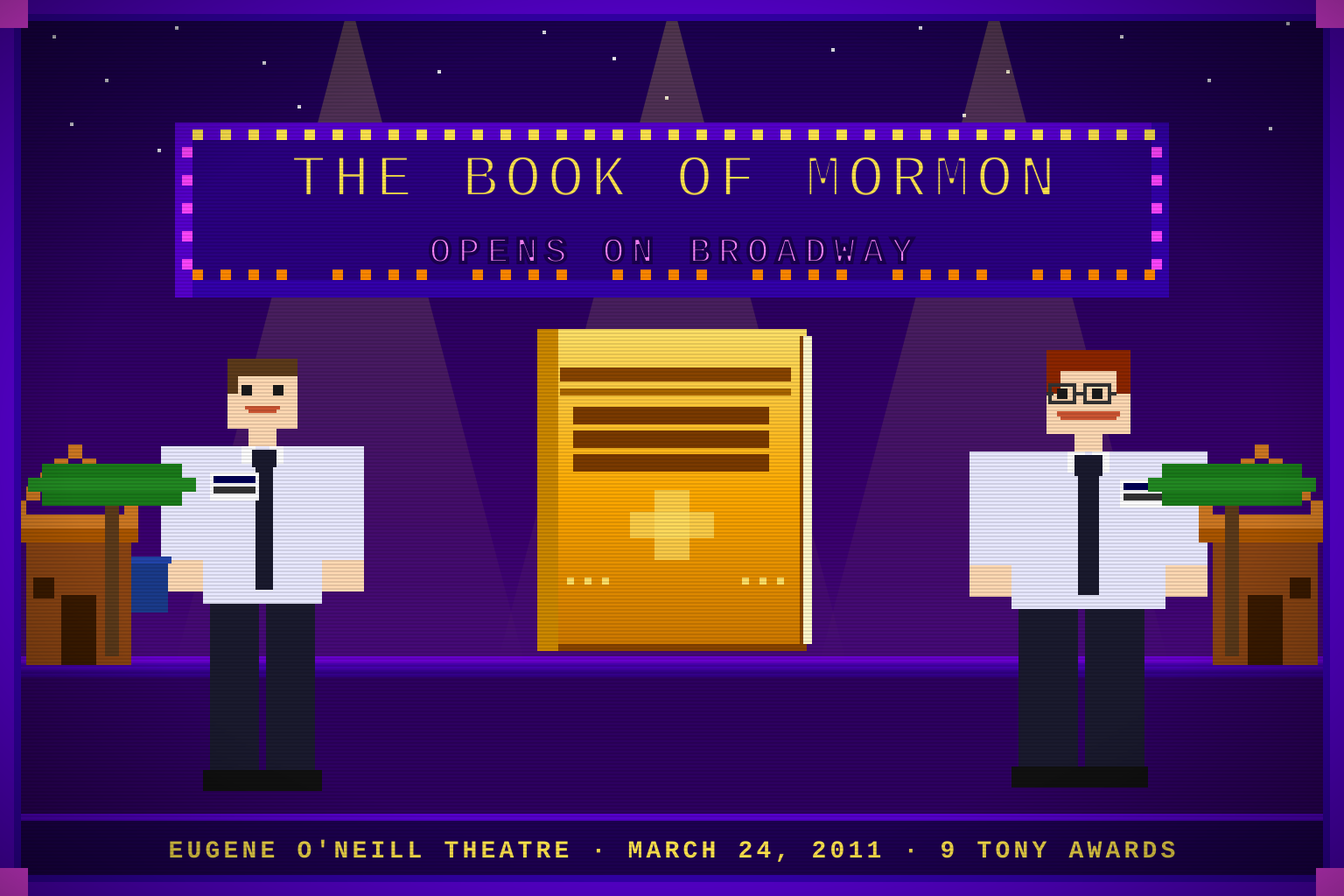
Key figures: Trey Parker (co-creator/co-director), Matt Stone (co-creator), Robert Lopez (co-creator/composer), Casey Nicholaw (choreographer/co-director), Andrew Rannells (Elder Price), Josh Gad (Elder Cunningham), Nikki M. James (Nabulungi)
Summary
The Book of Mormon, a satirical musical comedy created by South Park creators Trey Parker and Matt Stone with Avenue Q composer Robert Lopez, began preview performances on February 24, 2011, and officially opened on Broadway at the Eugene O’Neill Theatre on March 24, 2011. The show follows two mismatched Mormon missionaries sent to convert villagers in a remote, impoverished part of Uganda, using the culture-clash premise to satirize both organized religion and Western missionary idealism. Directed and choreographed by Casey Nicholaw, with Parker as co-director, the original production starred Andrew Rannells as Elder Price, Josh Gad as Elder Cunningham, and Nikki M. James as the villager Nabulungi.
The production received widespread critical acclaim for its score, book, and staging, and became one of the most commercially successful and difficult-to-obtain tickets on Broadway. At the 65th Tony Awards on June 12, 2011, the musical received a field-leading 14 nominations and won nine, including Best Musical, Best Book of a Musical, and Best Original Score.
Development and Pre-Broadway History
Parker, Stone, and Lopez spent roughly seven years developing The Book of Mormon, beginning in the early 2000s after Parker and Stone first discussed adapting the subject for the stage. The three collaborators met through Lopez’s work on Avenue Q (2003), which had itself won the Tony Award for Best Musical and demonstrated that adult-themed, edgy material could succeed in the Broadway mainstream.
The creative team conducted workshop readings between approximately 2006 and 2010, refining the book and score before committing to full production. The show’s songs deliberately blend classic mid-20th-century Broadway pastiche — drawing on the style of Rodgers and Hammerstein — with the irreverent, taboo-testing humor associated with South Park. Producer Scott Rudin, known for prestige projects including The Social Network (2010), joined the production, adding commercial and institutional credibility. The Eugene O’Neill Theatre, a house of roughly 1,100 seats on West 49th Street in the theatre district, was selected as the Broadway home.
Creation and Production
The show’s score addresses subjects including poverty, AIDS, war, genital mutilation, and religious faith through comedic and, at times, deliberately provocative means. Lopez’s experience writing traditional Broadway-style songs for Avenue Q was central to the production’s approach: the show’s most effective satirical moments arise from presenting disturbing or absurdist content in the formal vocabulary of classic American musical theatre. Parker and Stone brought their established television audience to the theatre, and the casting of relative unknowns — Rannells and Gad — in the two lead roles reinforced the production’s ensemble-driven identity rather than relying on marquee stars.
Awards and Reception
At the 65th Tony Awards, held June 12, 2011, at the Beacon Theatre in New York, The Book of Mormon won nine awards from its 14 nominations — the most wins of any production that evening and one of the largest single-show Tony hauls in Broadway history. Awards included:
- Best Musical
- Best Book of a Musical (Parker, Lopez, and Stone)
- Best Original Score (Parker, Lopez, and Stone)
- Best Direction of a Musical (Parker and Nicholaw)
- Best Featured Actress in a Musical (Nikki M. James)
- Best Scenic Design of a Musical (Scott Pask)
- Best Lighting Design of a Musical (Brian MacDevitt)
- Best Sound Design of a Musical (Brian Ronan)
- Best Orchestrations (Larry Hochman and Stephen Oremus)
The original cast recording, released April 19, 2011, debuted at number three on the Billboard 200 — an exceptional chart position for a Broadway cast album — and won the Grammy Award for Best Musical Theater Album at the 54th Grammy Awards in February 2012. The production also received the Drama Desk Award, the Drama Critics’ Circle Award for Best Musical, and the Outer Critics Circle Award for Outstanding New Broadway Musical.
Box Office and Commercial Impact
The Book of Mormon was sold out for months following its opening and was one of the highest-grossing shows on Broadway throughout its initial run. Weekly grosses regularly exceeded $1.5 million, and the show’s premium-priced tickets — standard seats reaching several hundred dollars, with resale prices substantially higher — set a then-record for Broadway demand relative to seat count. The show’s waitlist for tickets and the scarcity of available seats became a widely reported cultural phenomenon, with the Eugene O’Neill Theatre’s roughly 1,100 seats representing one of the smaller capacities on the Broadway strip.
The production ran for over 2,500 performances at the Eugene O’Neill before the COVID-19 pandemic forced Broadway’s closure in March 2020. It resumed performances in November 2021.
National Tour and International Productions
A North American touring production launched in September 2012, making The Book of Mormon one of the most extensively toured new musicals of its decade, playing in cities across the United States and Canada. A West End production opened at the Prince of Wales Theatre in London on March 21, 2013, and ran continuously for several years, becoming one of the longest-running American musical imports in London’s recent history. Australian and New Zealand productions followed, as did additional international stagings.
EGOT and the Lopez Legacy
The original cast album’s Grammy win in 2012 completed Robert Lopez’s status as an EGOT — the rare distinction of having won Emmy, Grammy, Oscar, and Tony awards. He had already held Tony wins from Avenue Q (2004) and The Book of Mormon (2011); his Oscar win came later for the song “Let It Go” from Disney’s Frozen (2014). Lopez and his creative partner Kristen Anderson-Lopez later became the first artists to win two Academy Awards for original song. The Book of Mormon thus served as a pivotal production in a creative career that crossed from Broadway into global mainstream pop culture.
Significance
The Book of Mormon was among the most acclaimed and commercially successful new musicals of the 2010–2011 Broadway season, demonstrating that irreverent, R-rated comedic material — previously associated with cable television — could succeed as mainstream Broadway theatre while still winning the industry’s top honors. Its success helped cement Robert Lopez as one of the few writers to win an EGOT, and its long commercial run sustained sold-out audiences on Broadway for over a decade after its 2011 opening, alongside national tours and international productions in London, Australia, and elsewhere. The production also reinvigorated public and press interest in Broadway as a cultural institution, generating mainstream coverage well beyond the traditional theatre press.
Sources
- The Book of Mormon (musical) - Wikipedia
- A timeline of ‘The Book of Mormon’ on Broadway and beyond - New York Theatre Guide
- 65th Tony Awards - Wikipedia
- The Book of Mormon - Britannica
- Robert Lopez - Wikipedia
- 54th Grammy Awards - Wikipedia
Related
- 83rd Academy Awards — the year’s marquee awards ceremony, two months before the show’s Broadway opening
- The Social Network Score — another 2011 landmark in awards recognition for original music
- The Muppets Film — a 2011 musical comedy whose “Man or Muppet” won its own Academy Award for Best Original Song