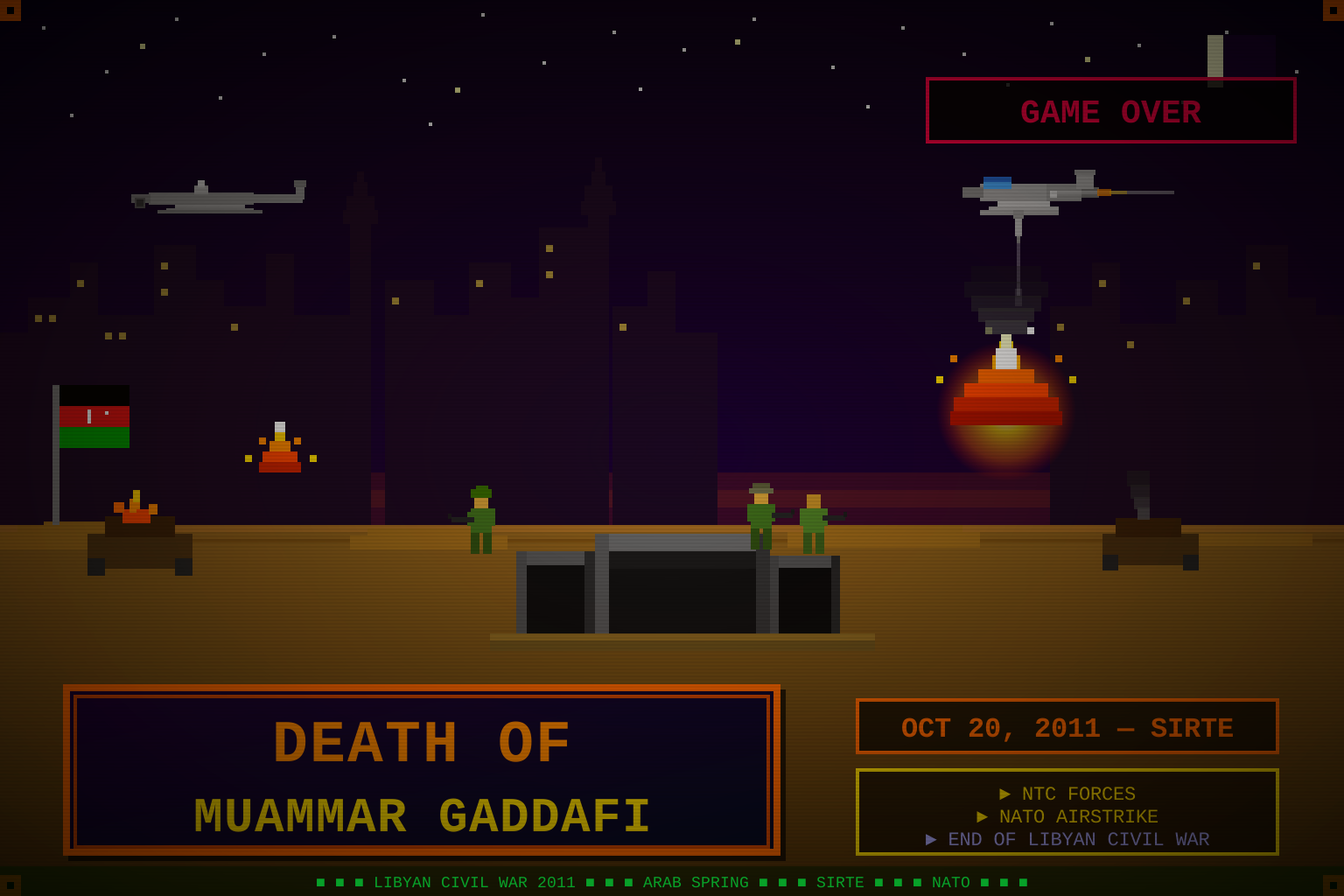
Key figures: Muammar Gaddafi, Mutassim Gaddafi (son, killed same day), Abu-Bakr Yunis Jabr (defense minister, killed same day), National Transitional Council (NTC) forces, NATO
Summary
On October 20, 2011, Muammar Gaddafi — Libya’s ruler for over four decades since seizing power in a 1969 coup — was captured and killed by National Transitional Council (NTC) fighters in his hometown of Sirte. His death came after a roughly 75-vehicle convoy attempting to flee the besieged city was struck by a NATO airstrike (a U.S. Predator drone and French Mirage jets), forcing Gaddafi and his remaining loyalists to take shelter in drainage pipes on the city’s outskirts. NTC fighters found him there, captured him alive, and killed him shortly afterward. His death, together with the fall of Sirte, marked the effective end of the Libyan Civil War that had begun in February 2011 as part of the wider Arab Spring.
Capture in Sirte
Sirte, Gaddafi’s birthplace and one of the last loyalist strongholds, had been besieged by NTC forces for weeks after the fall of Tripoli in August 2011. On the morning of October 20, Gaddafi’s convoy attempted to break out of the city but was struck by NATO airstrikes, destroying multiple vehicles and killing a number of loyalist fighters. Gaddafi and his son Mutassim took refuge in a house that NTC forces then shelled; the group fled into roadside drainage pipes, where a grenade explosion killed defense minister Abu-Bakr Yunis Jabr. NTC fighters pulled Gaddafi from a drainage pipe and captured him alive, reportedly saying “we want him alive.”
Killing and Aftermath
Gaddafi was killed in the custody of NTC fighters shortly after his capture. Video footage circulated showing him beaten and abused by fighters as he was dragged toward a vehicle; a subsequent medical examination found gunshot wounds to the head and abdomen. Mutassim Gaddafi was also killed the same day. Gaddafi’s body was put on public display in a commercial freezer in Misrata for several days before being buried at a secret desert location on October 25, 2011, after human rights organizations had called unsuccessfully for an independent autopsy and investigation into the killing.
End of the Civil War
The NTC’s interim government formally declared Libya “liberated” on October 23, 2011, three days after Gaddafi’s death, bringing the eight-month civil war to a close. International reaction was divided: Western governments and many NATO allies welcomed the end of Gaddafi’s rule, while some leaders, including Venezuela’s Hugo Chávez, condemned the killing as an extrajudicial execution. Human rights organizations, including Human Rights Watch, later documented the killing as part of a broader pattern of revenge violence in Sirte and called for accountability. The manner of Gaddafi’s death — captured alive but killed without trial — remained a point of international legal controversy in the following years.