Summary
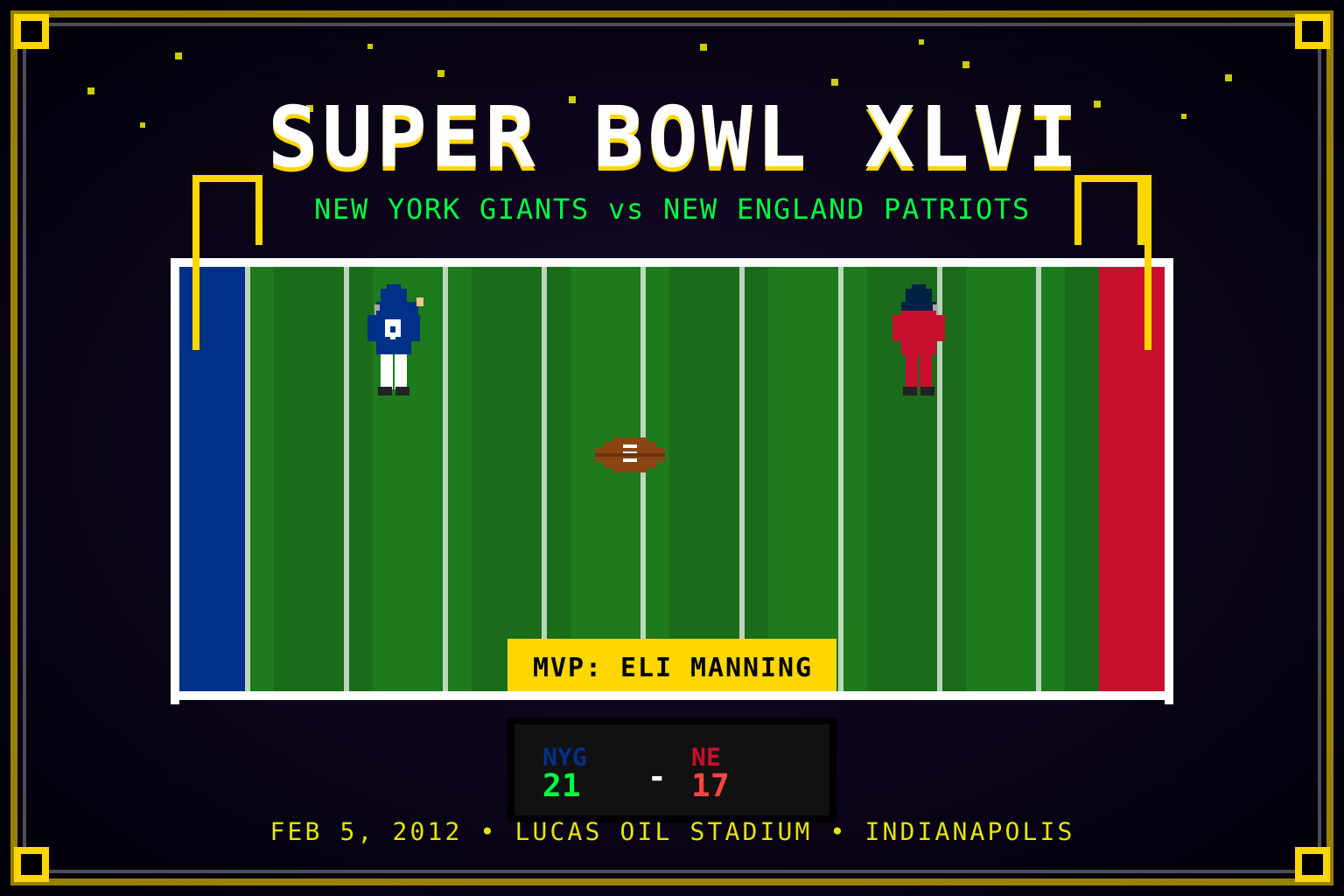
Super Bowl XLVI took place on February 5, 2012, at Lucas Oil Stadium in Indianapolis, Indiana, pitting the New York Giants against the New England Patriots in a rematch of Super Bowl XLII from four years earlier. The Giants prevailed in a 21–17 upset over the heavily favored Patriots, claiming the franchise’s fourth Super Bowl title. Quarterback Eli Manning was named Super Bowl MVP after completing 30 of 40 passes for 296 yards and one touchdown. The game drew an average of 111.3 million viewers in the United States — the most-watched program in US television history at the time, narrowly surpassing the record of 111.0 million set by Super Bowl XLV a year earlier.
Pre-Game Context: The Road to Indianapolis
The New England Patriots finished the 2011 regular season at 13–3 and entered as slight favorites with a prolific offense led by quarterback Tom Brady, who threw for 5,235 yards and 39 touchdowns during the season. Wide receiver Wes Welker caught 122 passes, and tight end Rob Gronkowski scored 17 receiving touchdowns in the regular season.
The New York Giants entered the playoffs as a wild-card team with a 9–7 regular season record, the first Super Bowl–winning team to do so in NFC history. Head coach Tom Coughlin’s squad had beaten the Falcons, Packers (in a famous 37–20 upset at Lambeau Field), and 49ers (in overtime) to reach the Super Bowl. The Giants’ pass rush — led by defensive ends Jason Pierre-Paul and Justin Tuck — had been the unit’s defining strength.
The Match: Quarter-by-Quarter
First Half
The game opened cautiously. The Patriots took a 10–9 halftime lead, but the score belied the strategic tension. Giants running back Ahmad Bradshaw and receiver Victor Cruz were held largely in check in the first half. Brady completed 16 of 27 first-half passes for 186 yards, while Manning threw for 121 yards against a Patriots secondary that had surrendered just 14.5 points per game during the regular season.
Fourth Quarter: The Decisive Moments
The Giants trailed 17–15 entering the final quarter. With 3:46 remaining, Manning led a 12-play, 88-yard drive that would decide the game. The pivotal play came when wide receiver Mario Manningham made an extraordinary sideline catch for 38 yards at the New England 23-yard line — a perfectly placed throw by Manning along the left boundary that Manningham caught with both feet in bounds while absorbing contact. The play was reviewed and upheld.
The drive culminated with Ahmad Bradshaw scoring a 6-yard rushing touchdown with 57 seconds remaining, completing the 21–17 Giants victory. Bradshaw later said he attempted to stop short of the goal line to run out the clock but fell into the end zone — one of Super Bowl history’s notable unintended moments.
New England had one final possession but Brady’s desperation pass fell incomplete as time expired.
Halftime Show: Madonna
The halftime show featured Madonna, performing a 13-minute medley of hits including “Vogue,” “Music,” “Give Me All Your Luvin’,” “Like a Prayer,” and “Open Your Heart.” Guest performers included LMFAO, Nicki Minaj, M.I.A., Cee Lo Green, and Cirque du Soleil acrobats. The production used elaborate set pieces including Roman columns and period-costumed dancers. An estimated 114 million viewers watched the halftime performance, exceeding the game’s already massive viewership in the moments around the show.
M.I.A.’s raised-middle-finger gesture during the broadcast drew FCC complaints and prompted the NFL to file an arbitration claim against her — initially for $1.5 million and later escalated to a demand of $16.6 million — which the two sides settled privately in 2014. The incident became one of the more discussed media controversies of early 2012.
Commercial Landscape: $3.5 Million Per 30 Seconds
The Super Bowl’s commercial slots cost approximately $3.5 million for 30 seconds — a record at the time — attracting campaigns from Budweiser, Volkswagen (the “Dog Strikes Back” ad), Chrysler (Clint Eastwood’s “Halftime in America”), Apple, and Coca-Cola. Volkswagen’s ad, a sequel to the 2011 “Darth Vader” spot, generated significant pre-game buzz after being released online in advance. Chrysler’s Clint Eastwood ad became widely discussed for its political undertones, arriving during the presidential election cycle.
Total advertising revenue for Super Bowl XLVI was estimated at $262 million, according to Kantar Media.
National Significance: An Election Year Backdrop
Super Bowl XLVI unfolded during the early months of the 2012 US presidential election cycle. Incumbent President Barack Obama was preparing for re-election; Republican primaries were still underway, with Mitt Romney the frontrunner at the time. Indianapolis itself was a symbolic choice — Lucas Oil Stadium, opened in 2008, had cost $720 million to construct and was seen as a civic investment in post-industrial Midwestern renewal.
The game’s underdog narrative — a 9–7 wild-card team defeating a dynasty — resonated broadly against a backdrop of ongoing economic recovery from the 2008 financial crisis. Unemployment stood at 8.3% in January 2012, and the Super Bowl served as a rare national shared-experience event during a politically polarized period.
Eli Manning’s Legacy
The win gave Eli Manning his second Super Bowl MVP award (matching his first from Super Bowl XLII in February 2008, also against the Patriots). The back-to-back upsets of New England — both involving last-minute drives — cemented Manning’s reputation for clutch performance under pressure. His two Super Bowl MVPs drew direct comparisons to his brother Peyton Manning, then recovering from cervical spine surgery that caused him to miss the entire 2011 season with the Indianapolis Colts. Eli’s second championship notably elevated his historical standing among NFL quarterbacks.
Sources
- Wikipedia: “Super Bowl XLVI” — comprehensive match details, scoring summaries, and viewership data verified against Nielsen ratings.
- NFL official records and Pro Football Reference: Game statistics, player totals, and franchise Super Bowl history.
- USA Today / Ad Meter: Commercial rankings and advertising revenue data for Super Bowl XLVI.
See Also
- 84th Academy Awards — another landmark US cultural event from February 2012
- 2012 Wimbledon Championships — major international sporting event later in 2012