Onset of the Greek Government-Debt Crisis
Society & Economics
Key figures: Prime Minister George Papandreou (PASOK); Finance Minister George Papaconstantinou; outgoing Prime Minister Kostas Karamanlis (New Democracy); the European Commission and Eurostat; credit-rating agencies Fitch, Standard & Poor’s, and Moody’s
Summary
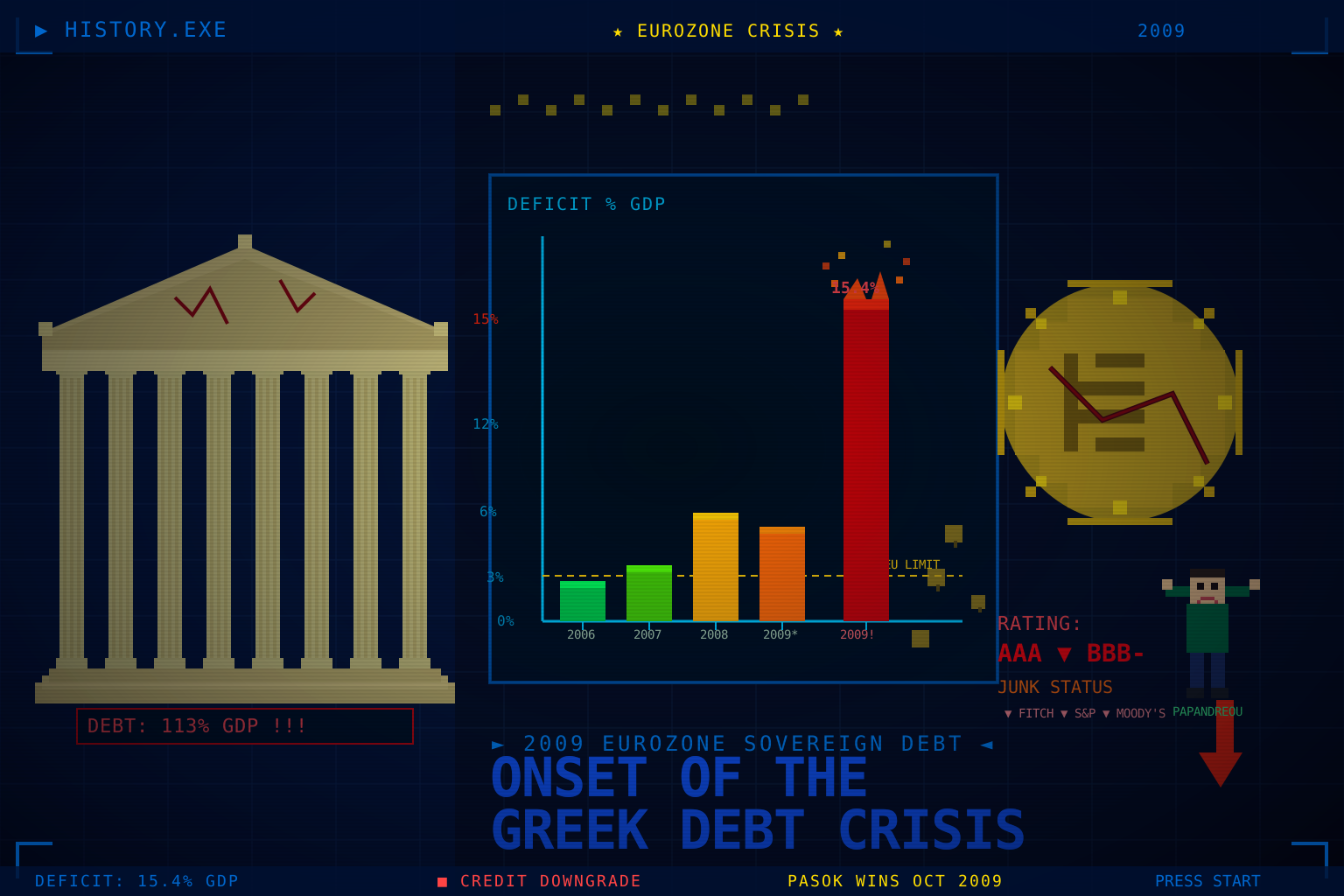
In the closing months of 2009 Greece disclosed that its public finances were far weaker than previously reported, an admission that sparked a collapse of investor confidence and marked the beginning of the European sovereign-debt crisis. The socialist PASOK party, led by George Papandreou, won a snap general election on 4 October 2009 and formed a government on 6 October. Soon after taking office, the new administration reviewed the national accounts and sharply revised the projected 2009 budget deficit upward—to roughly 12.7% of gross domestic product, compared with the 3.7% that the outgoing New Democracy government of Kostas Karamanlis had reported to Brussels and the 6–8% range forecast earlier in the year. The revised figure was more than four times the 3% ceiling set by the European Union’s Stability and Growth Pact; a subsequent Eurostat review raised the final 2009 deficit to 15.4% of GDP.
The revelation exposed years of misreported statistics and a structural gap between Greek government spending and revenue. Gross public debt already exceeded a full year’s economic output—about 113% of GDP in 2009—leaving little fiscal room to absorb the deficit shock. Finance Minister George Papaconstantinou later described the moment of discovering the true figures as encountering “a runaway train.”
Market Reaction and Credit Downgrades
Bond markets responded quickly. The yield spread between Greek ten-year government bonds and their German counterparts widened from about 138 basis points in early October to roughly 238 basis points by late December, pushing Greek borrowing costs to around 5.5%. The three major rating agencies downgraded Greek sovereign debt in rapid succession:
- 22 October 2009 — Fitch Ratings lowered Greece’s long-term rating from A to A−.
- 8 December 2009 — Fitch cut the rating again to BBB+ with a negative outlook, the first time a major agency had placed Greece below the A band.
- 16 December 2009 — Standard & Poor’s downgraded Greece to BBB+.
- 22 December 2009 — Moody’s lowered Greece’s rating to A2.
The downgrades raised the cost of servicing existing debt and refinancing maturing bonds, deepening concerns that Greece could not meet its obligations without external support.
From National Problem to Eurozone Crisis
Because Greece shared the euro, it could neither devalue its currency nor set its own monetary policy, and its fiscal troubles raised immediate questions about the credibility of the single currency and the exposure of other highly indebted eurozone members. The events of late 2009 set in motion the wider European sovereign-debt crisis of the following years: in May 2010 the European Union and the International Monetary Fund agreed a €110 billion rescue package for Greece, and the EU established the temporary European Financial Stability Facility (EFSF), later succeeded by the permanent European Stability Mechanism (ESM). Attention soon spread to Ireland, Portugal, Spain, and Italy, testing the architecture of the monetary union.
Significance
The Greek disclosures of October 2009 transformed a national accounting problem into a systemic threat to the euro. They revealed weaknesses in the eurozone’s fiscal surveillance—chiefly the reliance on member states’ own deficit reporting—and prompted reforms to European statistical oversight and budgetary coordination. The crisis reshaped European politics and economic policy for a decade, driving successive Greek austerity programs, prolonged recession, and debate over the balance between fiscal discipline and solidarity within the monetary union. The year 2009 thus marked both the tail of the global Great Recession and the opening of a distinctly European chapter of financial instability.
Sources
- Wikipedia — Greek government-debt crisis: https://en.wikipedia.org/wiki/Greek_government-debt_crisis
- European Stability Mechanism — “Runaway train: Greece sounds the alarm” (Safeguarding the Euro): https://www.esm.europa.eu/publications/safeguarding-euro/runaway-train-greece-sounds-alarm
- Eurostat — Provision of deficit and debt data for Greece (2010 revisions): https://ec.europa.eu/eurostat
- Council on Foreign Relations — The Eurozone in Crisis (backgrounder): https://www.cfr.org/