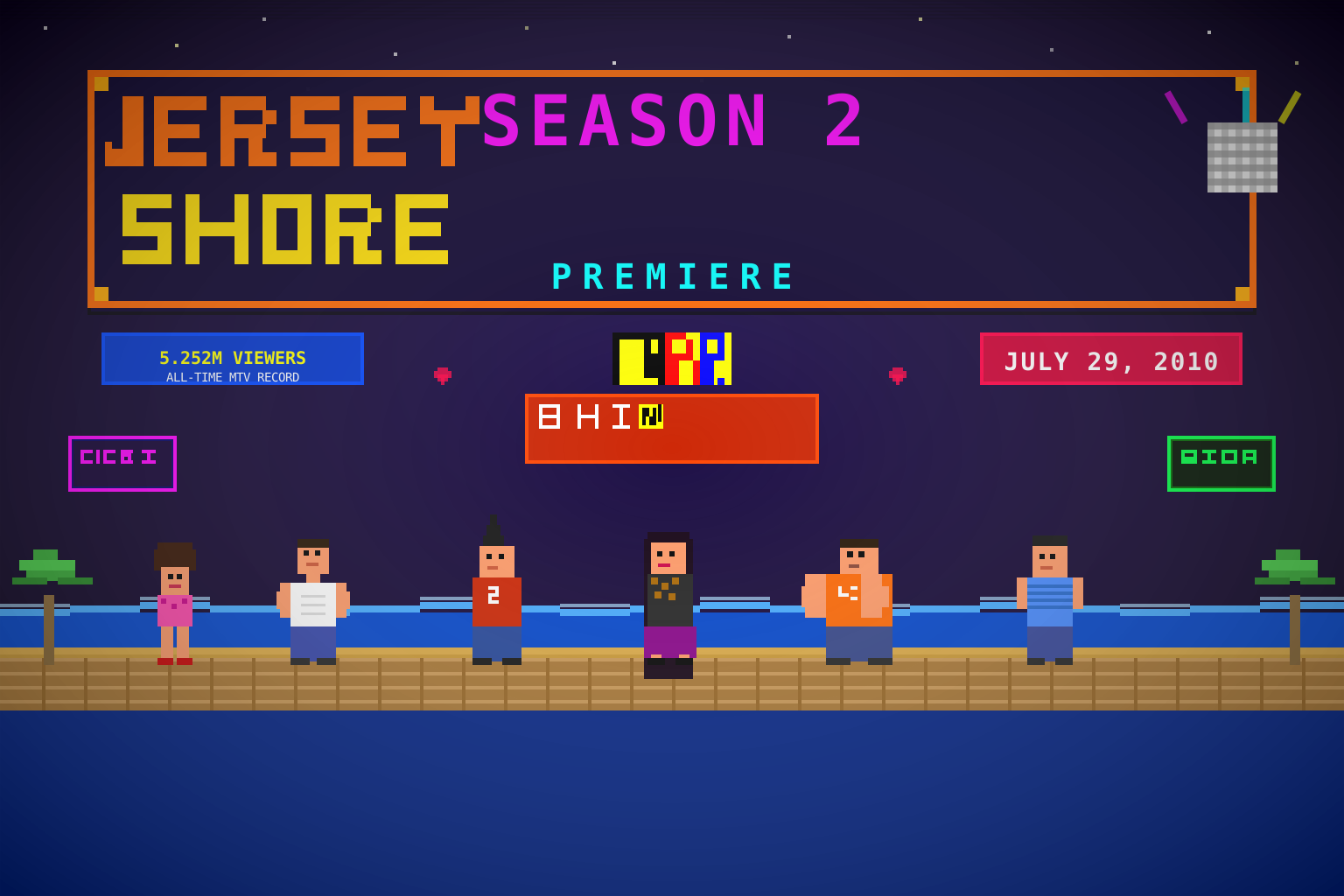
Key figures: Nicole Polizzi (“Snooki”), Michael Sorrentino (“The Situation”), Pauly D (DJ Pauly D), Jenni Farley (“JWOWW”), Ronnie Ortiz-Magro, Sammi Giancola, Vinny Guadagnino, Angelina Pivarnick
Summary
Jersey Shore Season 2 premiered on July 29, 2010, on MTV, returning the full cast to Seaside Heights, New Jersey, after a first season (December 2009–February 2010) that had transformed a modestly budgeted reality concept into a national talking point. The season-two premiere drew exactly 5.252 million viewers — a new all-time record for an MTV broadcast and an increase of roughly 70 percent over the Season 1 finale’s 3.1 million viewers.
Background and first season rise
Jersey Shore debuted on December 3, 2009, with 1.4 million viewers, a respectable launch for an unscripted series on a youth cable network. By the Season 1 finale (February 11, 2010), viewership had tripled. Critical and cultural attention had spiked in January 2010 when New Jersey Governor Chris Christie publicly called the show “embarrassing” and announced he would not participate in a promotional tie-in, a statement that paradoxically drove enormous press coverage and viewer curiosity. The Italian American One Voice Coalition had complained formally to MTV about what they described as ethnic stereotyping, which further amplified media interest.
Season 2 structure and cast dynamics
Season 2 comprised thirteen episodes aired between July 29 and October 14, 2010. The season returned cast members to their familiar Shore Store job and shared house on the Seaside Heights boardwalk. Key narrative arcs included:
- The on-again, off-again relationship between Ronnie and Sammi, which produced multiple public arguments and a dramatic breakup in episode seven;
- The departure and return of cast member Angelina Pivarnick, who left the house in episode two under acrimonious circumstances;
- Snooki’s increasingly prominent role as the show’s audience-favorite character, a trajectory that would later yield her own spin-off;
- “The Situation” (Mike Sorrentino) leveraging his Season 1 fame to begin a public entertainment career, including a cameo announcement deal reportedly worth $5 million.
Each episode averaged approximately 4.6 million viewers over the full season, sustaining the record numbers set by the premiere.
Cultural mechanics of the ratings spike
The Season 2 premiere coincided with the peak of the show’s social media amplification. By 2010, Twitter had grown to roughly 40 million active users, and cast members’ Twitter accounts — particularly those of Snooki and Pauly D — were among the most-followed reality-television handles on the platform. Live-tweeting during episodes became a significant second-screen behavior for young audiences. This dynamic — reality television + social media real-time commentary — would become a standard entertainment industry formula in subsequent years.
Merchandise, spin-offs, and brand extensions
By August 2010, MTV had licensed Jersey Shore merchandise generating an estimated $30 million in sales, including apparel and accessories tied to show catchphrases (“GTL,” “Gym Tan Laundry”). Cast members signed individual endorsement deals: Snooki with Nicole by OPI nail polish and multiple fashion brands; The Situation with Reebok and Vitamin Water. Pauly D launched a DJ career that culminated in a Las Vegas residency by 2012. The speed of the show’s commercial expansion in summer 2010 exemplified how cable reality television had become a platform for multi-channel brand monetization.
Significance
MTV’s pivot to unscripted dominance
Jersey Shore Season 2’s record ratings validated MTV’s strategic repositioning away from music videos (MTV had largely abandoned music programming by 2008) and toward unscripted reality content. Before Jersey Shore, MTV’s highest-rated programs had been The Real World (launched 1992) and TRL (ended 2008). The show demonstrated that a reality format built on specific geography, ethnicity, and social milieu could scale to a mass audience rather than a niche one.
Reality television’s cultural dominance in 2010
Season 2’s premiere placed Jersey Shore alongside other 2010 reality television phenomena — American Idol, Dancing with the Stars, and The Bachelor franchise — as evidence that unscripted content had replaced scripted television as commercial television’s dominant product. In the 18–49 demographic that cable networks prioritize, Jersey Shore regularly outperformed scripted competitors and some broadcast dramas.
Moral panic and ethnic representation
The show generated extensive discourse about ethnic stereotyping and working-class representation. Scholars of Italian American culture debated whether the show constituted harmful caricature or authentic representation of a particular subculture. The term “guido” — used unironically by cast members as self-description — was contentious in Italian American communities. The Unico National organization formally petitioned Domino’s Pizza, which had advertised on the show, to withdraw its sponsorship in September 2010. These debates prefigured ongoing arguments about race, ethnicity, and representation in reality television that continued throughout the decade.
The social-media celebrity model
Cast members’ rapid ascendance to celebrity status — achieved without traditional entertainment credentials — established the 2010s model of reality television as a celebrity launchpad that social media could sustain indefinitely after a show’s run. This pathway was later replicated by participants in Keeping Up with the Kardashians, The Bachelor, RuPaul’s Drag Race, and ultimately by the influencer economy that emerged on YouTube, Instagram, and TikTok.
Related
- The social platforms that amplified Jersey Shore’s live-viewing commentary are examined in The Social Network, which documents Facebook’s 2010 cultural moment.
- For the broader 2010 entertainment landscape, see the 52nd Grammy Awards (January 2010) and Inception (July 2010).
- The digital infrastructure enabling streaming alternatives to cable — which would eventually erode traditional TV ratings — is detailed in Netflix Streaming Transformation.