Key figures: Reed Hastings (CEO), Andy Rendich (Chief Service and Operations Officer), Ted Sarandos (Chief Content Officer), Studios: Paramount Pictures, Lionsgate, MGM, Relativity Media
Summary
Throughout 2010, Netflix achieved its transformation from a DVD-by-mail rental service into a streaming-first media platform, a shift that set in motion the “cord-cutting” era and fundamentally restructured the global entertainment industry. The company had launched its streaming service — then called “Watch Instantly” — in January 2007, initially available only on Windows computers. By 2010, the product had expanded to game consoles, set-top boxes, and mobile devices, and demand had overtaken the legacy DVD business.
Q1 2010: Streaming crosses 50 percent
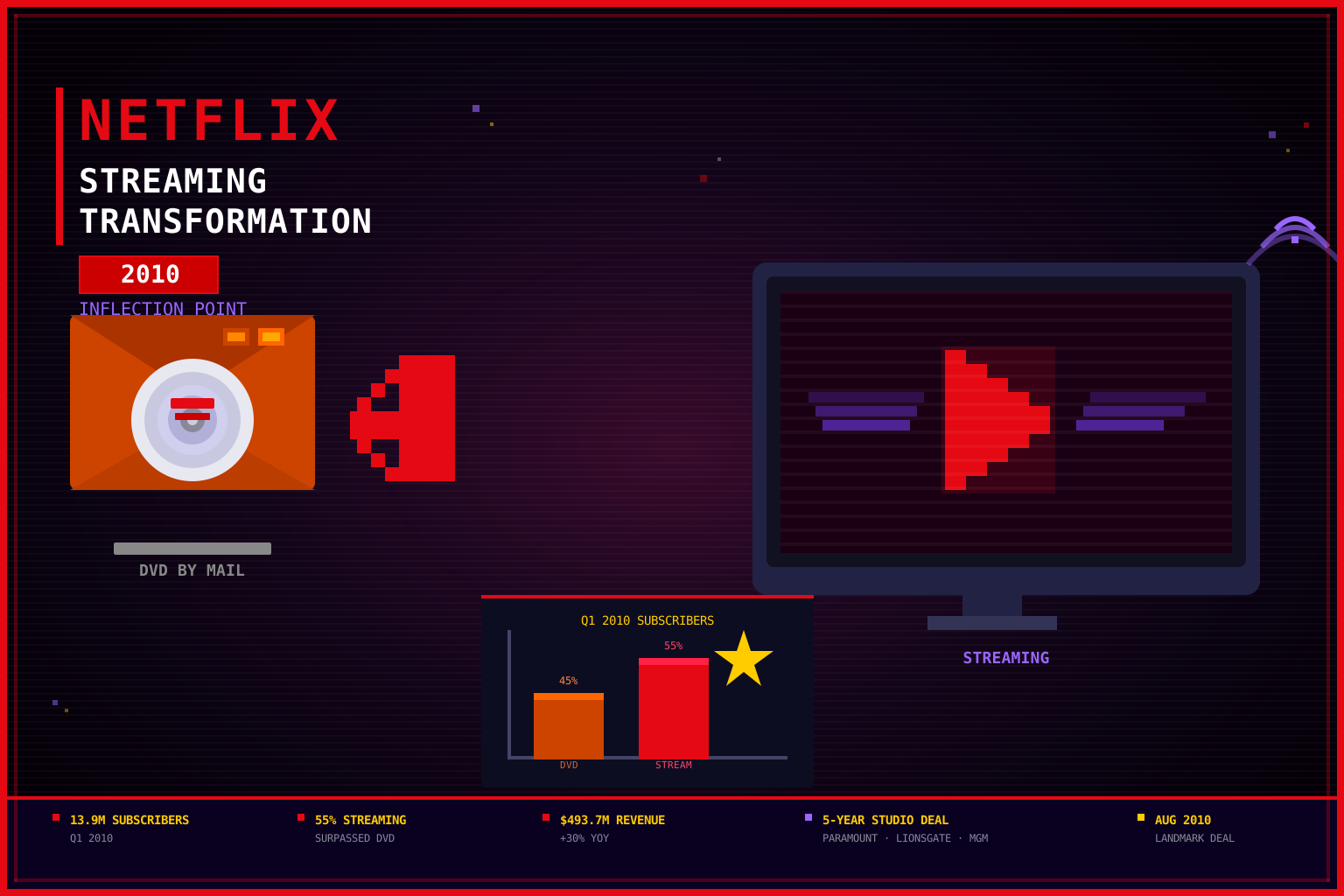
The structural turning point came in Netflix’s Q1 2010 earnings disclosure (filed April 2010), which revealed that 13.967 million of the company’s subscribers were active, and that the majority — approximately 55 percent — had streamed at least one hour of content in the preceding month, surpassing DVD rental activity for the first time. Reed Hastings, in his shareholder letter of April 26, 2010, framed the milestone explicitly: “We’re now primarily a streaming business that also offers DVDs.” Quarterly revenues for Q1 2010 were $493.7 million, up 30 percent year-over-year.
The August 2010 studio licensing deal
In August 2010, Netflix announced a landmark five-year licensing agreement with Paramount Pictures, Lionsgate Films, and Metro-Goldwyn-Mayer (MGM) valued at approximately $1 billion in aggregate licensing fees. The deal granted Netflix exclusive streaming rights to the studios’ film libraries — including titles that had previously been unavailable online. The agreement was negotiated by Ted Sarandos, then Senior Vice President of Content, and was structured as a “pay-TV window” substitute: Netflix paid the studios fees comparable to what cable networks (HBO, Showtime, Starz) paid for the same content window.
This followed an earlier deal signed July 8, 2010, with Relativity Media, which had provided Netflix access to approximately 100 films. By December 2010, Netflix had licensing agreements with all six major Hollywood studios, completing a transition from peripheral streaming service to peer of cable pay-TV networks in terms of content depth.
Device expansion and the mobile pivot
Netflix’s streaming footprint expanded dramatically during 2010:
- PlayStation 3 (November 2009) and Xbox 360 (November 2008) had established game consoles as living-room streaming devices; by mid-2010, more than 4 million households used one of these to access Netflix.
- iPad (launched April 3, 2010) shipped with a native Netflix application at launch, making it a defining use case for Apple’s new device category. Within three months, iPad Netflix usage accounted for a measurable percentage of total streaming hours.
- iPhone (iOS 4, launched June 21, 2010) gained a native Netflix app in August 2010, enabling streaming on mobile devices for the first time in the United States.
- Wii integration launched March 22, 2010, expanding Netflix’s reach to the console with the largest installed base in the United States (approximately 27.5 million units sold domestically by 2010).
International expansion: Canada launch
On September 22, 2010, Netflix launched its streaming service in Canada — its first international market — at a monthly price of CAD $7.99. The Canadian launch was streaming-only, with no DVD component, and was used to test the viability of a streaming-only subscription model that Netflix would later apply globally. By December 2010, Netflix had signed with Canadian television broadcasters to license local Canadian content, addressing early criticism that the Canadian library was significantly smaller than the U.S. catalog.
Plan separation and the road to Qwikster
In November 2010, Netflix formally restructured its subscription plans to separate streaming and DVD rental into distinct pricing tiers. Streaming-only plans were offered at $7.99/month; DVD-only plans started at $8.99/month for one disc at a time. This segmentation acknowledged that streaming had become the primary product and began what would become, in 2011, the controversial “Qwikster” spin-off attempt (later abandoned) of the DVD business.
Infrastructure: Open Connect and bandwidth scale
Netflix’s ability to stream to millions of simultaneous users in 2010 required substantial infrastructure investment. The company had begun migrating its data infrastructure to Amazon Web Services (AWS) in 2008, becoming one of AWS’s largest early enterprise customers. By 2010, Netflix was delivering approximately 4 billion hours of streaming content per quarter — a figure that required coordination across multiple content delivery networks (CDNs) including Limelight Networks and Akamai. The Federal Communications Commission’s December 2010 Open Internet Order (net neutrality rules) directly addressed concerns that ISPs could throttle Netflix streams to advantage their own cable TV services; the order’s passage was partly a response to lobbying from Netflix and streaming advocates.
Significance
The end of the video rental industry
Netflix’s streaming pivot directly accelerated the collapse of the physical video rental market. Blockbuster, which had operated approximately 9,000 stores globally at its 2004 peak, filed for Chapter 11 bankruptcy protection on September 23, 2010 — a coincidence of timing with Netflix’s Canadian launch that became widely cited as symbolic of the disruption. Blockbuster’s bankruptcy listed $900 million in debt and named Netflix as a primary competitive threat. Movie Gallery, the second-largest video rental chain, had already liquidated in May 2010. The video rental industry, which had generated $8.5 billion in annual revenue at its 2002 peak, was functionally terminated by streaming by 2012.
Template for the streaming wars
Netflix’s 2010 licensing agreements established the model — pay studios large upfront licensing fees for windowed catalog access — that all subsequent streaming services would follow. Amazon Prime Video launched its streaming component in February 2011, Hulu expanded its premium tier in 2012, and Apple TV+ and Disney+ (2019) all replicated the studio licensing model that Sarandos pioneered. The $1 billion licensing deal also established the price floor that studios would use to negotiate with every entrant.
Cord-cutting and the cable industry
Netflix’s 2010 growth initiated measurable cord-cutting — the cancellation of cable television subscriptions in favor of internet streaming. By Q4 2010, U.S. cable companies reported the first quarter of net subscriber losses in the industry’s history, a decline directly correlated with the availability of streaming alternatives. The trend accelerated every subsequent year: by 2020, pay-TV had lost approximately 25 million subscribers from its 2010 peak.
Platform economics and content leverage
The 2010 deals demonstrated that a technology company with scale — Netflix had surpassed 20 million U.S. subscribers by December 2010 — could negotiate with Hollywood studios from a position of structural leverage. This inversion of the traditional distribution power relationship (studios controlled distribution channels; distributors competed for content) prefigured Netflix’s move into original programming (House of Cards, 2013), when it concluded that licensing was both expensive and vulnerable and that ownership of content was strategically superior.
Related
- The iPad launch that became a primary Netflix streaming device is detailed in iPad Launch.
- The iOS 4 update that enabled the iPhone Netflix app is examined in iOS 4 and App Store Ecosystem.
- YouTube’s parallel evolution as a video platform in 2010 is covered in YouTube 2010 Platform.
- The cable television landscape being disrupted by Netflix was also the medium for Jersey Shore Season 2, a 2010 ratings record that cable still held.