Category: People
Key figures: Mark Zuckerberg (Facebook founder and CEO), Sheryl Sandberg (COO), Eduardo Saverin (co-founder), Dustin Moskovitz (co-founder)
Summary
By 2010, Mark Zuckerberg had transformed Facebook from a college networking platform into the world’s largest social network. On July 21, 2010, Zuckerberg announced that Facebook had reached 500 million active users — a threshold no social platform had previously crossed and one that MySpace, once the dominant network, never approached. At age 26, Zuckerberg was leading a technology company that was reshaping how billions of people communicated, shared information, and connected with one another. Facebook’s 2010 trajectory demonstrated the power of network effects and Zuckerberg’s strategic decisions around mobile optimization, third-party application integration via the Open Graph, and aggressive expansion into international markets. The company’s influence extended beyond technology into culture, politics, and commerce, making Zuckerberg one of the most visible technology entrepreneurs of his generation. By December 2010, Facebook was valued at approximately $41 billion in secondary market transactions (SharesPost), making Zuckerberg — who retained majority voting control through his shareholding structure — the world’s youngest self-made billionaire at the time.
The 500 Million User Milestone
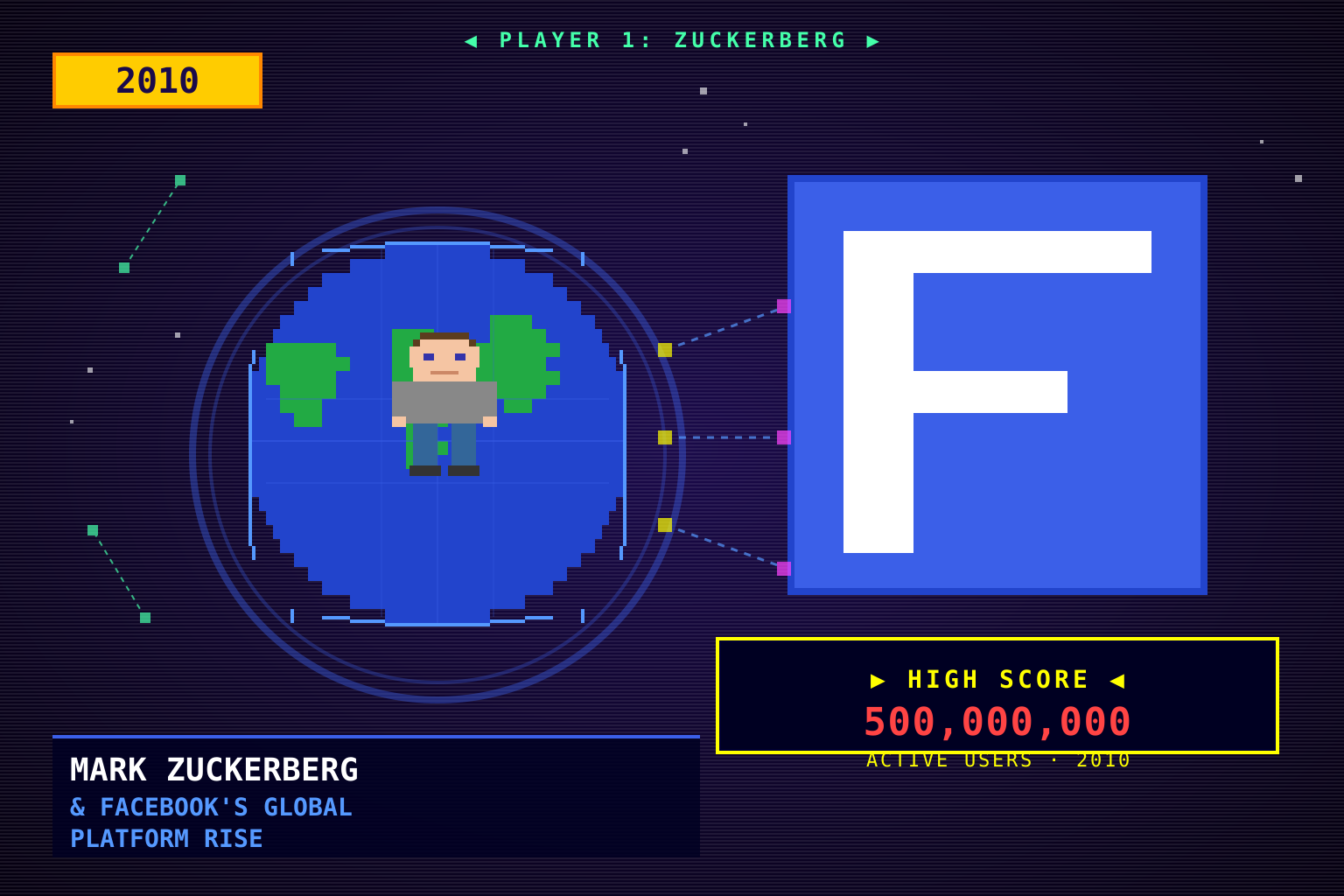
On July 21, 2010, Zuckerberg announced in a blog post that Facebook had reached 500 million active users, adding that more than half of them — 250 million — logged in on any given day. For context: the global internet user population at the time was approximately 2 billion. Facebook had grown from roughly 350 million users at the start of 2010, representing net additions of more than 150 million users in six months. The milestone attracted international media coverage and crystallized Facebook’s position as the dominant social network, at a moment when competitors including MySpace (which peaked at approximately 75–100 million users) and Friendster (which had pivoted away from social networking) were in obvious decline. MySpace had been acquired by News Corporation in 2005 for $580 million and was sold in 2011 for just $35 million — a collapse that underscored Zuckerberg’s strategic advantage.
The 500-million-user announcement coincided with the publication of a major profile in The New Yorker (October 2010) and preceded the October 1 theatrical release of The Social Network, David Fincher’s biographical film dramatizing Facebook’s founding. Together, these events made Zuckerberg one of the most discussed individuals of 2010 and culminated in his selection as Time Person of the Year, announced on December 15, 2010.
Open Graph and the Platform Strategy
On April 21, 2010, at Facebook’s f8 developer conference in San Francisco, Zuckerberg unveiled the Open Graph — a system enabling third-party websites and applications to integrate Facebook’s social layer by embedding “Like” buttons and sharing metadata. The Open Graph represented a strategic pivot: rather than keeping social activity within Facebook.com, Zuckerberg sought to extend Facebook’s identity layer across the entire web. Participating sites could embed the “Like” button, allowing users to signal preferences that would then appear in their Facebook news feeds, creating a feedback loop that drove traffic back to publisher sites while enriching Facebook’s user behavior data.
Within 24 hours of launch, more than 50,000 websites had integrated the Like button. By the end of 2010, the button appeared on hundreds of millions of pages. The Open Graph also enabled Facebook Connect, an identity and authentication system that allowed users to log into third-party services using their Facebook credentials — reducing friction for new service sign-ups and making Facebook an identity provider for large portions of the web. This platform positioning was strategically transformative: it made Facebook indispensable to web developers and contributed to a lock-in effect that extended far beyond Facebook.com itself.
The Social Network Film and Public Image
The theatrical release of The Social Network on October 1, 2010, directed by David Fincher from a screenplay by Aaron Sorkin (based on Ben Mezrich’s book The Accidental Billionaires), forced a widespread public reckoning with the mythology and ethics of Facebook’s founding. The film dramatized the dispute between Zuckerberg and co-founders Eduardo Saverin and the Winklevoss twins, portraying Zuckerberg as a brilliant but ruthless figure who gained success partly through betrayal. Zuckerberg publicly disputed the film’s accuracy, calling specific scenes “fictional,” and the portrayal conflicted sharply with Facebook’s self-presentation as a platform built for community and connection.
The film won three Academy Awards (Best Adapted Screenplay, Best Film Editing, Best Original Score), grossed approximately $224 million at the worldwide box office, and generated sustained discourse about entrepreneurship, ethics, and the social costs of disruption. Despite Zuckerberg’s objections, the film’s narrative shaped public perception of him and Facebook for years. See: The Social Network (2010 film).
Privacy Controversies and Regulatory Scrutiny
2010 was also the year in which Facebook’s data practices attracted significant institutional criticism. In April 2010, Facebook introduced “instant personalization” — a feature that shared user data with partner websites by default rather than requiring opt-in. The Electronic Privacy Information Center (EPIC) filed a formal complaint with the Federal Trade Commission (FTC) in May 2010, alleging that Facebook’s changes to privacy defaults violated FTC guidelines. In the same month, Canada’s Privacy Commissioner found that Facebook had violated the Canadian Personal Information Protection and Electronic Documents Act (PIPEDA) with respect to third-party application data access, and Facebook agreed to make changes.
These incidents established a pattern of regulatory friction and backlash that would intensify throughout the 2010s. Zuckerberg’s public responses — characterizing privacy concerns as reflecting an outdated social norm and defending Facebook’s platform openness — drew criticism from privacy advocates and began a decades-long regulatory conversation about the responsibilities of large technology platforms toward users’ personal data.
The Tech Landscape Context
Facebook’s 2010 trajectory unfolded within a broader technology landscape in which social media platforms were competing intensely for attention, advertising revenue, and developer ecosystems. Twitter, which grew from approximately 75 million to 175 million registered users during 2010, was Facebook’s most visible rival for real-time social sharing, though the two platforms served different use cases. See: Twitter and Social Media Growth in 2010. Instagram, launched October 6, 2010, demonstrated that specialized mobile-first social applications could achieve rapid user acquisition — Instagram reached 1 million users within two months of its launch, a trajectory that ultimately led Facebook to acquire it for approximately $1 billion in April 2012. See: Instagram Launch.
Significance
Mark Zuckerberg’s 2010 leadership established him as one of the defining figures of the technology industry and the decade that followed. His decisions in 2010 — particularly around Open Graph, aggressive international expansion, and the use of Facebook as an identity layer across the web — set Facebook on a trajectory to become not just a social network but a fundamental infrastructure layer of the internet itself. The platform’s 500-million-user milestone represented the first time a single social application had enrolled a meaningful fraction of the global internet population. In 2010, Zuckerberg was celebrated as a visionary entrepreneur who democratized social connection; the ethical and societal consequences of his platform — surveillance capitalism, filter bubbles, election interference, mental health impacts — would become subjects of intense public and regulatory scrutiny in the years that followed. His role in 2010 exemplified how a single technology leader could influence the trajectory of billions of people’s communication and information access, establishing precedents that would define debates about technology, responsibility, and power throughout the 2010s.
Related
- The Social Network (2010 film) — the Fincher/Sorkin dramatization of Facebook’s founding that shaped Zuckerberg’s public image
- Twitter and Social Media Growth in 2010 — Facebook’s primary rival in real-time social sharing
- Instagram Launch — mobile-first social photography app founded October 6, 2010; acquired by Facebook in 2012
Sources
- Facebook: 500 Million Users and Counting
- The Facebook Effect: The Real Inside Story of Mark Zuckerberg and World’s Fastest-Growing Company
- Mark Zuckerberg Biography and 2010 Milestones
- Open Graph Launch at f8 Conference – April 2010
- Time Person of the Year 2010: Mark Zuckerberg
- EPIC v. Facebook FTC Complaint – May 2010