Key figures: Elon Musk (CEO), Martin Eberhard (co-founder), Marc Tarpenning (co-founder), Jeffrey Evanson (investor relations).
Summary
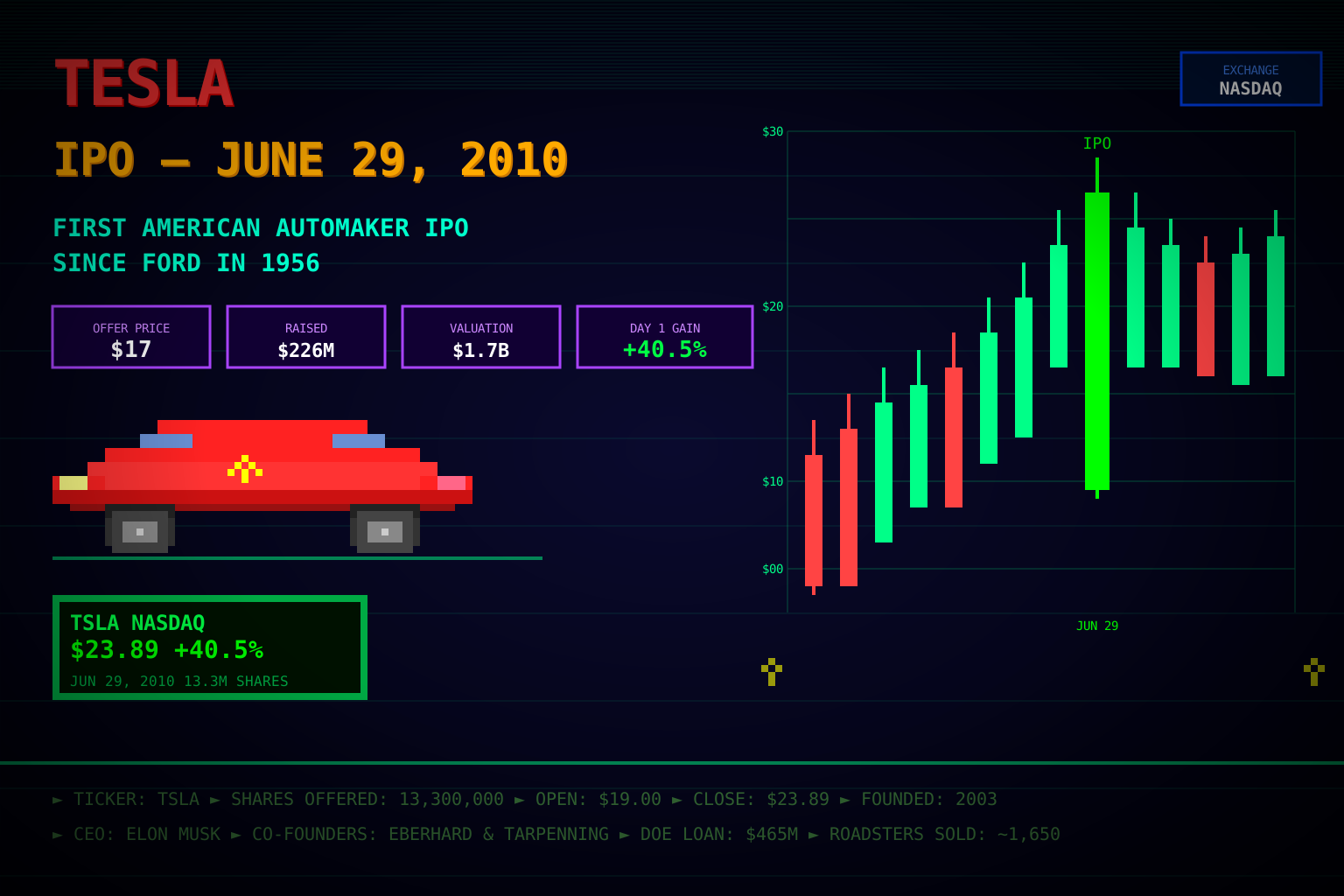
On June 29, 2010, Tesla Motors held its initial public offering on the NASDAQ exchange under the ticker symbol TSLA, becoming the first American automaker to go public since Ford Motor Company in 1956. The company offered 13.3 million shares at $17 per share, raising approximately $226 million. The stock opened at $19 and closed at $23.89—a 40.5% first-day gain—signaling strong investor confidence in electric vehicle technology and sustainable transportation, despite a broader market downturn on the same day. The IPO valued Tesla at approximately $1.7 billion, roughly eleven times the company’s then-total lifetime revenues.
Background and Pre-IPO Context
Tesla was founded in 2003 by Martin Eberhard and Marc Tarpenning, with Elon Musk joining as chairman and primary funder in 2004 after contributing $6.5 million in Series A funding. By 2010, the company had sold approximately 1,650 Roadster sports cars at prices starting around $109,000, generating roughly $150 million in cumulative revenues—almost entirely from that single vehicle.
The IPO was not Tesla’s first attempt at public funding. The company had quietly filed its S-1 registration with the Securities and Exchange Commission on January 29, 2010, but had previously benefited from a critical $465 million U.S. Department of Energy loan in January 2010 under the Advanced Technology Vehicles Manufacturing Loan Program—the same program that funded Fisker Automotive. That federal backstop was widely credited with making the public offering viable by providing a substantial capital cushion beyond investor funds. The underwriters Goldman Sachs and Morgan Stanley priced the offering at the top of the initial $14–16 range, ultimately at $17, after significant institutional demand.
At the time of the IPO, Tesla’s next vehicle—the Model S sedan—was still in development, with production not scheduled until 2012. The company was therefore being valued almost entirely on its vision and engineering capabilities rather than demonstrated revenue potential.
IPO Day: Trading Details
The June 29 offering launched into a difficult market environment: the Dow Jones Industrial Average fell more than 2% that day, dragged down by concerns over European sovereign debt and weak U.S. economic data. That TSLA still surged 40.5%—from an offering price of $17 to a close of $23.89—was seen as a striking vote of confidence.
- Shares offered: 13.3 million (plus an overallotment option of approximately 1.99 million shares)
- Offer price: $17.00 per share
- Opening trade: $19.00 per share
- Closing price (Day 1): $23.89 per share
- Market capitalization at close: approximately $1.7 billion
- Total proceeds raised: approximately $226 million
- Volume traded on Day 1: approximately 18.7 million shares, nearly 1.4× the float
A $10,000 investment at the IPO price of $17 per share would have purchased 588 shares. By mid-2025, those shares (adjusted for a 5-for-1 stock split in August 2020 and a 3-for-1 split in August 2022) would have been worth approximately $2.86 million—a ~286-fold return and one of the largest gains from any major U.S. IPO of the decade.
Significance
Tesla’s IPO represented a pivotal watershed moment for the electric vehicle industry and cleantech investment. By demonstrating that a startup EV manufacturer could access public capital markets and attract institutional investors, Tesla fundamentally changed perceptions of electric vehicles—from niche novelty to legitimate, scalable transportation technology. The strong first-day performance, despite the company’s still-modest revenue and single-vehicle product, signaled that the investment community believed in the long-term viability of EV platforms and Elon Musk’s vision of mass-market electrification.
The IPO catalyzed broader institutional interest in cleantech over the subsequent decade. Tesla’s successful execution on Model S production (launched June 2012), subsequent Model X (2015) and Model 3 (2017) vehicles, and eventual S&P 500 inclusion in December 2020 validated the market’s 2010 bet. The company’s stock reached an all-time intraday high of $414.50 (split-adjusted) in November 2021, roughly 24× the IPO price on a split-adjusted basis, and the company eventually surpassed a $1 trillion market capitalization—a figure that exceeded the combined market cap of the entire legacy automotive industry at the time.
Beyond Tesla itself, the IPO reset expectations for what a capital-intensive hardware startup could achieve through public markets, influencing the valuations of Rivian (which went public in November 2021 at a $66.5 billion valuation despite minimal revenue) and Lucid Motors, both of which cited Tesla’s market-making precedent.
Industry Context: The Automotive Landscape in 2010
The 2010 automotive sector was still recovering from a crisis that had seen General Motors and Chrysler enter Chapter 11 bankruptcy in 2009 and accept federal bailouts totaling $85 billion. Against this backdrop, Toyota—then the world’s largest automaker—was navigating a massive recall crisis involving unintended acceleration in millions of vehicles (see: Toyota Recall Crisis). Tesla’s IPO thus entered an industry undergoing profound structural stress, making its public-market debut all the more remarkable.
No major U.S. automaker had successfully gone public since Ford’s 1956 offering raised $657 million in what was then one of the largest IPOs in American history. The 54-year gap between Ford and Tesla reflected both the capital intensity of automaking (which typically led companies to remain private or be absorbed into larger conglomerates) and the regulatory and manufacturing complexity that deterred startup entrants.
Related
- SpaceX Falcon 9 / Dragon COTS Demo-1 — Elon Musk’s other company achieved a historic first orbital flight of a commercial spacecraft in December 2010, further elevating Musk’s profile as a visionary entrepreneur.
- Venture Capital Recovery in 2010 — The broader VC and IPO market context in which Tesla launched.
- Flash Crash — Market volatility earlier in 2010 that highlighted the fragility of the equity markets Tesla was entering.
- Toyota Recall Crisis — The troubled state of the incumbent automotive industry against which Tesla’s IPO was set.
Sources
- CNBC: Tesla’s IPO was 15 years ago. The stock is up almost 300-fold since then.
- TechCrunch: Tesla IPO Shares Pop, Drop, And Rally. Market Values It At $1.7 Billion.
- CNN Money: Tesla IPO has investors giddy but auto experts wary (Jun. 29, 2010)
- U.S. News & World Report: How Much Would $10,000 Invested in Tesla Stock at IPO Be Worth Today?
- U.S. Department of Energy: Tesla Advanced Technology Vehicle Manufacturing Loan