Key figures: Eben Upton (co-founder and trustee, Raspberry Pi Foundation); the Raspberry Pi Foundation (University of Cambridge Computer Laboratory)
Summary
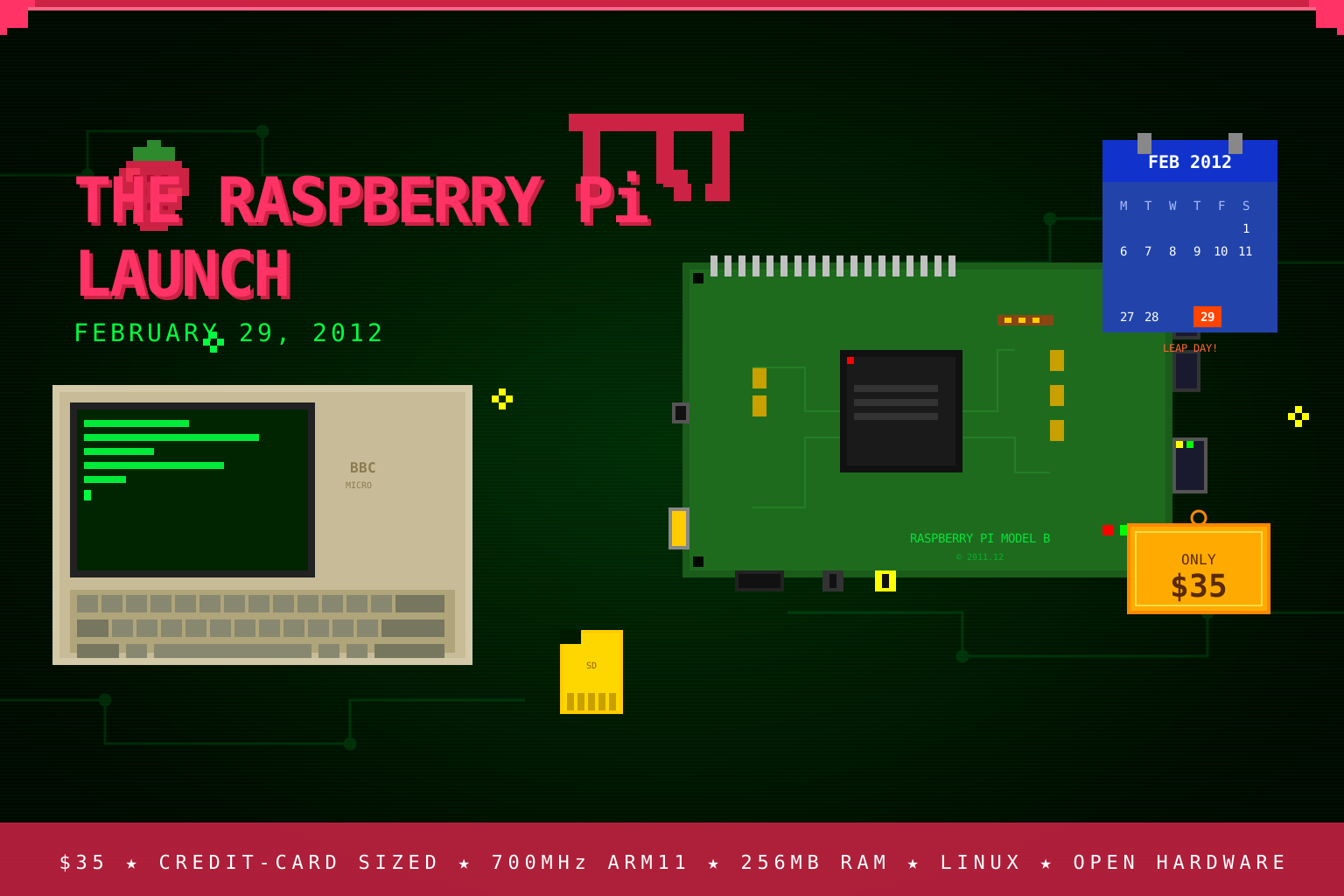
On 29 February 2012 — a leap day — the Raspberry Pi Foundation, a British educational charity, released the Raspberry Pi Model B, a bare, credit-card-sized single-board computer priced at $35. Built around a Broadcom BCM2835 system-on-chip with a 700 MHz ARM11 processor and 256 MB of RAM (upgraded to 512 MB in October 2012), the board offered HDMI and composite video output, USB and Ethernet ports, and an SD-card slot for storage, and ran Linux-based operating systems such as the Debian-derived Raspbian. A stripped-down Model A, priced at $25, followed in early 2013.
The Foundation had been established around 2008–2009 by a group associated with the University of Cambridge Computer Laboratory, including Eben Upton, in response to a marked decline in the number and preparedness of students applying to study computer science. Its founders argued that the rise of games consoles and locked-down consumer devices had displaced the accessible, programmable home computers of the 1980s — machines like the BBC Micro and ZX Spectrum on which many British engineers had first learned to code. The Raspberry Pi was conceived as a cheap, open, “hackable” computer that schoolchildren could program, modify, and even damage without significant cost.
Demand on launch day vastly exceeded expectations. The Foundation licensed manufacturing and distribution to two established electronics suppliers, RS Components and Premier Farnell (element14), and the websites of both were overwhelmed and crashed within minutes as buyers rushed to order the first batch of 10,000 units. One distributor reported more than 100,000 expressions of interest or pre-orders on the first day. Initial boards were manufactured in Asia, but in September 2012 production moved to a Sony factory in Pencoed, Wales.
Significance
The Raspberry Pi became one of the defining computing products of the 2010s and a catalyst for the global “maker” movement. By October 2013 the Foundation had sold one million units, and by February 2016 the Raspberry Pi had overtaken Sinclair’s ZX Spectrum to become the best-selling British computer of all time, with tens of millions of units sold in later years. Its low cost and open design made it a fixture in classrooms, university laboratories, hobbyist projects, industrial prototypes, and internet-of-things devices worldwide.
More broadly, the Pi’s arrival ran counter to the prevailing 2012 trend toward sealed, consumption-oriented consumer electronics epitomised by the Apple iPhone 5 and Windows 8. Where those platforms emphasised polished, tightly controlled experiences, the Raspberry Pi deliberately exposed its hardware and invited tinkering — an ethos aligned with the open-internet activism that animated the year’s SOPA/PIPA protests. The device is widely credited with helping to reshape computing curricula, contributing to the introduction of programming and computer science into the school syllabus in the United Kingdom and elsewhere later in the decade.
Key Facts
- Launch date: 29 February 2012 (Model B)
- Price: $35 (Model B); a $25 Model A followed in 2013
- Hardware: Broadcom BCM2835 SoC, 700 MHz ARM11 CPU, 256 MB RAM at launch (512 MB from October 2012); runs Linux (e.g. Raspbian)
- Maker: the Raspberry Pi Foundation, a UK educational charity linked to the University of Cambridge Computer Laboratory; co-founder Eben Upton
- Mission: reverse declining computer-science enrolment by providing a cheap, programmable computer for schools and hobbyists
- Launch demand: distributors RS Components and Premier Farnell crashed under traffic; first batch of 10,000 units sold out rapidly
- Manufacturing: moved to Sony’s Pencoed, Wales factory in September 2012
- Milestones: 1 million units sold by October 2013; best-selling British computer of all time by 2016
See Also
- Apple iPhone 5 Launch — the flagship sealed consumer device of 2012, a contrast to the Pi’s open design
- Windows 8 Release — Microsoft’s 2012 consumer-platform bet, released the same year
- SOPA and PIPA Internet Activism — the 2012 open-internet movement whose ethos the Pi shared