Key figures: J.K. Rowling (author), Jason Cockcroft (UK illustrator), Mary GrandPré (US illustrator), Arthur A. Levine (US editor), Scholastic and Bloomsbury Publishing (publishers), Barry Cunningham (original UK editor who signed Rowling in 1997)
Summary
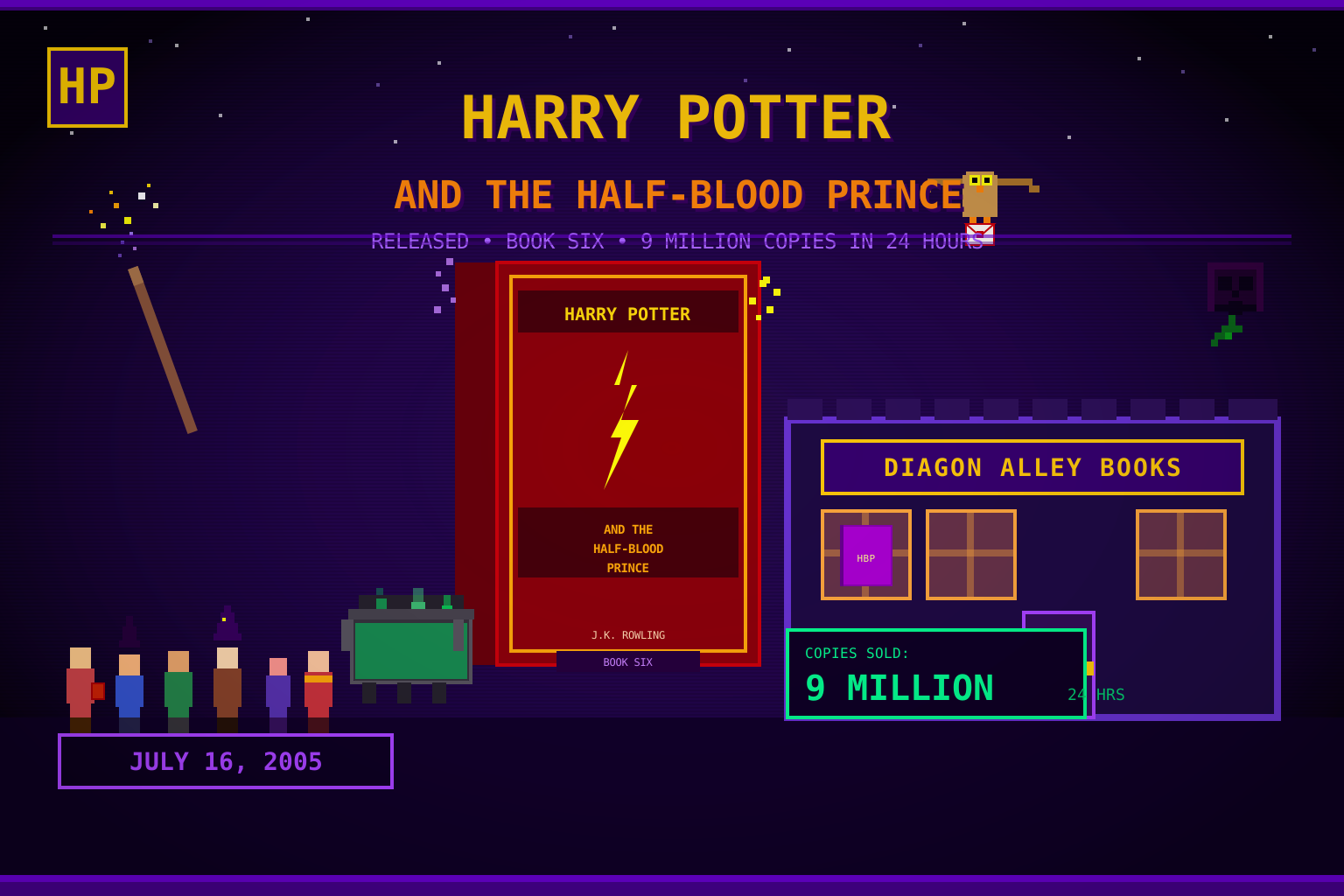
J.K. Rowling’s Harry Potter and the Half-Blood Prince, the sixth novel in the Harry Potter series, was released on July 16, 2005. Published simultaneously by Bloomsbury Publishing in the United Kingdom and Scholastic Books in the United States, the 607-page book achieved unprecedented commercial success. It sold approximately 9 million copies worldwide in its first 24 hours — 2 million in the UK and approximately 6.9 million in the US — with an initial global print run of 10.8 million copies. Within nine weeks, 11 million copies had sold in the United States alone.
The novel broke pre-order records on Amazon with 1.4 million advance orders, surpassing its predecessor Harry Potter and the Order of the Phoenix. Midnight release events became a cultural phenomenon, with fans queuing outside bookstores to obtain copies at the earliest moment. A controversy emerged when Canadian retailers inadvertently sold copies before the authorized July 16 release date, prompting legal action regarding copyright protection.
The book’s darker tone compared to earlier instalments in the series resonated with readers and critics alike, who praised its character development and escalating narrative complexity. The novel received the 2006 British Book of the Year Award and recognition from the American Library Association, reflecting its artistic achievement alongside commercial dominance.
Publishing Context
By 2005, Harry Potter was one of the most commercially significant literary franchises in history. Harry Potter and the Order of the Phoenix (2003) had itself broken US records with 5 million first-day sales. The eight-year run from 1997’s Philosopher’s Stone had accumulated translations into more than 65 languages across over 200 countries.
Bloomsbury and Scholastic coordinated unprecedented secrecy around the manuscript. Advance review copies were withheld from critics, and plot details were classified — even the 607-page length was not disclosed until close to publication. Print-run logistics involved more than 35 separate printing facilities in the US alone, each operating under confidentiality agreements. The initial US print run of 10.8 million copies was the largest first printing in American publishing history at that time.
The Midnight Launch Phenomenon
The July 16 release date fell on a Saturday to allow maximum retail participation. Bookstores worldwide — particularly chains such as Borders, Barnes & Noble, and independent booksellers — organised midnight opening events with costume contests, trivia games, and theatrical readings. Train companies in the United Kingdom reported significantly elevated passenger numbers as readers traveled to city-centre stores for midnight openings.
In Canada, the premature sale by at least one Wal-Mart store led to a court injunction requiring purchasers to either return copies unopened or sign agreements not to discuss contents before the official release. The controversy paradoxically amplified pre-publication excitement.
The 24-hour sales figure of 9 million copies represented approximately one book sold every 9.4 seconds throughout that first day. Scholastic’s distribution network engaged roughly 13,000 UPS trucks to deliver pre-orders across the United States on release day alone.
Narrative and Characters
Half-Blood Prince is set during Harry Potter’s sixth year at Hogwarts School of Witchcraft and Wizardry. It is distinguished by its deepening of the mythology surrounding the series’ antagonist, Lord Voldemort, through a series of memory-based flashbacks presented by headmaster Albus Dumbledore. The novel introduces the concept of Horcruxes — objects in which Voldemort has concealed fragments of his soul — which became the central narrative device of the seventh and final volume, Harry Potter and the Deathly Hallows (2007).
The novel’s tone is notably darker than preceding volumes; Rowling acknowledged in interviews that the sixth book was the most emotionally difficult to write. The title character, the “Half-Blood Prince,” is revealed in the novel’s climax in a plot twist that reconfigured readers’ understanding of established characters and generated extensive public discussion in the weeks following publication.
Critical Reception
Critical response was strongly positive. The New York Times and The Guardian praised Rowling’s narrative control and the coherence of the series’ expanding mythology. Publishers Weekly noted the book’s mature handling of loss and mortality, themes that distinguished it from the series’ early tone. The novel’s penultimate chapter drew particular critical and reader attention for a major plot development that reoriented the trajectory of the final volume.
The novel received the 2006 British Book of the Year Award — the Nibbies — from The Bookseller magazine, recognising commercial achievement alongside literary merit. The American Library Association included it in its Notable Children’s Books list.
Industry Impact
The Half-Blood Prince’s commercial performance accelerated ongoing structural shifts in publishing. Its simultaneous global release model, strict street-date enforcement, and maximised pre-order cycle became templates applied to major releases across fiction and non-fiction. The logistics of delivering pre-ordered copies — engaging national courier fleets and coordinated retail operations — presaged supply-chain strategies later applied to physical media releases in film and gaming.
The release also demonstrated the emerging interaction between franchise publishing and early internet culture: Harry Potter fan communities on LiveJournal, early forums, and nascent blogging networks coordinated real-time reactions that amplified media coverage well beyond traditional book-review circuits, an early instance of the social-media fan engagement that would reshape entertainment marketing in subsequent years.
Significance
The release of Half-Blood Prince marked a watershed moment in publishing history. Its sales velocity and global readership demonstrated the Harry Potter franchise’s undiminished cultural grip in 2005, eight years after the first book’s 1997 debut. The novel’s commercial success influenced publishing industry practices, establishing new templates for simultaneous worldwide releases, coordinated marketing campaigns, and midnight-launch events that would become standard for major book releases. The phenomenon illustrated how literary franchises could command mass-market attention comparable to blockbuster cinema, reshaping publishing economics and author prominence in popular culture during the mid-2000s.
Related Topics
- Star Wars: Revenge of the Sith (2005) — another major franchise conclusion dominating 2005 popular culture
- The Lion, the Witch and the Wardrobe (2005) — adaptation of a beloved fantasy series released later in December 2005
- Live 8 concerts (2005) — the other dominant cultural event of the same week, July 2, 2005
- Coldplay releases X&Y (2005) — the year’s best-selling album, released six weeks before Half-Blood Prince