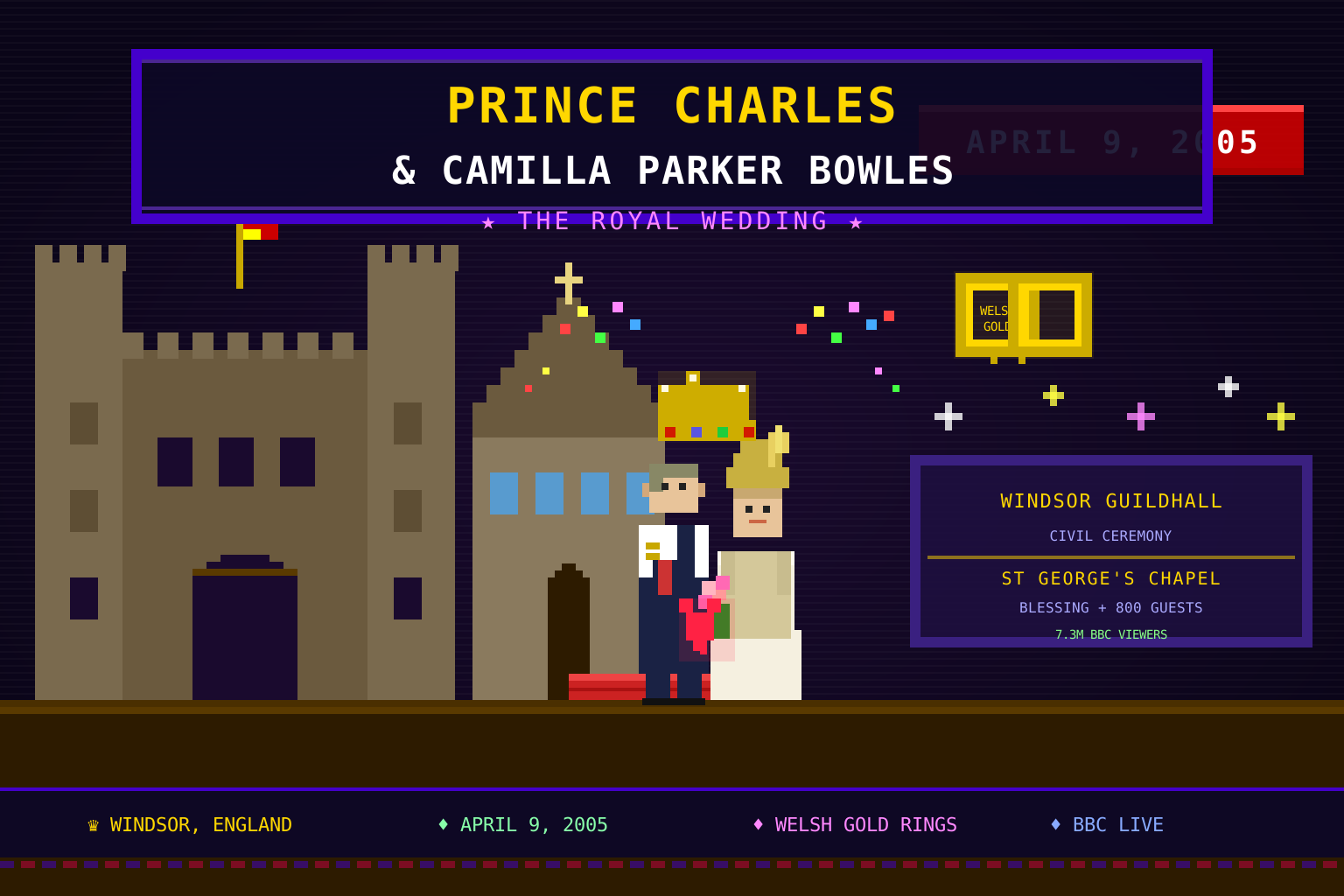
Key figures: Prince Charles (Prince of Wales), Camilla Parker Bowles, Queen Elizabeth II, Archbishop of Canterbury Rowan Williams
Summary
On April 9, 2005, Prince Charles, heir to the British throne, married Camilla Parker Bowles in a two-part ceremony at Windsor, England. The civil marriage took place at Windsor Guildhall with limited attendance—restricted to close family members, notably excluding Queen Elizabeth II and Prince Philip—before transitioning to a Service of Prayer and Dedication at St George’s Chapel, Windsor Castle, where approximately 800 guests witnessed the blessing. The ceremony was witnessed by Prince William and Prince Harry (Charles’s sons) and Tom Parker Bowles (Camilla’s son). The attendees included senior members of the royal family, foreign royalty, British political leaders including Prime Minister Tony Blair, religious figures led by Archbishop of Canterbury Rowan Williams, and notable public figures such as Stephen Fry and Rowan Atkinson. Camilla wore a cream dress and coat designed by Robinson Valentine with a Philip Treacy hat, and the couple exchanged rings fashioned from Welsh gold from the Clogau St David’s mine. The BBC broadcast the ceremony live to approximately 7.3 million viewers. The Queen hosted a reception at Windsor Castle following the Service, and the couple honeymooned at Birkhall on the Balmoral Estate.
Background
Charles and Camilla first met in 1970 and had maintained a relationship, with varying degrees of publicity, across nearly four decades. Charles married Lady Diana Spencer on July 29, 1981, in a ceremony at St Paul’s Cathedral watched by an estimated 750 million television viewers worldwide. That marriage ended in divorce in August 1996, and Diana died in a Paris car crash on August 31, 1997. Camilla had herself been married to Brigadier Andrew Parker Bowles from 1973 to 1995.
Public and institutional resistance to the relationship was substantial throughout the 1990s, driven in part by Diana’s documented unhappiness and the sympathetic public narrative around her. By the early 2000s, however, opinion polls showed a gradual softening: a 2004 survey found around 65% of Britons supportive of the marriage, provided Camilla did not become Queen. The Church of England’s own General Synod had ruled in 2002 that remarriage after divorce was permissible in exceptional circumstances, clearing the canonical obstacle that had long been cited as a barrier.
The postponement
The wedding had originally been scheduled for April 8, 2005, but was moved back by one day after the state funeral of Pope John Paul II was confirmed for that date at St Peter’s Basilica in Rome. Prince Charles attended the Pope’s funeral on April 8; the Vatican ceremony drew more than 200 heads of state and government in what was described as one of the largest gatherings of world leaders in history. The rescheduling required fresh legal paperwork, as the registrar’s licence was date-specific, and prompted a brief public exchange between Clarence House and Windsor Borough Council.
The ceremony in detail
The civil ceremony at Windsor Guildhall lasted approximately twenty minutes and was open only to around 30 close family members. Queen Elizabeth II and Prince Philip chose not to attend the civil register ceremony—Buckingham Palace indicated the Queen wished to host the subsequent reception rather than participate in both events—though they were both present for the religious blessing at St George’s Chapel.
At St George’s Chapel the Service of Prayer and Dedication was conducted by the Archbishop of Canterbury, Rowan Williams. In a striking gesture of transparency, both Charles and Camilla publicly recited a general confession from the 1662 Book of Common Prayer acknowledging their “manifold sins and wickedness”—a passage described by commentators as the most candid act of penitence ever performed publicly by senior royals. The service lasted about 45 minutes.
Camilla’s title upon marriage became HRH The Duchess of Cornwall for most purposes in the United Kingdom; in Scotland she was known as the Duchess of Rothesay. Clarence House announced that, should Charles become king, she intended to be known as Princess Consort rather than Queen Consort—a distinction later reversed: when Charles acceded to the throne as King Charles III in September 2022, Camilla became Queen Consort and was crowned alongside him at Westminster Abbey on May 6, 2023.
The couple’s wedding rings were fashioned from Welsh gold, continuing a royal tradition dating to 1923, when the future Queen Elizabeth The Queen Mother’s wedding ring was made from gold mined at the Clogau St David’s mine near Dolgellau. Gold from the same Welsh source has been used for royal wedding rings across subsequent generations.
Media and public reaction
Television audiences in the United Kingdom peaked at approximately 7.3 million for the BBC live broadcast, considerably below the 28 million who watched Charles and Diana’s 1981 wedding. An estimated 20,000 well-wishers lined Windsor’s streets on the day. International coverage was extensive: American networks including NBC, ABC, CBS, and CNN carried live or same-day footage.
Opinion polling conducted in the days following the wedding showed around 60% of British respondents supportive of the marriage, while a minority—particularly among older age groups—continued to express reservations. The wedding received broadly positive coverage in the Commonwealth realms, though media in Australia and Canada noted the absence of Prime Ministers from either country among the 800 guests.
Significance
The wedding marked a historic moment for the British monarchy and the culmination of a relationship spanning decades. Charles’s marriage to Camilla, following his 1981–1996 marriage to Diana and the public controversy surrounding his post-Diana relationship with Camilla, represented a significant shift in royal precedent and public acceptance. The event demonstrated the monarchy’s capacity to adapt ceremonial and religious practices to contemporary circumstances.
The 2005 wedding occurred within a year dense with consequential events for European heads of state: Pope John Paul II died two weeks before the ceremony, and Pope Benedict XVI was elected just ten days after. In July, Prime Minister Tony Blair—who had attended the Windsor reception—faced the immediate aftermath of the 7 July London bombings before hosting the G8 summit at Gleneagles.