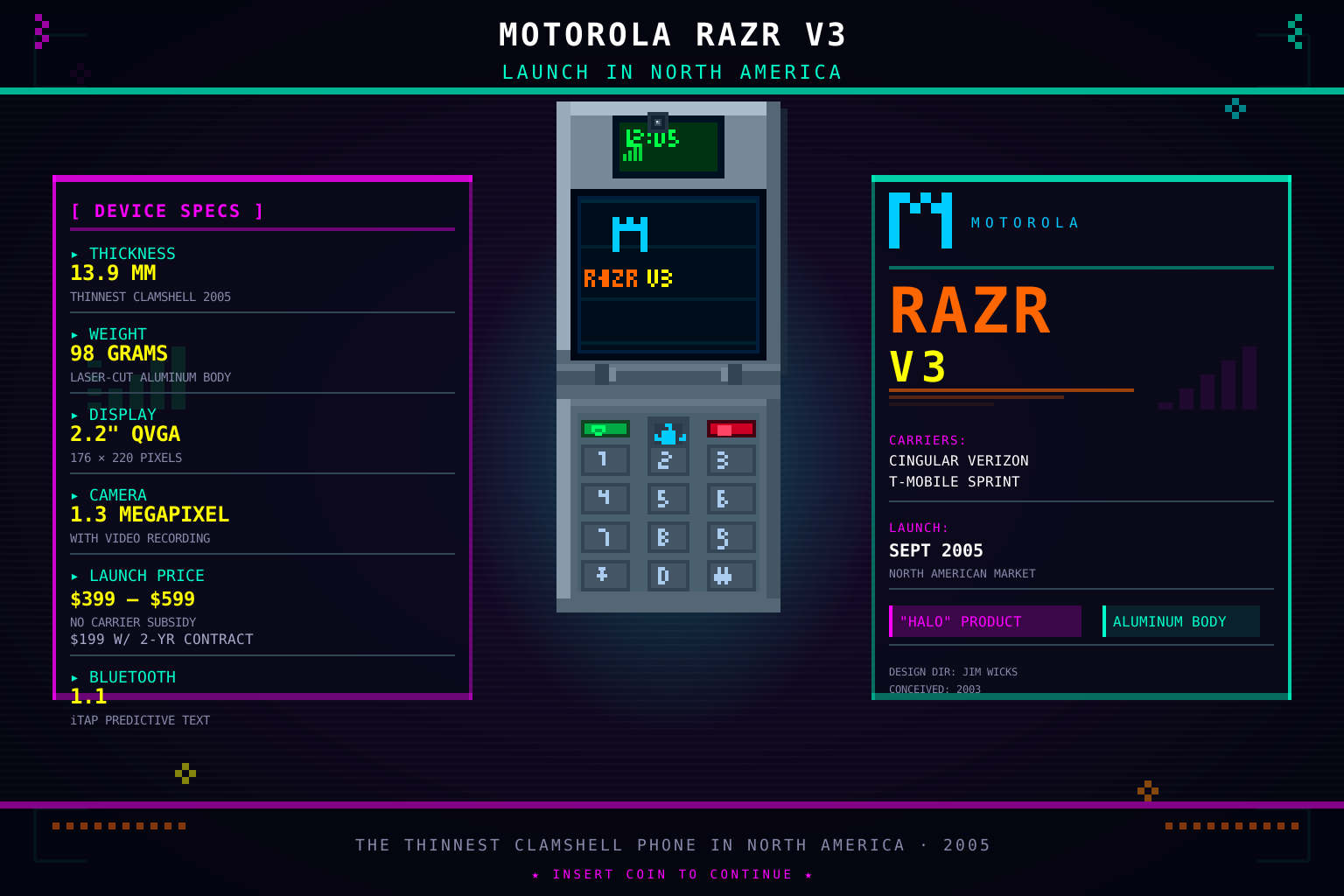
Key figures: Motorola Inc., Jim Wicks (Director of Consumer Experience Design); Cingular Wireless (original US launch carrier, 2004) and Verizon Wireless, T-Mobile, and Sprint (carriers added as availability broadened in 2005)
Summary
Motorola released the RAZR V3 flip phone to the broader North American consumer market in late September 2005, making widely available a device that had debuted at a premium price in 2004. At just 13.9 mm thick and 98 grams, the RAZR was the thinnest clamshell mobile phone available in North America at the time of its consumer-market launch, a feat achieved through the use of laser-cut aluminum rather than the molded plastic prevalent in competing handsets.
The device featured:
- 2.2-inch QVGA internal color display (176 × 220 pixels)
- 1.3-megapixel integrated camera with video recording
- Dual-display design (outer 96 × 80-pixel monochrome screen for caller ID and notifications)
- Bluetooth 1.1 and Motorola’s proprietary mini-USB connector
- Internal antenna (eliminating the external stub common on phones of the era)
- iTAP predictive text and a chemically etched keypad machined from a single aluminum sheet
Initially priced at $399–$599 without carrier subsidy, the RAZR dropped to $199–$299 with a two-year Verizon contract, and ultimately to $49–$99 by late 2006 as subsidies deepened and competition increased.
Design Origins
The RAZR was conceived in 2003 as a “halo” product—an aspirational device meant to signal Motorola’s return to design leadership. The industrial design team, led by Jim Wicks and working at Motorola’s facility in Libertyville, Illinois, aimed explicitly to make a phone that felt more like a luxury consumer good than a communications tool. The machined aluminum casing, borrowed from aerospace manufacturing techniques, was a significant cost and engineering challenge: early prototypes proved too fragile, requiring months of materials engineering before the production unit achieved the required drop-test durability.
Significance
Sales and Market Impact
The RAZR’s North American mass-market availability in 2005 coincided with the height of the clamshell era, and the device’s appeal proved remarkable in breadth. By the end of 2006, Motorola had sold over 50 million RAZR units globally; total lifetime sales across all RAZR variants ultimately exceeded 130 million units, making it one of the best-selling mobile phones ever manufactured. At the product’s peak, Motorola held roughly 22% of the global mobile phone market (2006), up from 15% in 2003, a resurgence largely attributed to the RAZR’s halo effect lifting the entire product line.
Carrier subsidy economics transformed the RAZR from a luxury item to a mass-market device within eighteen months of its initial release. By mid-2006, it was available for free with a contract at many US carriers—a price point that dramatically broadened adoption across income levels.
Influence on Phone Design
The RAZR established thinness as a primary competitive axis for mobile phones. Competitors including Nokia, Samsung, and LG scrambled to produce ultra-thin handsets in response; Samsung’s Ultra Edition line and LG’s Chocolate series both cited the RAZR as a direct prompt for their design directions. This competitive dynamic accelerated industrial investment in miniaturization, battery chemistry, and display technology throughout 2005–2007—developments that laid partial groundwork for the capabilities Apple would integrate into the original iPhone (2007).
Cultural Footprint
The RAZR became a genuine fashion object, appearing in films, television shows, and celebrity photographs throughout 2005–2007. Its silver-and-black aesthetic—described internally at Motorola as “liquid silver”—was adopted across accessories, consumer electronics, and automotive interiors during the same period, reflecting how influential a single consumer device’s visual language could be. The phone’s cultural status was reinforced by high-profile product placement deals and a memorable advertising campaign built around the tagline “Hello Moto.”
Competitive Landscape in 2005
The RAZR launched into a US mobile market where Nokia held overall leadership, Samsung was rapidly growing share, and the Sidekick (T-Mobile/Danger) had established a foothold among younger users. The smartphone category barely existed in mainstream consumer terms: the BlackBerry was a corporate tool, and Windows Mobile devices were expensive niche products. In this context, the RAZR’s combination of design cachet and relatively accessible price made it effectively unchallenged in the premium-but-not-smartphone segment for nearly two years.
See also: Apple releases the iPod Nano · Blu-ray vs. HD DVD format war begins · Xbox 360 launches