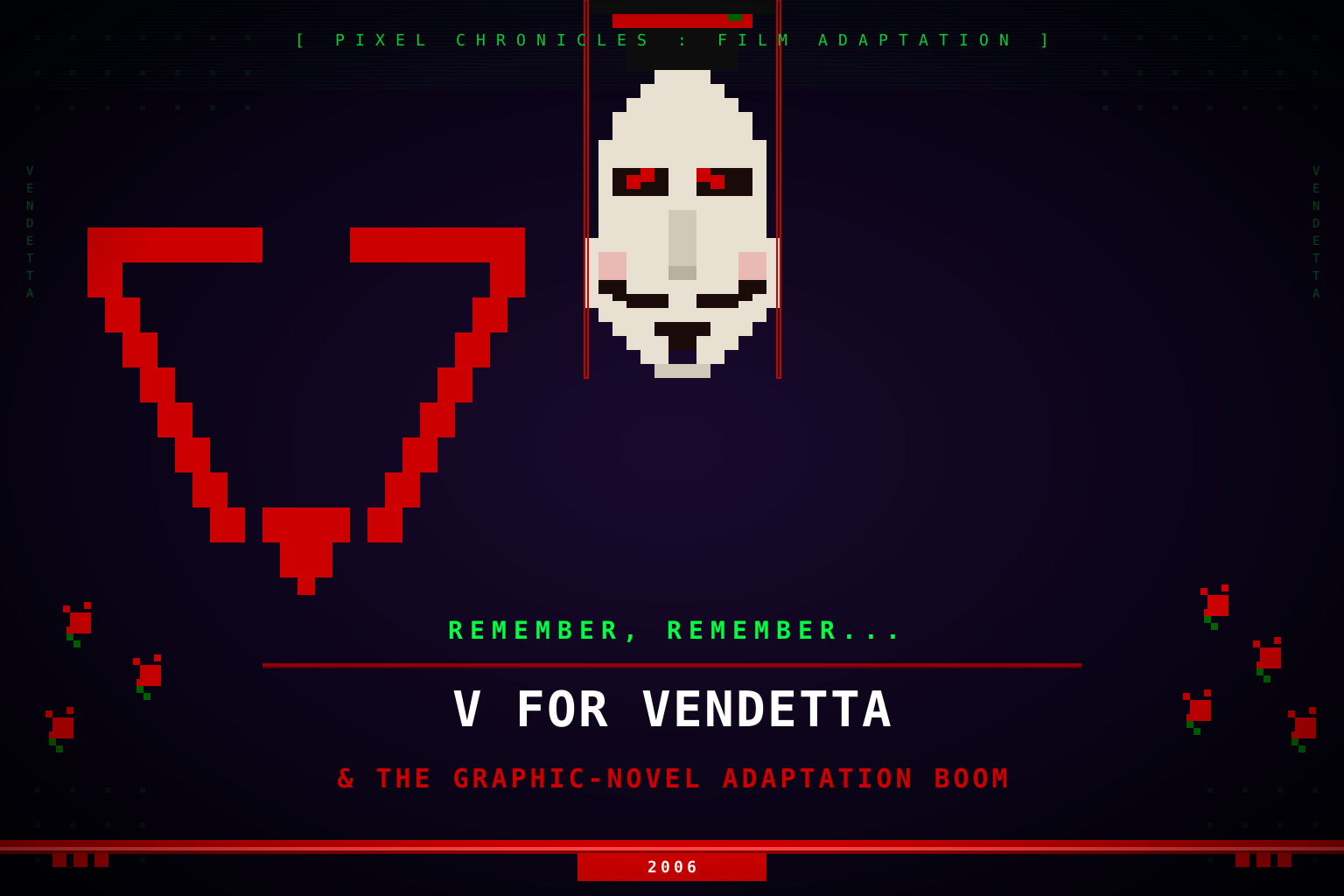
Key figures: James McTeigue (director), the Wachowski Sisters (writers/producers), Natalie Portman, Hugo Weaving, Stephen Rea; Alan Moore and David Lloyd (original graphic novel)
Summary
V for Vendetta, directed by James McTeigue and written by Lana and Lilly Wachowski, premiered on March 17, 2006, adapting the 1988–1989 graphic novel by Alan Moore and David Lloyd. The film stars Natalie Portman as Evey Hammond, a young woman drawn into the orbit of a masked anarchist revolutionary (Hugo Weaving as the voice and body of “V”) who targets the dystopian, totalitarian government of a future Britain. The Wachowskis’ script retained the graphic novel’s anarchist philosophy, anti-surveillance themes, and Roman-numeral poetry while translating it into a cinematic thriller contemporaneous with post-9/11 anxieties about government authority and civil liberties.
Warner Bros. distributed the film globally. It earned approximately $25.6 million in its North American opening weekend — opening at #1 — and went on to gross roughly $132.5 million worldwide against a production budget of approximately $54 million, a commercially successful outcome for a politically charged R-rated drama. Hugo Weaving performed the entire film behind the iconic Guy Fawkes mask without his face visible on screen, a technical and performative challenge that became part of the film’s cultural mystique.
Alan Moore’s Disavowal
Alan Moore, whose relationship with Hollywood adaptations of his work was already contentious after the mixed reception of From Hell (2001) and The League of Extraordinary Gentlemen (2003), publicly disavowed V for Vendetta before its release and removed his name from the credits. Moore objected to several key departures from the graphic novel — most notably the softening of V’s explicitly anarchist ideology into a more generalised anti-authoritarianism — and to Warner Bros.’ handling of the adaptation rights. His disavowal became a recurring subject of debate about the ethics and fidelity of comic-book adaptations.
Significance
Adaptation as Auteur Practice
V for Vendetta demonstrated that graphic-novel adaptations could be prestigious, politically engaged, and artistically ambitious rather than mere commercial vehicles for existing intellectual property. The Wachowskis’ involvement — themselves major-studio auteurs from The Matrix (1999) — elevated the project beyond typical comic-book movie stereotypes. McTeigue’s directorial debut successfully translated the medium’s panel-by-panel narrative into cinematic montage and choreography, adapting David Lloyd’s stark black-and-white composition into a baroque, rain-soaked palette.
Political Allegory in Mainstream Cinema
The film’s explicit anti-authoritarian politics were unusual for a major-studio release in 2006. Released during peak U.S. involvement in Iraq and Afghanistan and amid debates over the USA PATRIOT Act, warrantless surveillance, and “extraordinary rendition,” V for Vendetta spoke directly to contemporary anxieties in ways mainstream blockbusters rarely did. The line “People should not be afraid of their governments; governments should be afraid of their people” circulated widely online in 2006–07 as a meme before “meme” had its current meaning.
The Guy Fawkes Mask as Global Protest Symbol
The film’s most lasting cultural legacy was the transformation of the Guy Fawkes mask — worn by the protagonist V, and originally associated with the 1605 Gunpowder Plot against the English Parliament — into a symbol of political resistance worldwide. Beginning with anti-Scientology demonstrations by the Anonymous collective in January 2008, continuing through the Arab Spring of 2010–11, Occupy Wall Street (2011), and Brazilian protests (2013), the mask became the most recognisable visual shorthand for anti-establishment dissent in the social media era. This transformation from comic-book aesthetic detail to real-world protest icon was unprecedented and unanticipated at the film’s release.
A notable economic irony: the Guy Fawkes masks are licensed by Time Warner (the film’s studio), meaning that every mask purchased for political protest generates royalties for a major media corporation — a tension the original anarchist graphic novel could not have foreseen.
Catalyst for the Comic-Book Adaptation Boom
V for Vendetta arrived at a decisive inflection point in the 2000s comic-book adaptation wave. Along with Superman Returns (June 28, 2006) and the ongoing Marvel Studios pipeline, it helped demonstrate audience appetite for intelligent, visually sophisticated adaptations spanning superhero franchises and more literary graphic novels. The film’s success opened doors for subsequent prestigious adaptations: Zack Snyder’s Watchmen (2009), Robert Rodriguez’s Sin City (2005, validated by continued critical discussion through 2006), Marjane Satrapi’s animated Persepolis (2007 Cannes debut), and eventually the wave of streaming miniseries based on graphic novels in the 2010s–20s.
Related
- Casino Royale and Daniel Craig’s Bond reinvention — another 2006 film that gambled on a darker, more politically textured approach to familiar franchise material
- An Inconvenient Truth — a 2006 documentary that, like V for Vendetta, used non-fiction framing to foreground urgent political concerns
- Borat — another 2006 film that used satire and genre-bending to critique political culture
- Brokeback Mountain dominates the 2006 awards season — swept the same awards season, its Oscars decided at the 78th Academy Awards (March 5, 2006)