Category: Society & Economics
Key figures: Menu Foods (Canadian pet food manufacturer, first to issue recall); FDA (Food and Drug Administration); Stephen F. Sundlof (FDA Center for Veterinary Medicine director); Hill’s Pet Nutrition; Mars Inc.; Nestlé Purina PetCare; Procter & Gamble (Iams, Eukanuba); Xuzhou Anying Biologic Technology Development Co. (identified Chinese supplier)
Summary
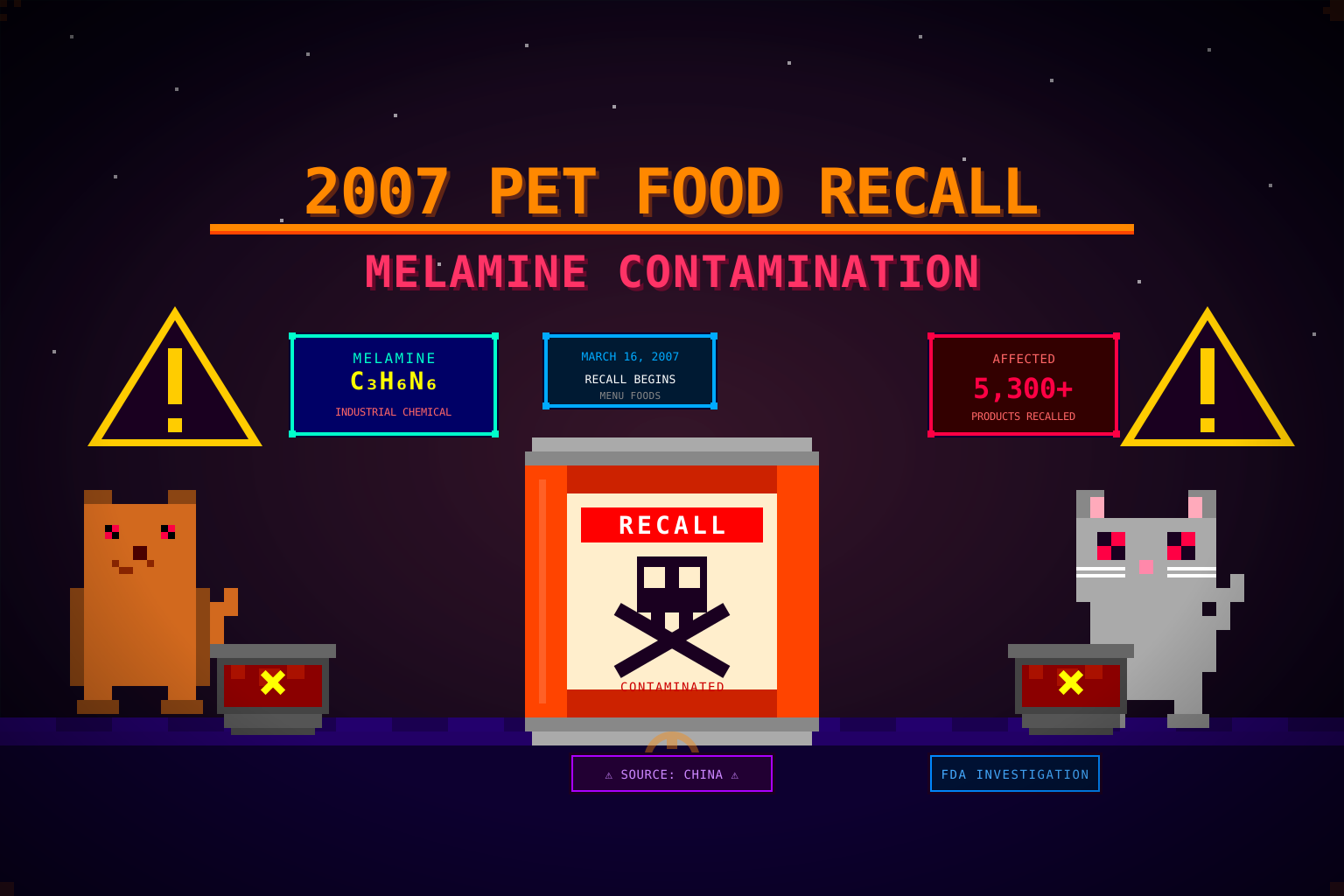
On March 16, 2007, the Canadian pet food manufacturer Menu Foods announced the first voluntary recall of pet foods after the company’s internal quality testing revealed kidney failure and deaths in test animals. Subsequent investigation identified the culprit: melamine contamination in wheat gluten imported from China. Over the following weeks, the recall exploded in scope to become the largest pet food recall in history, eventually affecting over 5,300 products from 27 manufacturers and nearly every major brand in North America, Europe, and South Africa.
Melamine is an industrial chemical (chemical formula C₃H₆N₆) used in the production of plastics, fertilizers, adhesives, and other materials, but is explicitly prohibited as a food ingredient in the United States, European Union, and most other nations. It is not naturally present in food and has no nutritional value. Investigation later revealed that unscrupulous suppliers in China had deliberately added melamine to wheat gluten, rice protein, and corn gluten before export because melamine contains a high nitrogen content (66% by molecular weight). When food manufacturers or regulatory bodies test pet food for protein quality, they typically measure nitrogen content as a proxy for protein levels—a widely accepted analytical shortcut known as the Kjeldahl method. The addition of melamine artificially inflated nitrogen readings, deceiving purchasers into believing they had purchased high-quality, protein-rich ingredients when they had actually purchased protein supplemented with an inedible toxic chemical.
The contaminated ingredients were used by Menu Foods and hundreds of other manufacturers to produce wet pet foods (canned and pouched products) sold under premium brand names including Hill’s Pet Nutrition, Mars (Pedigree, Whiskas), Nestlé Purina PetCare (Purina Pro Plan, Fancy Feast), Procter & Gamble’s Iams and Eukanuba lines, Del Monte Pet Products, and dozens of others. The FDA received approximately 18,000 consumer complaints from March through May 2007 regarding melamine-contaminated products causing acute kidney failure in cats and dogs. While the FDA confirmed only 14 animal deaths in its official investigations, unconfirmed reports suggested the actual death toll numbered in the thousands, with veterinary organizations reporting over 100 deaths among nearly 500 confirmed cases of kidney failure by late March. The lack of a centralized, mandatory reporting system for animal deaths meant the true scale remained unclear.
The economic impact was substantial. Menu Foods alone lost at least $42 million directly from the recall, with additional uncalculated losses from reduced sales and reputational damage. The company eventually settled lawsuits with pet owners for $12.4 million, though the full litigation lasted years. Beyond direct financial losses, the recall imposed enormous costs on pet shelters and rescue organizations that had to discard donated food supplies out of precaution, and on veterinary clinics that treated the spike in kidney failure cases. Pet food manufacturers industry-wide incurred costs for product destruction, reformulation, alternative sourcing, and rebuilding consumer trust.
Timeline of the Crisis
The recall unfolded rapidly across several weeks:
- Early March 2007: Menu Foods conducts routine taste-testing with cats and dogs fed new batch of wet food; test animals develop acute renal failure. Internal investigation begins.
- March 16, 2007: Menu Foods announces voluntary recall of approximately 60 million containers of “cuts and gravy” style pet food produced between December 3, 2006, and March 6, 2007.
- Late March 2007: FDA begins investigation; initial focus on aminopterin (rat poison) later ruled out; wheat gluten identified as contaminated ingredient.
- March 30, 2007: Melamine confirmed as the contaminant in wheat gluten sourced from China.
- April–May 2007: Recall expands to over 5,300 products from 27 manufacturers; contaminated rice protein concentrate, corn gluten identified as additional vectors.
- May 2007: FDA traces contaminated ingredients to Xuzhou Anying Biologic Technology Development Co. in China’s Jiangsu province; the Chinese company and intermediary Suzhou Textile Import & Export Corp are implicated.
- February 2008: Two Chinese nationals and a US company charged in federal court in connection with the contamination.
Significance
The 2007 pet food recall represented a critical moment in modern global supply chain vulnerability. Unlike previous food safety crises, which typically involved domestic production failures or single-point contaminations, the melamine crisis revealed systematic, intentional contamination at the supplier level in a developing nation, hitting American and European consumers through an intricate multi-step supply chain (Chinese raw material supplier → North American pet food manufacturer → retailer → consumer). The deliberate nature of the contamination—not an accident but a calculated deception to defraud purchasers—highlighted the difficulty of ensuring food safety integrity when production and inspection occur in different nations under different regulatory regimes.
The crisis unfolded against a backdrop of broader economic anxiety. The subprime mortgage crisis was simultaneously building through mid-2007, and the pet food recall added to public concerns about the safety of globalized supply chains and the adequacy of government regulation. The Northern Rock bank run in September 2007 and the stock market peak in October 2007 further defined 2007 as a year of hidden systemic vulnerabilities becoming visible.
The crisis prompted immediate regulatory responses. The FDA and Congress held hearings to examine the causes of the recall and the adequacy of pet food oversight. Prior to 2007, pet food was one of the least regulated food categories in the United States, with manufacturers largely policing themselves. The revelation that a toxic chemical could be deliberately added to the food supply without detection until animals fell ill galvanized calls for mandatory testing, supplier verification, and enhanced regulatory authority. The hearings contributed to the Food and Drug Administration Amendments Act of 2007 (FDAAA), signed into law in September 2007, which expanded FDA authority and established enhanced adverse-event reporting requirements.
More broadly, the melamine recall raised urgent questions about the safety of the broader human food supply, particularly regarding protein imports from China. Within months, public health agencies began investigating whether melamine had also contaminated human foods. In September 2008, Chinese authorities discovered melamine in infant formula sold domestically and for export, sickening more than 300,000 children and killing six infants. The 2007 pet food recall had provided an early warning of this systemic vulnerability: unscrupulous suppliers could evade detection by exploiting the proxy measures used to assess food quality, with devastating consequences.
The crisis accelerated the “farm-to-table” and “locavore” movements by heightening consumer awareness of long-distance, complex supply chains and their vulnerability to contamination and fraud. Pet owners who had purchased premium, expensive foods under trusted brand names only to discover their pets had been poisoned with industrial waste became newly skeptical of supply chain claims and “made in USA” or “premium” marketing. This contributed to a broader shift in consumer preferences toward transparently sourced and domestically produced pet foods, and toward increased scrutiny of ingredient origins.
The 2007 pet food recall also became a case study in corporate accountability and insurance. It demonstrated that companies could be held liable for supplier failures occurring in foreign jurisdictions, establishing precedent for supply chain accountability that would influence corporate governance and supply chain oversight for years to come—particularly relevant to the broader debates about China’s expanding global economic role in 2007.
Sources
- 2007 pet food recalls — Wikipedia
- Timeline of the 2007 pet food recalls — Wikipedia
- Melamine recalls shaped pet food trends, safety programs — Pet Food Industry Magazine
- 10 Years Later – The Pet Food Industry a Decade after the Melamine Recall of 2007 — JustFoodForDogs
- Anatomy Of A Pet Food Catastrophe — Chemical & Engineering News
- Pet owners receive $12.4 million in melamine case — VIN News