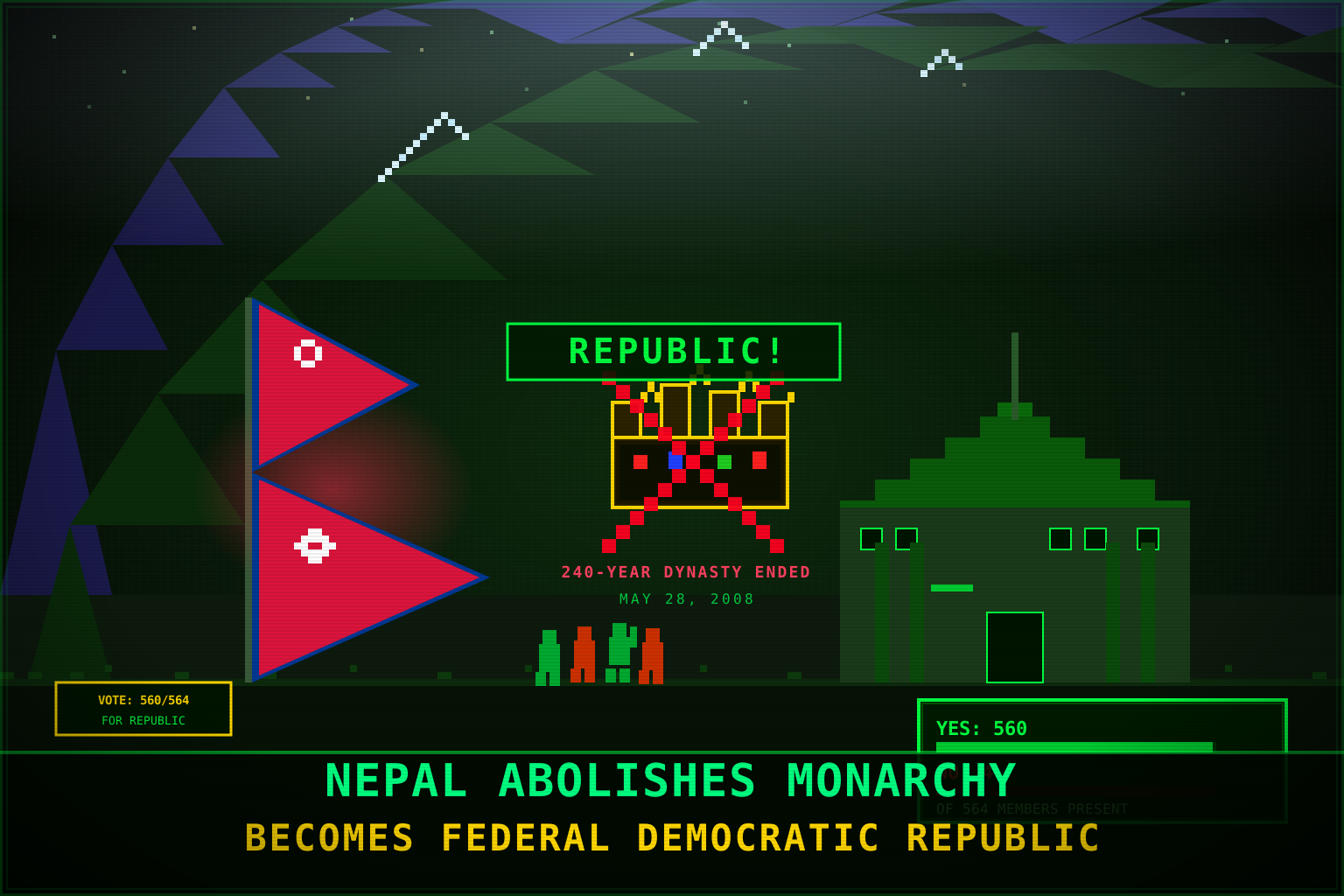
Key figures: King Gyanendra (last monarch of Nepal), Pushpa Kamal Dahal “Prachanda” (leader, Communist Party of Nepal (Maoist)), Girija Prasad Koirala (interim Prime Minister)
Summary
On May 28, 2008, at the first session of Nepal’s newly elected Constituent Assembly in Kathmandu, lawmakers voted to abolish the monarchy and proclaim the country a federal democratic republic. The motion passed overwhelmingly: of 564 members present, 560 voted in favour and 4 against. The decision ended the 240-year-old Shah dynasty, which had ruled since Prithvi Narayan Shah unified the Himalayan kingdom in 1768, and transformed the world’s last constitutional Hindu kingdom into a secular republic.
King Gyanendra, the last monarch, accepted the decision without resistance. The assembly gave him 15 days to vacate the Narayanhiti Royal Palace in central Kathmandu; he departed on June 11, 2008, and the palace was subsequently converted into a public museum. The vote was the culmination of a peace process that had ended a decade-long Maoist insurgency and dismantled royal authority in stages.
The republican transition was led by former communist insurgents. The Communist Party of Nepal (Maoist), under Pushpa Kamal Dahal — known by the nom de guerre “Prachanda” — had won the largest bloc of seats in the April 10, 2008 Constituent Assembly election, and Prachanda became the republic’s first prime minister in August 2008.
Background: From Civil War to Republic
The abolition of the monarchy was the endpoint of the Nepalese Civil War (1996–2006), an insurgency waged by the Communist Party of Nepal (Maoist) that killed an estimated 17,000 people. Royal authority had already been shaken in 2001 by the palace massacre, in which Crown Prince Dipendra killed most of the royal family before dying himself, bringing his uncle Gyanendra to the throne.
In February 2005 Gyanendra dismissed the government and seized direct power, provoking a broad pro-democracy movement. The 2006 popular uprising known as the Loktantra Andolan (Democracy Movement) forced the king to restore parliament in April 2006. In November 2006 the government and the Maoists signed the Comprehensive Peace Accord, formally ending the war. Parliament stripped the king of most powers, and in December 2007 the interim legislature voted to abolish the monarchy pending ratification by an elected Constituent Assembly — the body that delivered the final verdict on May 28, 2008.
Significance
Nepal’s transition ended one of the world’s oldest surviving monarchies and created a republic through a negotiated peace process rather than a violent overthrow of the sovereign. It brought a former armed insurgency into electoral politics, a model of insurgent-to-mainstream transition studied across South Asia — a region that in 2008 also saw the Mumbai terrorist attacks reshape regional security. The republic’s founding placed Nepal among the several states whose status changed in 2008, alongside Kosovo’s declaration of independence.
The new republic’s early years proved politically turbulent: Prachanda resigned as prime minister in May 2009, and the first Constituent Assembly failed to produce a constitution before dissolving in 2012. A permanent constitution was not promulgated until September 2015, entrenching the federal republican structure established by the 2008 vote.