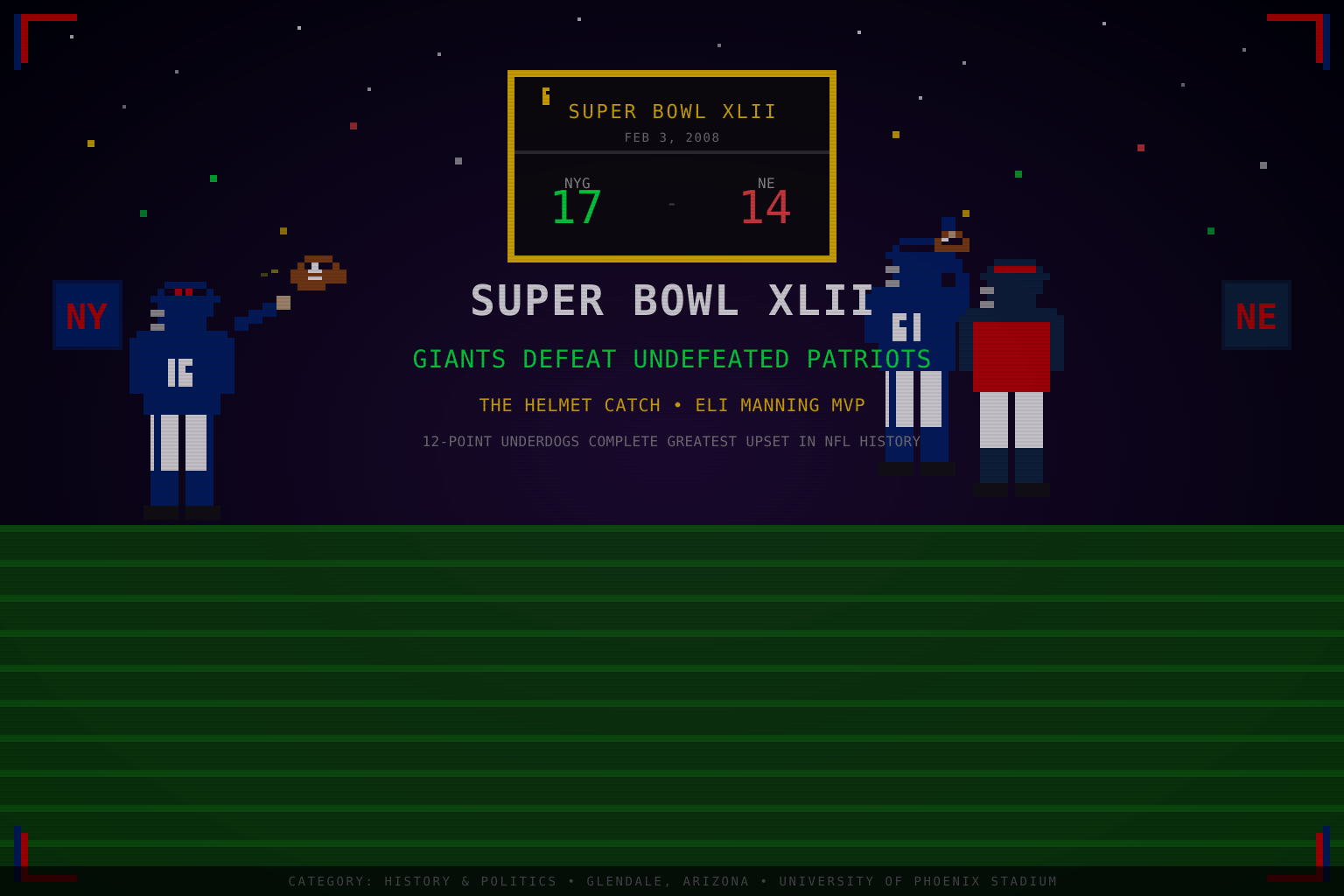
Super Bowl XLII — Giants Defeat Undefeated Patriots
Category: History & Politics
Key figures: Eli Manning (New York Giants quarterback, MVP), David Tyree (Giants receiver), Plaxico Burress (Giants receiver), Tom Brady (Patriots quarterback), Bill Belichick (Patriots head coach), Tom Coughlin (Giants head coach)
Summary
Super Bowl XLII, held on February 3, 2008 at the University of Phoenix Stadium in Glendale, Arizona, resulted in the New York Giants’ stunning 17–14 upset victory over the undefeated New England Patriots, denying the Patriots what would have been a perfect 19–0 season — the first in NFL history — after the 1972 Miami Dolphins’ 17–0 run, until then the sole perfect season in league history. (The Patriots had entered the game 18–0, having gone 16–0 in the regular season and 2–0 in the playoffs.) The game became a defining moment in NFL history and one of the greatest upsets in sports, captured by David Tyree’s iconic “Helmet Catch” — a 32-yard reception in which Tyree pinned the ball against his helmet while double-covered with 1:15 remaining in the fourth quarter. Eli Manning earned Super Bowl MVP honors for orchestrating the game-winning drive, which concluded with Plaxico Burress’s go-ahead 13-yard touchdown reception with 35 seconds remaining. The Giants entered the game as 12-point underdogs.
Background: The Patriots’ Perfect Regular Season
The 2007 New England Patriots had entered Super Bowl XLII with a 16–0 regular season record, the first team in NFL history to complete a perfect 16-game regular season. Under head coach Bill Belichick and quarterback Tom Brady, they had set numerous records: Brady threw 50 touchdown passes, breaking Peyton Manning’s single-season record of 49 (set in 2004), while wide receiver Randy Moss caught 23 touchdown passes, surpassing Jerry Rice’s record. The Patriots had won all three of their playoff games — defeating the Jacksonville Jaguars (31–20), San Diego Chargers (21–12), and preparing to face the Giants.
The 2007 Giants had gone 10–6 in the regular season and entered the playoffs as a wild card team. In the NFC Championship Game, they defeated the Green Bay Packers 23–20 in overtime in sub-zero conditions at Lambeau Field. Their path to the Super Bowl was improbable by any standard: in the final week of the regular season, they had played the Patriots to a near-close 38–35 loss, the Patriots’ closest game of the year, suggesting the Giants could compete.
Game Recap
University of Phoenix Stadium, Glendale, Arizona — February 3, 2008
| Quarter | Giants | Patriots |
|---|---|---|
| 1st | 3 | 0 |
| 2nd | 0 | 7 |
| 3rd | 0 | 0 |
| 4th | 14 | 7 |
| Final | 17 | 14 |
First half: The Giants opened the game with a 16-play, 9:59 drive — the longest in Super Bowl history at the time — that ended with kicker Lawrence Tynes’s 32-yard field goal (3–0 Giants) in the first quarter. In the second quarter, Patriots running back Laurence Maroney scored on a 1-yard touchdown run, sending New England into halftime ahead 7–3.
Third quarter: Both defenses dominated and the quarter was scoreless, the score remaining 7–3 in the Patriots’ favor as strong Giants defensive play repeatedly pressured Brady.
Fourth quarter — the comeback: Giants receiver David Tyree — primarily a special teams player — caught a 5-yard touchdown pass from Manning early in the quarter (about 11:05 remaining) to give the Giants a 10–7 lead. The Patriots answered when Randy Moss caught a 6-yard touchdown pass from Brady with 2:42 remaining, restoring a 14–10 New England lead. Trailing by four, the Giants took possession and mounted their decisive drive.
The Helmet Catch (1:15 remaining): Facing a third-and-five at the Giants’ own 44-yard line, Eli Manning escaped a near-sack — grasping fingers from multiple Patriots defenders left him stumbling but upright — and launched a deep pass to David Tyree. Tyree leapt, caught the ball, and as he was dragged to the ground by safety Rodney Harrison, pinned the ball against his helmet with one hand. The incomprehensible 32-yard reception moved the Giants to the Patriots’ 24-yard line and has since been voted one of the greatest plays in NFL history.
Winning touchdown (0:35 remaining): Manning found Plaxico Burress alone in the end zone on a 13-yard touchdown pass, giving the Giants a 17–14 lead with 35 seconds remaining. The Patriots ran one final desperation play — Brady’s Hail Mary fell incomplete — and the Giants were champions.
Key Statistics
- Eli Manning: 19/34 completions, 255 yards, 2 touchdowns, 0 interceptions; Super Bowl MVP
- Tom Brady: 29/48 completions, 266 yards, 1 touchdown, 0 interceptions
- David Tyree: 3 receptions, 43 yards, 1 touchdown (including the Helmet Catch)
- Plaxico Burress: 2 receptions, 33 yards, 1 touchdown
- Broadcast: Fox; called by Joe Buck and Troy Aikman; half-time show by Tom Petty and the Heartbreakers
- Attendance: 71,101 at University of Phoenix Stadium
- Television audience: an average of 97.5 million viewers, the most-watched Super Bowl to that date and, at the time, the second most-watched U.S. television program in history, behind only the 1983 M*A*S*H series finale
Legacy and Cultural Impact
Super Bowl XLII’s outcome reverberated across American culture and sports history in several dimensions:
The greatest upset: The Giants were 12-point underdogs, and most analysts expected the Patriots to complete their historic 19–0 season. The victory became a defining example of sporting unpredictability. ESPN subsequently rated it the #1 upset in sports history across multiple retrospective rankings.
Eli Manning’s vindication: Manning, who had faced criticism for inconsistent play early in his career, was instantly recast as a clutch performer. His Super Bowl MVP performance — in only his seventh year in the league — silenced critics and established his legacy. He would repeat as Super Bowl MVP in Super Bowl XLVI (February 2012), defeating the Patriots again.
The Patriots’ near-perfect record: The loss denied the Patriots the record of the first 19–0 NFL championship team. The 1972 Miami Dolphins, whose 17–0 record remained the only perfect season, reportedly celebrated annually when the last undefeated team of each regular season loses — including the 2007 Patriots.
David Tyree’s one-catch legacy: Tyree, who had only four career regular-season touchdown catches before the Super Bowl, retired after 2009 without ever catching another pass as significant as the Helmet Catch. He became the rare sports figure defined entirely by a single play.
2008 sporting year context: Super Bowl XLII opened a year of extraordinary sporting spectacle that included Michael Phelps winning 8 gold medals at the Beijing Olympics (see Beijing Summer Olympics), Usain Bolt setting world records in the 100m and 200m (see Usain Bolt), and Roger Federer vs. Rafael Nadal defining tennis excellence. The Giants’ upset established the year’s theme of unexpected results and individual brilliance.
Significance
Super Bowl XLII’s upset victory represented one of the greatest moments in New York Giants history and a defining upset in sports that transcended football. The Patriots’ undefeated season and quest for 19–0 perfection had captured the nation’s imagination, with the team favored by 12 points going into the game. The Giants’ victory, driven by Eli Manning’s composure and David Tyree’s acrobatic catch, demonstrated the unpredictability that makes sport compelling and reset expectations about what was possible against a seemingly dominant team. The game became a cultural touchstone and remains one of the most replayed and discussed Super Bowls, with “The Helmet Catch” achieving iconic status in sports history. For the Patriots, the loss represented a historic near-miss, ending their bid for perfection, though the franchise would go on to dominate the AFC for the next two decades. The game exemplified how major sporting events in 2008 — alongside the Olympics and other competitions — provided respite and drama during the year of the financial crisis (see 2008 Financial Crisis).