Summary
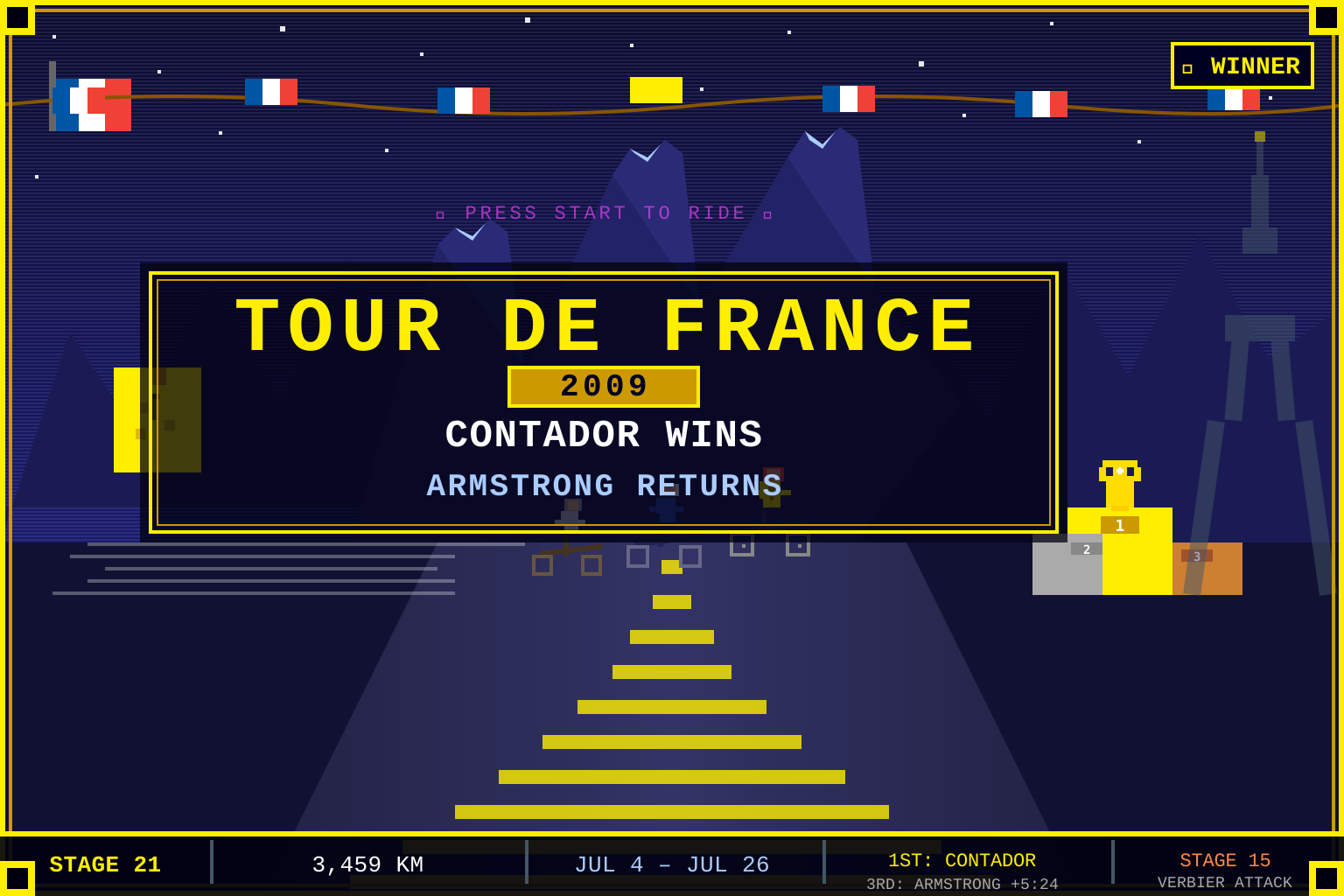
The 2009 Tour de France ran from July 4 to July 26 across 3,459 kilometres (2,149 miles) in 21 stages. Spanish cyclist Alberto Contador of Team Astana won the general classification, completing his second Tour de France title. His margin of victory over runner-up Andy Schleck of Team Saxo Bank was 4 minutes 11 seconds; Lance Armstrong, Contador’s Astana teammate, finished third overall, 5 minutes 24 seconds behind Contador.
Armstrong’s participation was the race’s dominant storyline. He had retired from professional cycling in July 2005 after winning a seventh consecutive Tour de France title, citing a desire to spend time with his family and to focus on cancer-awareness work through the Livestrong Foundation. In September 2008, Armstrong announced his return to competition at age 37, signing with Team Astana. His comeback attracted extraordinary global media coverage — cameras tracked his every stage, and his social media presence (he had recently joined Twitter) brought a new audience to cycling.
General Classification — Final Podium
| Rank | Rider | Team | Time Behind |
|---|---|---|---|
| 1st | Alberto Contador | Team Astana | — |
| 2nd | Andy Schleck | Team Saxo Bank | +4:11 |
| 3rd | Lance Armstrong | Team Astana | +5:24 |
| 4th | Bradley Wiggins | Garmin–Slipstream | +6:01 |
Stage Highlights
Stage 15, a mountain stage finishing atop Verbier in Switzerland on July 19, proved decisive. Contador attacked in the final kilometres and distanced Armstrong and the rest of the field, taking the yellow jersey and effectively sealing the overall title. Armstrong conceded time to his younger teammate on the climb. The dynamic between Contador and Armstrong — teammates nominally supporting each other but clearly competing — became one of the race’s defining tensions.
Contador extended his lead by winning the Stage 18 individual time trial in Annecy on July 23; Armstrong finished 16th on the stage while holding his podium position. British rider Bradley Wiggins finished fourth overall, foreshadowing his 2012 Tour de France victory.
Significance
Armstrong’s third-place finish confirmed he could compete at the sport’s highest level despite a three-year absence. His comeback also marked a shift in how athletes engaged with media and fans: Armstrong’s Twitter account became one of the most-followed in sports, and he live-tweeted race days in ways no major athlete had previously attempted.
The 2009 Tour carried an undercurrent of controversy that would grow in subsequent years. Cycling had been rocked by doping scandals throughout the 2000s, and Armstrong’s return renewed scrutiny of his record seven Tour victories (1999–2005). In 2012, the United States Anti-Doping Agency (USADA) issued a comprehensive report concluding that Armstrong had engaged in “the most sophisticated, professionalized and successful doping program that sport has ever seen.” USADA subsequently stripped Armstrong of all his competitive results from August 1998 onward, including the 2009 Tour de France result. Armstrong publicly admitted to doping in a January 2013 interview with Oprah Winfrey.
The 2009 race thus occupies a contested place in cycling history: at the time it was hailed as a triumph of athletic perseverance; in retrospect it became part of a broader reckoning with the sport’s systematic use of performance-enhancing drugs.
Broader Context
The 2009 cycling season was part of a remarkable year for sports excellence and spectacle. Just weeks after the Tour’s finish, Jamaican sprinter Usain Bolt shattered the 100m and 200m world records at the 2009 World Championships, and Roger Federer had just won his record-breaking 15th Grand Slam singles title at Wimbledon in early July. Each story raised questions about the limits of human athletic performance — and in cycling’s case, about the integrity of claimed achievements.