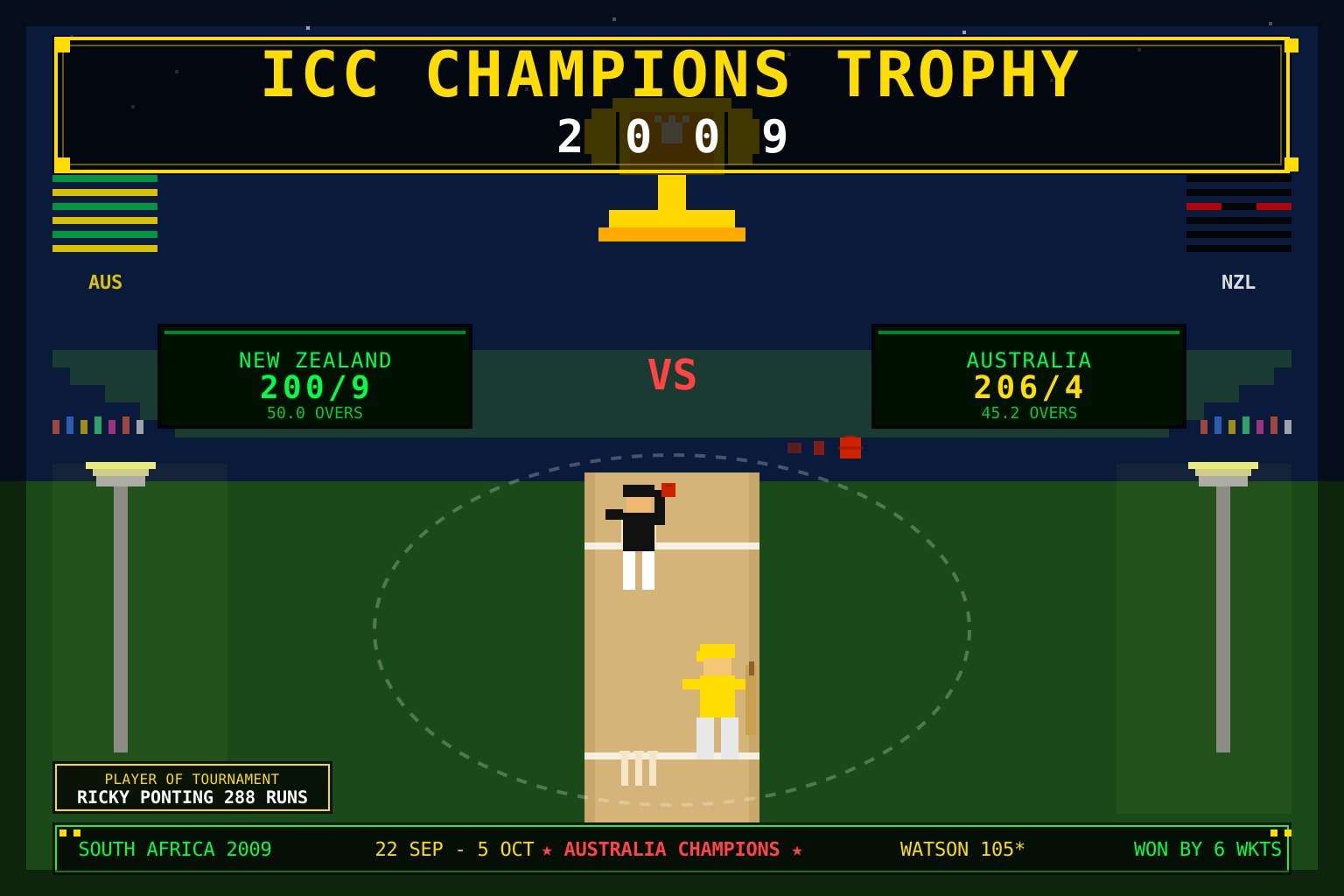
ICC Champions Trophy 2009
Date: 22 September–5 October 2009 Location: South Africa (Centurion and Johannesburg) Category: People & Sports Key figures: Ricky Ponting (Australia captain), Shane Watson (Australia), Daniel Vettori (New Zealand captain), Graeme Smith (South Africa captain)
Summary
The 2009 ICC Champions Trophy — the sixth edition of the one-day international (ODI) tournament — was hosted at two South African venues, SuperSport Park in Centurion and the Wanderers Stadium in Johannesburg, from 22 September to 5 October 2009. Eight nations competed in a group stage followed by knockout rounds. Australia, the defending champions from 2006, retained the title by defeating New Zealand by 6 wickets in the final at Centurion on 5 October 2009.
In the final, New Zealand scored 200 for 9 in their 50 overs; Australia replied with 206 for 4 in 45.2 overs, completing the chase with 28 balls to spare. Australian all-rounder Shane Watson anchored the reply with an unbeaten 105 and was named player of the final. Australia captain Ricky Ponting, who scored 288 runs across the tournament, was named player of the tournament.
The event was played against the backdrop of a transformative period in cricket’s commercial history: the Indian Premier League’s relocated 2009 season had been staged in South Africa four months earlier, and the growth of Twenty20 cricket was reshaping team strategies and player priorities worldwide.
Format and results
Eight teams were divided into two groups of four:
- Group A: Australia, India, Pakistan, West Indies
- Group B: New Zealand, England, Sri Lanka, South Africa
The top two from each group advanced to the semi-finals. Australia and Pakistan progressed from Group A; New Zealand and England from Group B. Host nation South Africa was eliminated in the group stage, finishing fourth in Group B — continuing the Proteas’ long record of underachievement at major limited-overs tournaments.
Semi-finals:
- Australia defeated England, chasing England’s 257 to reach 258 for 1 in 41.5 overs.
- New Zealand defeated Pakistan, chasing Pakistan’s 233 for 9 to reach 234 for 5 in 47.5 overs.
Final — 5 October 2009, SuperSport Park, Centurion:
- New Zealand: 200 for 9 (50 overs).
- Australia: 206 for 4 (45.2 overs); Shane Watson 105 not out.
- Australia won by 6 wickets.
Tournament context: cricket’s three-format era
By 2009, international cricket was navigating a three-format ecosystem — Test matches, ODIs, and the rapidly expanding Twenty20 game — that created scheduling and commercial tensions. Test cricket remained the sport’s most prestigious format, but administrators increasingly positioned the Champions Trophy as a compact “premium ODI” event. The launch of the Indian Premier League in 2008 accelerated this tension, as franchise Twenty20 cricket offered players higher earnings for fewer matches.
Australia’s limited-overs dominance
Australia entered the tournament as reigning ODI World Cup champions, having won that competition in 2003 and 2007, and as defending Champions Trophy holders from 2006. Their victory in Centurion reinforced the Ponting era as one of the most dominant in the sport’s history, comparable to the West Indies teams of the 1970s and 1980s. Australia went through the 2009 tournament unbeaten.
South Africa as host nation
South Africa hosted the Champions Trophy for the second time, having co-staged the 2002–03 competition. The 2009 event demonstrated the maturity of South African cricket infrastructure at Centurion and Johannesburg, both of which had also hosted matches in the relocated 2009 IPL season earlier that year. On the field, however, South Africa again fell short, exiting in the group stage.
The parallel Twenty20 tournament
A significant companion event earlier in 2009 was the ICC World Twenty20, held in England from 5 to 21 June 2009. Pakistan won that tournament, defeating Sri Lanka in the final at Lord’s Cricket Ground in London. It was the second edition of the global Twenty20 championship, following the inaugural 2007 event, and underscored the format’s swift ascent within the international calendar.
The 2009 season thus saw international cricket conducted across three distinct formats in a single year — a pattern that became the norm through the following decade and was later formalised in the ICC’s World Test Championship and expanded T20 World Cup cycles.
Significance
Australia’s sustained supremacy: The Champions Trophy victory extended Australia’s run of success in ICC limited-overs events, confirming the team as the benchmark of the era under Ricky Ponting’s captaincy.
A sport in transition: The Champions Trophy’s compact format and the parallel rise of Twenty20 reflected cricket adapting to shifting audience and commercial pressures. The 2009 season foreshadowed the restructuring of the international calendar in the years that followed.
South Africa’s hosting profile: Following the relocated IPL season earlier in the year, the 2009 Champions Trophy reinforced South Africa’s standing as a reliable neutral venue for major international cricket tournaments.
Sources
- Wikipedia — 2009 ICC Champions Trophy
- Wikipedia — 2009 ICC Champions Trophy final
- Wikipedia — 2009 ICC World Twenty20
- ESPNcricinfo — Australia v New Zealand, Final, Centurion, 5 October 2009 (full scorecard)
Related
- Indian Premier League 2009 — IPL 2009 season played in South Africa, same venues four months earlier
- Super Bowl XLIII — Steelers championship — Major sports championship in same year
- Tour de France 2009 — Contador wins — Other 2009 World Championship event
- Usain Bolt’s 2009 world records — Athletic peak performance in 2009
</content> </invoke>