Summary
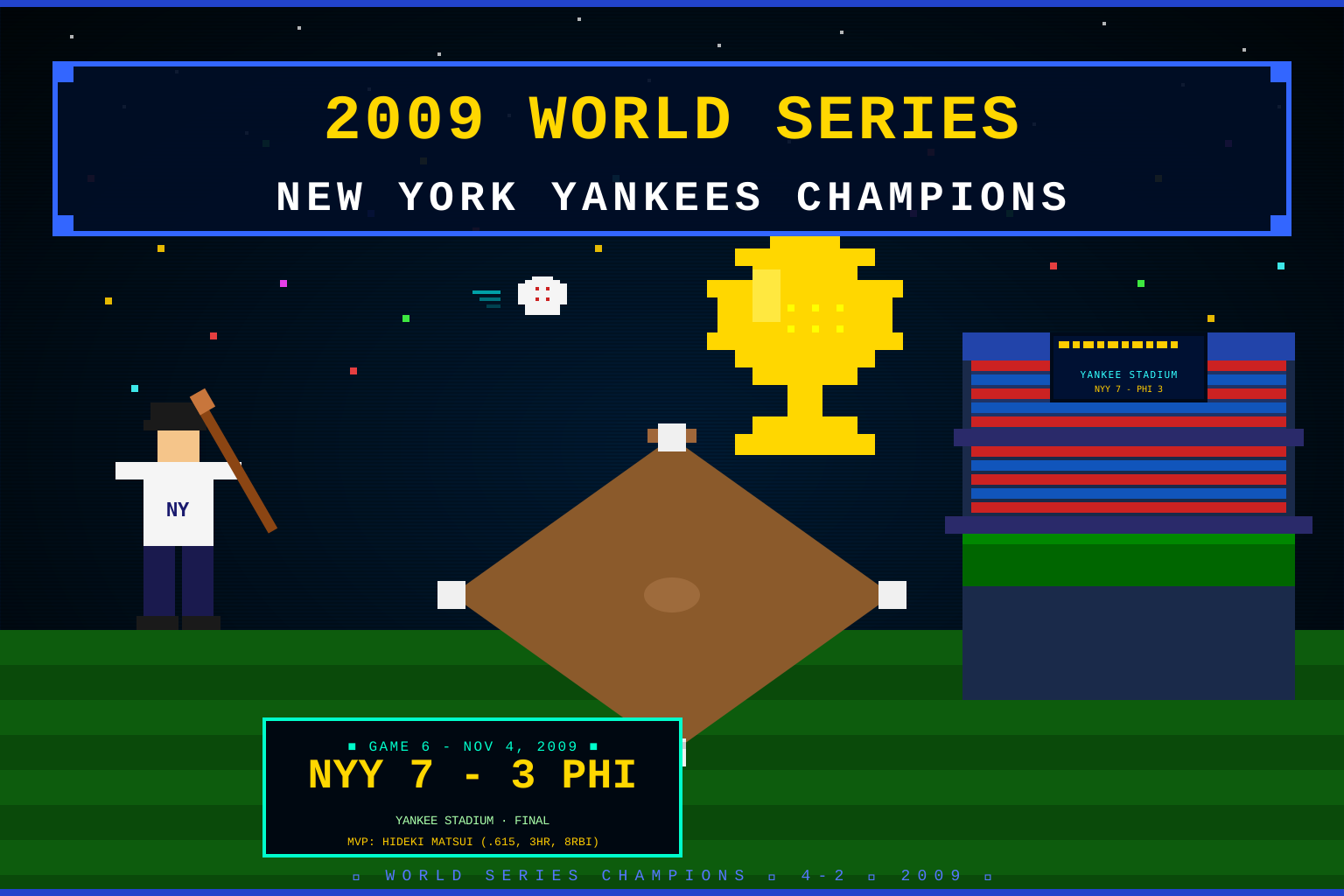
The 2009 World Series ran from October 28 to November 4, 2009, with the New York Yankees defeating the defending-champion Philadelphia Phillies four games to two. The deciding Game 6 was played at the new Yankee Stadium in the Bronx, New York — the first World Series game ever played at the $1.5 billion ballpark, which had opened in April 2009 to replace the original stadium across the street. The Yankees won Game 6 by a score of 7–3.
Designated hitter Hideki Matsui was named World Series Most Valuable Player. In Game 6 alone, Matsui went 3-for-4 with a two-run home run and drove in six of the Yankees’ seven runs. For the series, Matsui batted .615 (8-for-13) with 3 home runs and 8 runs batted in. Matsui became the first Japanese-born player to win World Series MVP honors, capping a distinguished career that had begun in Nippon Professional Baseball with the Yomiuri Giants.
2009 World Series Results
| Game | Date | Winner | Score | Location |
|---|---|---|---|---|
| 1 | Oct. 28 | Phillies | 6–1 | Yankee Stadium |
| 2 | Oct. 29 | Yankees | 3–1 | Yankee Stadium |
| 3 | Oct. 31 | Yankees | 8–5 | Citizens Bank Park |
| 4 | Nov. 1 | Yankees | 7–4 | Citizens Bank Park |
| 5 | Nov. 2 | Phillies | 8–6 | Citizens Bank Park |
| 6 | Nov. 4 | Yankees | 7–3 | Yankee Stadium |
Key Players and Performances
The Yankees had rebuilt their roster aggressively in the 2008–09 offseason, signing starting pitcher CC Sabathia to a seven-year, $161 million contract (the richest pitching contract in history at the time), right-hander A.J. Burnett to a five-year deal, and first baseman Mark Teixeira to an eight-year, $180 million commitment. The three arrivals pushed New York’s payroll to approximately $208 million, the highest in Major League Baseball by a significant margin.
Sabathia started Games 1 and 4 and was lined up for a potential Game 7; although Cliff Lee outdueled him in the opener — a 6–1 Phillies win — he anchored a rotation that also leaned on veteran left-hander Andy Pettitte, who won both Game 3 and the clinching Game 6. Alex Rodriguez, who had entered the postseason under scrutiny after his February 2009 admission to using performance-enhancing drugs from 2001 to 2003, delivered one of his finest playoff performances, batting .365 with 6 RBI across the series. Rodriguez’s clutch hitting, after years of postseason struggles, was widely noted by commentators.
Manager Joe Girardi, in his second season, navigated the roster’s veteran depth through a demanding October schedule and was credited with aggressive bullpen deployment that kept the Phillies’ lineup — led by Ryan Howard and Jimmy Rollins — in check in the critical late innings.
Significance
The 2009 championship was the Yankees’ 27th World Series title, extending their record as the most successful franchise in professional baseball. The nine-year gap since their 2000 championship (which had also defeated the Mets in the “Subway Series”) was unusually long for a club of New York’s resources and had been a source of pointed criticism from fans and media.
The series also concluded a remarkable year of change for the Yankees organization. Playing their final season at the old Yankee Stadium in 2008 had been framed as an emotional farewell to a monument of American sports; winning the first World Series in the new stadium provided an immediate validation of the $1.5 billion investment.
The championship highlighted baseball’s widening economic disparity: with a payroll more than three times that of smaller-market clubs, the Yankees demonstrated how sustained financial dominance could translate into roster depth sufficient to absorb injuries and maintain championship-caliber production.
Broader Context
The 2009 World Series was the final championship event in a year packed with major American sports milestones. In February, the Pittsburgh Steelers had won the Super Bowl XLIII in one of the most dramatic finishes in NFL history, and the Los Angeles Lakers had taken the 2009 NBA Finals over the Orlando Magic. The three championships together reflected a broader theme of storied franchises reclaiming elite status — Pittsburgh, Los Angeles, and New York each ending notable dry spells or defending legacies under scrutiny.