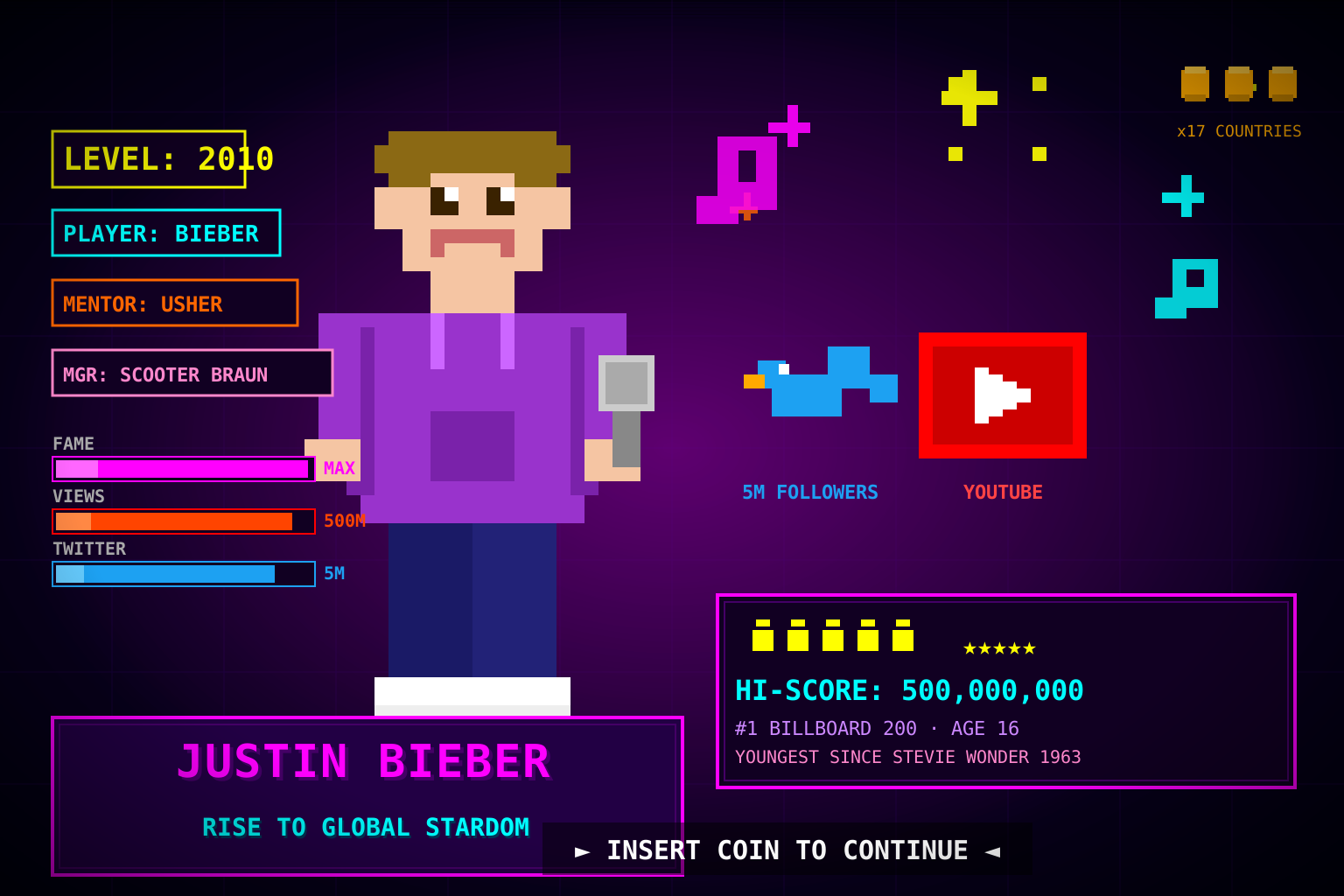
Key figures: Justin Bieber, Usher (mentor), Scooter Braun (manager), L.A. Reid (Island Def Jam chairman)
Summary
Justin Drew Bieber, born March 1, 1994, in London, Ontario, Canada, emerged as a global pop phenomenon in 2010 after being discovered by talent manager Scooter Braun through YouTube videos in early 2009. Braun came across Bieber’s homemade covers of R&B songs while searching for a different artist; he contacted Bieber’s mother and flew the then-13-year-old to Atlanta to meet with Usher. Island Records signed Bieber in October 2008, and his debut extended play My World was released November 17, 2009, debuting at number six on the Canadian Albums Chart.
By January 2010, Bieber’s debut single “One Time” (released July 7, 2009) had charted in seventeen countries. His first full-length album, My World 2.0, was released March 23, 2010, and debuted at number one on the Billboard 200 — making Bieber, at 16 years old, the youngest artist to debut at number one since Stevie Wonder in 1963. The album’s lead single “Baby” (featuring rapper Ludacris) became one of the most-viewed YouTube videos in history, accumulating over 500 million views by year-end — breaking the previous record held at the time. By mid-2010, Bieber had amassed more than 5 million Twitter followers, making him one of the platform’s most-followed accounts.
Bieber’s July 2010 summer tour across North America — including sold-out dates at Madison Square Garden and the Staples Center — demonstrated the extraordinary scale of his fanbase and the purchasing power of the “Bieber fever” demographic. The My World Tour, which ran from June 23, 2010 through April 29, 2011, grossed approximately $53 million.
Discovery and Digital Stardom
Bieber’s path to fame was novel in the music industry. Unlike previous teen pop stars who were groomed through Disney Channel, talent competitions, or traditional label showcases, Bieber’s discovery originated entirely from user-generated content on YouTube, which by 2010 had become the world’s dominant video platform with over 2 billion views per day. Braun recognized in Bieber’s self-uploaded cover videos — featuring songs by Ne-Yo, Chris Brown, Stevie Wonder, and Justin Timberlake — a raw charisma and vocal talent that conventional industry scouts had overlooked.
This origin story became a founding narrative of social-media-native celebrity: the idea that traditional gatekeepers (labels, talent agents, television networks) were no longer the only path to mainstream stardom. Bieber’s success validated a new industry model and prompted major labels to systematically scour social platforms for undiscovered talent in subsequent years.
Cultural Significance
Justin Bieber’s 2010 breakthrough exemplified the emergence of social-media-driven celebrity culture, where discovery and fame could bypass traditional gatekeepers. His success demonstrated that digital platforms — particularly YouTube and Twitter — had become central to music industry power dynamics. The passionate “Beliebers” fanbase, predominantly female teenagers, demonstrated the purchasing and engagement power of youth-focused digital fandom in unprecedented terms.
His rapid rise also occurred alongside other seismic shifts in music consumption: the growth of digital downloads over physical sales, the emergence of streaming (see Netflix’s transformation of media), and the debut of Instagram in October 2010. Bieber would later become one of the earliest and most prolific celebrity users of Instagram, further cementing his role as a defining figure of social-media celebrity.
Bieber’s trajectory stands in contrast to other dominant pop figures of 2010 — including Lady Gaga, who represented provocative, avant-garde pop artistry — demonstrating that 2010’s music landscape was large enough to simultaneously sustain radically different models of pop stardom.
Related
- Lady Gaga — Pop’s Provocative Vanguard — parallel dominant pop figure of 2010
- YouTube 2010 Platform — the platform central to Bieber’s discovery
- Instagram launched — October 2010 platform that Bieber would define
- Kanye West’s MBDTF — another defining musical figure of 2010