Key figures: Federal Bureau of Alcohol, Tobacco, Firearms and Explosives (ATF), Chemical Safety Board investigators, President Barack Obama (memorial address), West Fertilizer Company owner Donald Adair
Summary
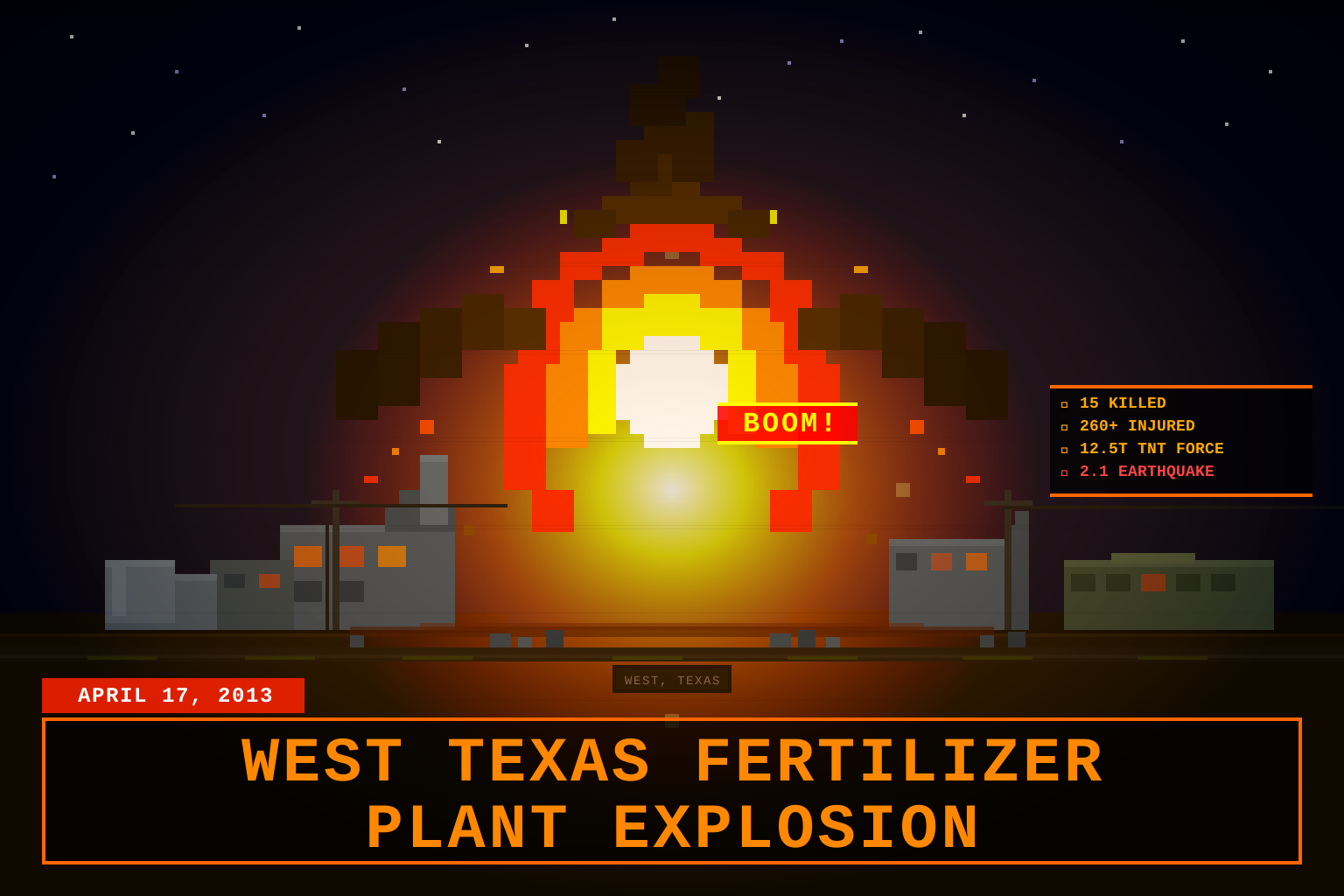
At 7:51 P.M. on April 17, 2013, the West Fertilizer Company facility in West, Texas, exploded with the force of approximately 12.5 tons of TNT. The blast, triggered by a fire in a storage area containing ammonium nitrate fertilizer, killed 15 people and injured over 260 others. Twelve of the fatalities were emergency responders—firefighters and paramedics responding to the initial fire—making it one of the deadliest single incidents for first responders in recent US history. The explosion obliterated over 150 buildings across the town, including the nearby West Middle School, West High School, a nursing home, and apartment complexes. The blast was so powerful that it registered as a 2.1-magnitude earthquake and was felt 80 miles away, causing an estimated $100 million in property damage.
Federal investigators from the Bureau of Alcohol, Tobacco, Firearms and Explosives determined that a deliberate fire preceded the explosion, resulting in a $50,000 reward for information leading to the person responsible. The facility, which had stored ammonium nitrate for years, lacked the safety infrastructure and regulatory oversight that characterized larger chemical storage operations, exposing a regulatory gap in US hazardous-materials governance.
The Explosion: Chronology
West, Texas, is a small city of approximately 2,800 residents located 18 miles north of Waco. The West Fertilizer Company had operated at the site since the 1960s, storing and distributing agricultural chemicals including anhydrous ammonia and ammonium nitrate fertilizer to local farms.
On the afternoon of April 17, a fire was reported in a seed house at the facility at approximately 7:29 P.M. local time. West Volunteer Fire Department personnel and EMS crews from neighboring towns responded; firefighters positioned themselves within 100–150 feet of the burning building and were attempting to suppress the blaze when the ammonium nitrate detonated at 7:51 P.M. The explosion generated a blast pressure wave that damaged or destroyed structures within a 1,400-foot radius and shattered windows up to five miles away.
The facility had stored 40–60 tons of ammonium nitrate at the time of the explosion, a quantity comparable in destructive potential to the 1995 Oklahoma City bombing, which used 2.5 tons of ammonium nitrate. First responders arriving after the blast encountered a 93-foot-wide, 10-foot-deep crater where the storage building had stood.
Casualties and Community Impact
The explosion killed 15 people: 12 firefighters and emergency responders, 2 members of the public, and 1 nursing home resident. West’s population of 2,800 meant that most residents knew the victims personally. Three hundred forty residents were displaced, and the town’s two schools—West Middle School and West High School—sustained structural damage severe enough to require demolition and reconstruction.
President Obama attended a memorial service at Baylor University on April 25, 2013, along with First Lady Michelle Obama, Texas Governor Rick Perry, and Texas Senators John Cornyn and Ted Cruz. Obama described the first responders as “our neighbors and friends who embodied the best of who we are as Americans.”
West’s Czech-American community had settled the region in the 1800s; the “Czech Stop” kolache bakery on Interstate 35, a regional landmark, was among the businesses damaged. Donations exceeding $2 million arrived from across the country within weeks. Reconstruction of West’s schools was completed in 2014, funded through insurance, federal disaster relief, and community donations.
Regulatory Failures and Investigation
The Chemical Safety Board (CSB), an independent federal agency charged with investigating industrial chemical accidents, released a comprehensive investigation report in January 2016. Key findings included:
- Ammonium nitrate storage: West Fertilizer stored quantities of ammonium nitrate far exceeding the 400-pound threshold requiring reporting to the EPA under Risk Management Program (RMP) rules—yet because the company classified its activity as a “farm supply” retailer rather than a chemical storage facility, it fell below reporting thresholds. The facility had last been inspected by the Occupational Safety and Health Administration (OSHA) in 1985.
- Building proximity: West Middle School was located 542 feet from the fertilizer plant; the West Rest Haven nursing home was 476 feet away—both within the blast zone. The CSB report cited inadequate local zoning as a systemic failure.
- Fire-suppression deficiency: The storage building lacked a sprinkler system, automatic fire-suppression equipment, or secondary containment for explosive materials. NFPA (National Fire Protection Association) standards recommend a minimum 750-foot setback from occupied structures for ammonium nitrate storage above certain quantities; West’s layout violated this standard.
- Right-to-know failures: The facility had not updated its Tier II reporting (required under EPCRA, the Emergency Planning and Community Right-to-Know Act) to accurately reflect its ammonium nitrate inventory. Local emergency planners had no current record of the hazard.
The ATF investigated the fire as arson and offered rewards, but the investigation stalled. In May 2016, a local man was indicted on arson and destruction-of-evidence charges; his trial resulted in a mistrial in 2016 and he was acquitted in 2017. The cause of the initial fire remains officially undetermined.
Regulatory Aftermath and Policy Response
The West explosion, occurring two days after the Boston Marathon bombing on April 15, competed with that attack for US domestic news coverage through late April 2013. While the bombing commanded sustained national attention and a sweeping law-enforcement response, the fertilizer disaster’s regulatory implications advanced more slowly.
President Obama signed Executive Order 13650 on August 1, 2013, directing federal agencies (EPA, OSHA, ATF, DHS, Agriculture, and Transportation) to improve chemical facility safety and security. The order established the Chemical Facility Safety and Security Working Group, which produced recommendations for ammonium nitrate reporting requirements and community buffer zones.
The EPA subsequently proposed rules in 2016 strengthening RMP requirements for chemical facilities, including mandatory root-cause analysis of incidents and enhanced coordination with local emergency planners. These rules were finalized under Obama and partially rolled back under the Trump administration before being partially restored under Biden. As of 2025, advocates note that thousands of small agricultural chemical retailers nationwide continue to operate with minimal federal oversight of explosive-grade material storage.
The West explosion is frequently cited alongside the Rana Plaza building collapse (April 24, 2013) as defining industrial-safety tragedies of 2013, together raising global questions about the adequacy of regulatory frameworks in both developing and developed economies.