Category: Society & Economics
Key figures: Ricky Ponting (Australia captain); Adam Gilchrist (Australia wicketkeeper-batsman, Player of the Match in the final); Glenn McGrath (Australia bowler, Player of the Series); Trent Johnston (Ireland captain); Bob Woolmer (Pakistan coach, d. March 18, 2007)
Summary
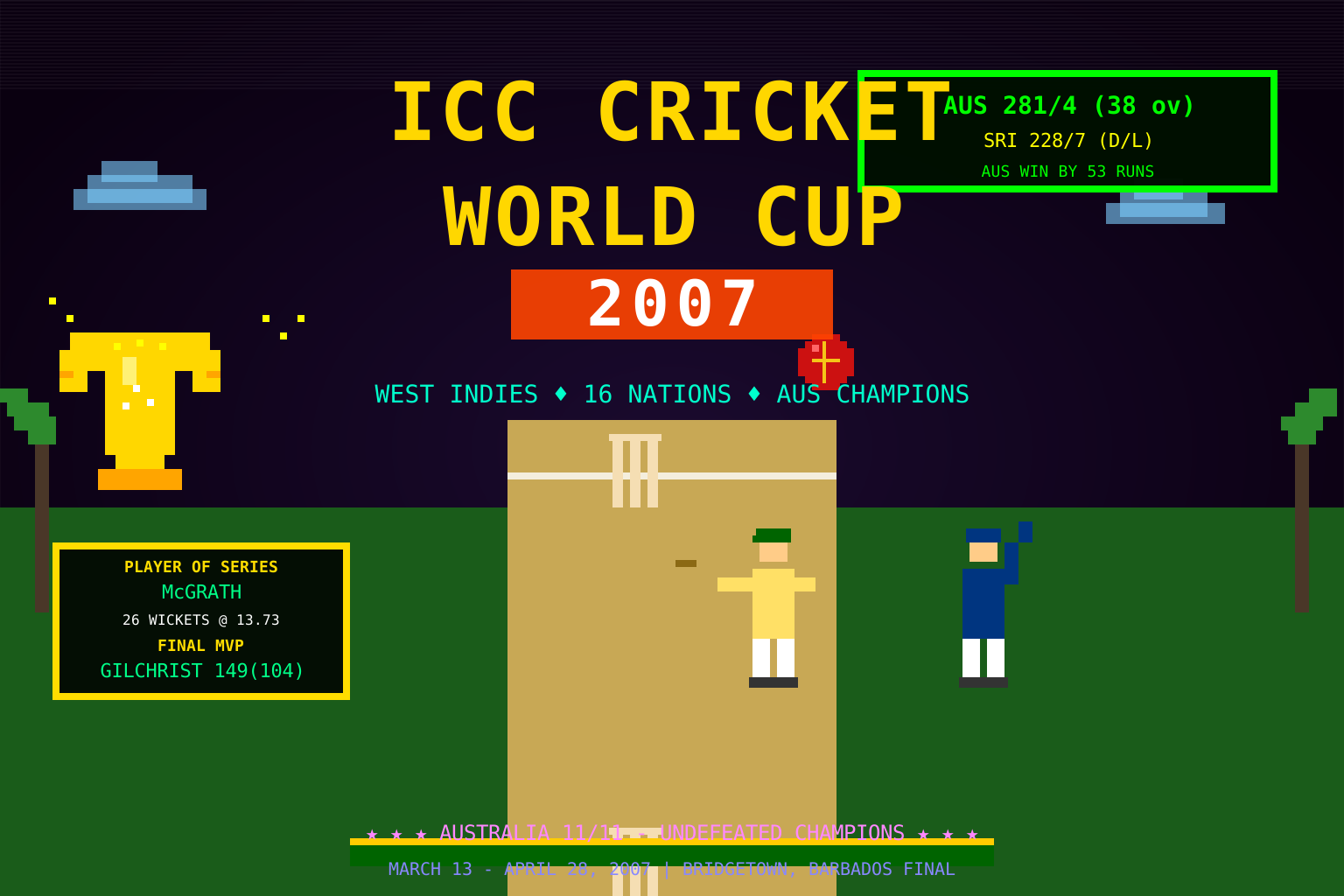
The 2007 ICC Cricket World Cup, the tournament’s ninth edition, took place across nine West Indian venues from March 13 to April 28, 2007. The competition featured sixteen competing nations—the largest field in World Cup history at that time—divided into four groups of four teams each, with the top two finishers from each group advancing to a “Super 8” second-round stage before semi-finals and the final.
Australia dominated the tournament without losing a single match, winning all eleven games en route to their fourth World Cup title and unprecedented third consecutive championship. Under captain Ricky Ponting, Australia possessed the competition’s most balanced squad: pace spearhead Glenn McGrath—playing in what would prove to be his final World Cup—took 26 wickets in the tournament at an average of 13.73, earning him Player of the Series honors. In the final at Kensington Oval, Bridgetown, Barbados on April 28, Australia defeated Sri Lanka by 53 runs under the Duckworth-Lewis method after rain interrupted play while Sri Lanka were chasing a record target. Wicketkeeper-batsman Adam Gilchrist scored 149 off just 104 balls in the final, wielding a squash ball inside his glove—a personal superstition he disclosed afterward—in one of the most destructive batting performances in World Cup final history.
Australia’s victory extended their unbeaten run in World Cup matches to 29 games without defeat, stretching back to their group-stage loss to Pakistan on May 23, 1999.
Historic Upsets and Surprises
The 2007 tournament produced upsets that fundamentally reordered cricket’s perceived competitive hierarchy:
India and Pakistan’s group-stage exits: India and Pakistan, both seeded as contenders and among the tournament’s biggest commercial draws, suffered shocking group-stage eliminations—the first time either nation had exited at such an early stage. India lost to Sri Lanka and Bangladesh; Pakistan, hampered by internal tensions and the psychological shock of coach Bob Woolmer’s death on March 18, fell to Ireland and the West Indies. The dual elimination was an unprecedented commercial and competitive crisis for the ICC, as Indian broadcasters had paid enormous rights fees on the assumption India would advance deep into the tournament.
Ireland’s breakthrough: Ireland, making their World Cup debut as an ICC Associate Member, produced the tournament’s greatest upset by defeating Pakistan by 3 wickets on March 17, the day before Woolmer’s death. After bowling Pakistan out for 132, Ireland slipped to 15 for 2 in pursuit of a rain-adjusted target before wicketkeeper Niall O’Brien anchored the reply with 72, and captain Trent Johnston struck the winning runs. The result carried Ireland into the Super 8—only the second time an Associate Member had reached the second-round stage of a World Cup, following Kenya’s run in 2003. Ireland’s performance ignited sustained investment in cricket development outside the traditional Test-playing nations.
Bangladesh’s continued rise: Bangladesh’s Super 8 qualification confirmed their emergence as a competitive one-day international side following their 2005 tournament progress. Their group-stage defeat of India was especially significant, as India had been considered heavy favorites.
The Death of Bob Woolmer
The tournament was profoundly overshadowed by the death of Pakistan head coach Bob Woolmer on March 18, 2007—just over 24 hours after Pakistan’s elimination by Ireland at Sabina Park, Jamaica. Woolmer, 58, was found unresponsive in his hotel room and later died at the University Hospital of the West Indies. Jamaican police initially announced they were treating the death as murder by strangulation, triggering an international investigation and weeks of intense media coverage. The announcement generated speculation about match-fixing and player pressure that was deeply damaging to cricket’s reputation.
After a lengthy investigation involving detectives from Scotland Yard, forensic pathologists from multiple countries, and toxicology tests, Jamaican authorities announced in June 2007 that a second post-mortem examination and expert review had overturned the initial findings. The coroner returned an open verdict, concluding there was insufficient evidence to determine whether Woolmer had died of natural causes or by another means. The episode nonetheless cast a long shadow over the tournament and intensified debate about the pressures placed on players and coaching staff in high-stakes international cricket.
Commercial and Structural Dimensions
The 2007 World Cup generated a record ICC surplus. The governing body distributed US$239 million in revenues to its member nations—a more than 50 percent increase over the 2003 World Cup’s distributions—reflecting cricket’s growing commercial value, particularly its reach into South Asian diaspora markets through satellite broadcasting. The ICC’s decision to expand the tournament to 16 teams proved commercially mixed: while it added competitive novelty through upsets, it extended the group-stage phase and diluted the quality of several matches, drawing criticism from broadcasters and commentators who felt the format was overly long.
The absence of India and Pakistan from the Super 8 phase severely reduced broadcast ratings in South Asian markets. The ICC subsequently revised the World Cup format for 2011, reducing the field and restructuring the knockout phase to ensure the major cricket economies remained competitive deeper into the tournament.
Significance
The 2007 Cricket World Cup marked a transformative inflection point for international cricket. Australia’s third consecutive title affirmed their status as the greatest team in the history of one-day international cricket, while Ireland’s breakthrough presaged the sport’s increasing competitiveness outside the traditional powers—a trend that culminated in Ireland and Afghanistan both receiving full Test status in 2017. The tournament demonstrated that the ICC’s expanded membership model could produce commercially valuable surprises, even while revealing structural vulnerabilities in a format too dependent on Indian and Pakistani advancement to attract consistent global viewership.
The competition also highlighted the intense physical and psychological pressures of elite international coaching, a debate intensified by Bob Woolmer’s death that led to increased discussion of player welfare, preparation loads, and the scrutiny placed on national team staff.
For comparative context in 2007’s championship sports landscape, see also Super Bowl XLI, another major sporting event of 2007 that produced historic milestones and broke significant racial and civic barriers in American professional football.