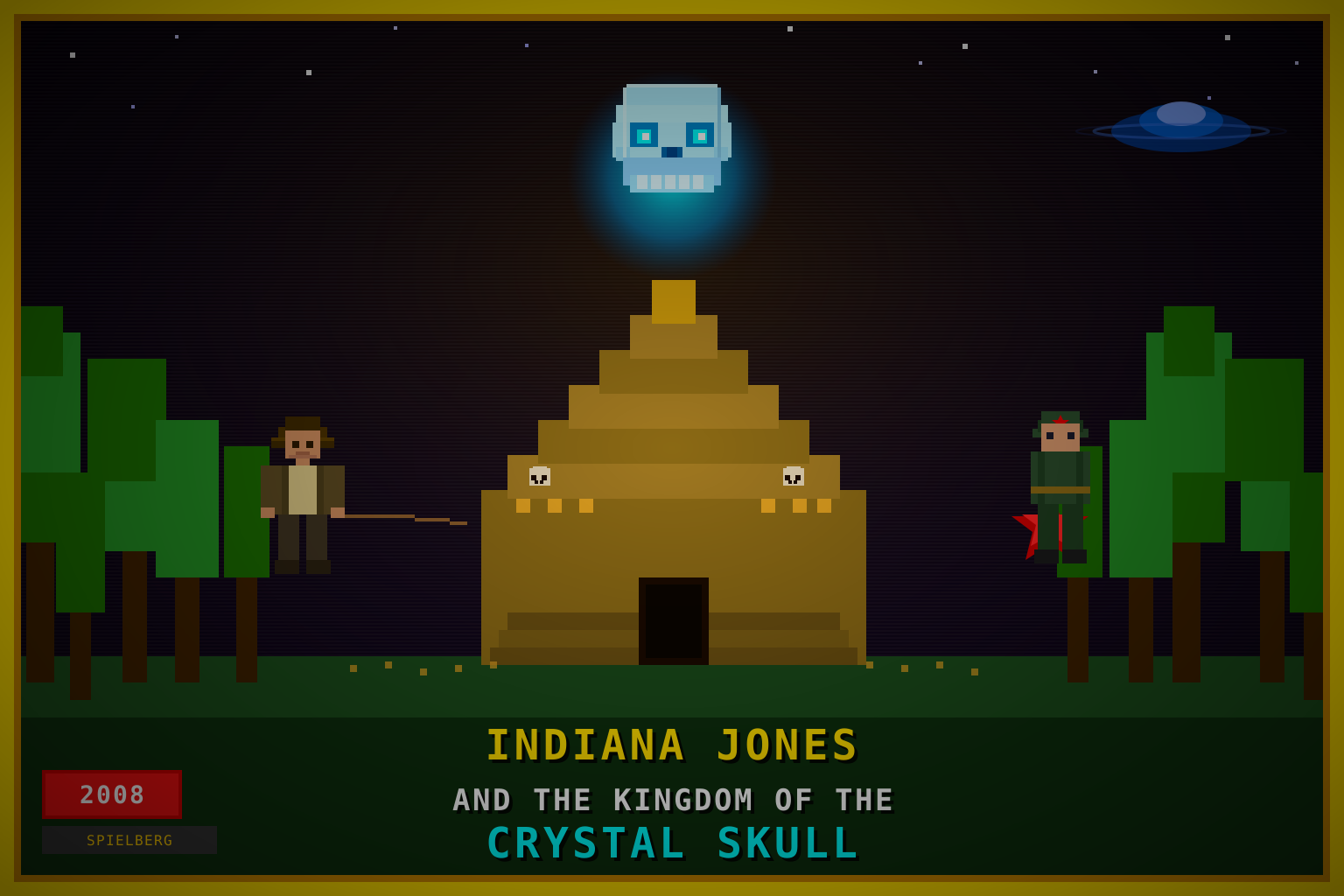
Key figures: Steven Spielberg (director), George Lucas (producer/story), David Koepp (screenwriter), Harrison Ford (Indiana Jones), Karen Allen (Marion Ravenwood), Shia LaBeouf (Mutt Williams), Cate Blanchett (Soviet Colonel Irina Spalko), John Hurt (Professor Oxley), Ray Winstone (Mac), John Williams (composer)
Summary
Indiana Jones and the Kingdom of the Crystal Skull, directed by Steven Spielberg and starring Harrison Ford, premiered on May 22, 2008, marking the fourth installment in the Indiana Jones franchise and the first film in the series since Indiana Jones and the Last Crusade (1989). The 19-year gap between releases set the stage for a nostalgic return to one of cinema’s best-known adventure heroes — and generated both record-breaking commercial returns and lasting critical debate.
The film follows aging archaeologist Indiana Jones navigating a 1950s Cold War landscape as he searches for the legendary Kingdom of the Crystal Skull. Reunited with Marion Ravenwood (Karen Allen, reprising her role from Raiders of the Lost Ark), Indiana confronts Soviet agents led by Colonel Irina Spalko (Cate Blanchett), while discovering that the rebellious young Mutt Williams (Shia LaBeouf) is his son. The story spans from a U.S. military warehouse in Nevada to the Amazon rainforest in Peru, culminating at the ancient city of Akator (El Dorado). The crystal skulls are ultimately revealed to belong to interdimensional beings — a narrative choice that generated significant audience debate.
Production and Development
Development on a fourth Indiana Jones film began in the early 1990s, with Spielberg, Lucas, and Ford struggling to agree on a story. Writers including Jeb Stuart, Jeffrey Boam, M. Night Shyamalan, Frank Darabont, and Jeff Nathanson all submitted drafts over the intervening years. The Crystal Skull concept — tying into the real archaeological curiosity of quartz crystal skulls once attributed to pre-Columbian cultures — was settled by the mid-2000s as the mythological MacGuffin that could credibly shift the franchise’s supernatural angle from Judeo-Christian artifacts (the Ark of the Covenant, the Holy Grail) to pre-Columbian American mythology.
Principal photography ran from June 18 to October 26, 2007, with locations in New Haven, Connecticut; Los Angeles; and international shoots in Hawaii and the United Kingdom. The production budget reached approximately $185 million — the most expensive film in the franchise to that point. John Williams returned to compose the score, incorporating the iconic “Raiders March” alongside new thematic material evoking 1950s Cold War science-fiction aesthetics.
The film was set in 1957, approximately 19 years after the events of The Last Crusade, and placed Indiana Jones in McCarthyism-era America and the early Space Race, replacing the wartime Nazis of the original trilogy with Soviet agents as the adversaries.
Box Office Performance
Kingdom of the Crystal Skull debuted to $100.1 million domestically over its opening weekend (May 22–25, 2008), setting a record for the Memorial Day weekend and ranking among the largest opening weekends in U.S. history to that point. The film earned $317.1 million domestically and $473.6 million internationally for a worldwide total of $790.7 million — making it the second-highest-grossing film of 2008 worldwide, behind only The Dark Knight. Its $185 million production budget was recouped within two weeks of release.
Internationally the film performed strongest in the United Kingdom, Germany, France, and Australia, reflecting the franchise’s enduring global recognition.
Significance
Franchise legacy and the aging-hero template: Harrison Ford, at 65 during filming, portrayed an archaeologist-adventurer explicitly grappling with age — a relatively novel creative choice for a major action franchise at the time. The film’s commercial success with an older lead influenced subsequent studio decisions to revive aging franchises with original cast members and pre-figured the explicitly age-conscious action sequels of the 2010s.
The summer blockbuster season of 2008: The film opened the 2008 summer season alongside Iron Man (May 2) and preceded WALL-E (June 27) and The Dark Knight (July 18) — a summer widely regarded as one of the strongest in Hollywood history. Crystal Skull’s commercial dominance through late May and early June demonstrated that audiences could sustain multiple major franchise releases simultaneously.
The refrigerator scene and fan discourse: One sequence — Indiana Jones surviving a nuclear blast by hiding in a lead-lined refrigerator — became a touchstone of internet fan criticism. The phrase “nuke the fridge” entered popular vocabulary as a counterpart to “jump the shark,” describing a moment when an established franchise strains credibility beyond recovery. The debate reflected how intensely audiences had internalized the internal logic of the original trilogy.
Cannes premiere and awards context: The film had its international premiere at the Cannes Film Festival on May 18, 2008, out of competition, where it received a standing ovation. It drew no major year-end awards nominations — the Academy Awards, BAFTA, and Golden Globes all favored other 2008 releases, chief among them Slumdog Millionaire — an absence that contrasted with its commercial success and reflected critics’ ambivalence.
Critical reception: The film holds a 77% critics’ rating on Rotten Tomatoes and a mixed audience score, with a Metacritic score of 65 out of 100, indicating a generally mixed but not hostile critical response. Roger Ebert gave it 3.5 out of 4 stars, praising its spirit of adventure. The more divisive audience reaction — particularly around the film’s alien mythology — contributed to a reevaluation of the franchise’s identity that shaped the later revival Indiana Jones and the Dial of Destiny (2023).
Sources
- Wikipedia: Indiana Jones and the Kingdom of the Crystal Skull
- Box Office Mojo: Indiana Jones and the Kingdom of the Crystal Skull
- Rotten Tomatoes: Indiana Jones and the Kingdom of the Crystal Skull
- The Numbers: Indiana Jones and the Kingdom of the Crystal Skull (2008)