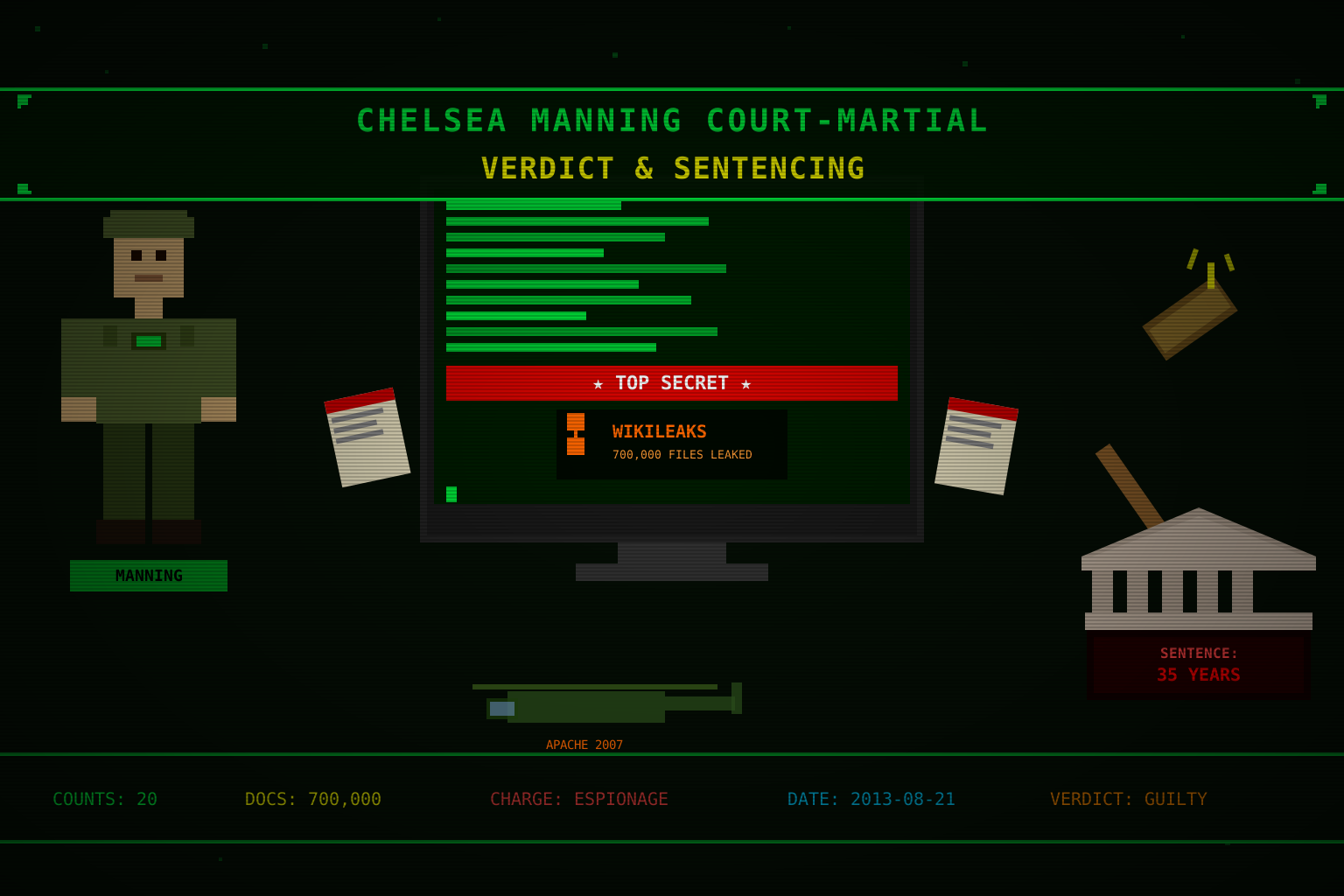
Key figures: Chelsea Manning (US Army intelligence analyst), Judge Denise Lind, Adrian Lamo (confidant/informant), Julian Assange (WikiLeaks founder), David Coombs (defense attorney)
Summary
On August 21, 2013, a military court sentenced US Army Private First Class Chelsea Manning to 35 years in prison following a conviction on 20 counts of espionage, theft, and computer fraud. Manning, then serving as an intelligence analyst in Iraq, had leaked over 700,000 classified documents to WikiLeaks beginning in 2009—including Iraq and Afghanistan war logs, diplomatic cables, assessments of Guantanamo detainees, and the widely distributed video depicting a 2007 Apache helicopter attack on Iraqi civilians that the crew mistook for insurgents.
Judge Denise Lind acquitted Manning of the most serious charge—aiding the enemy—which carried a potential life sentence. However, the 35-year sentence, combined with dishonorable discharge and rank reduction to Private E-1, represented the heaviest penalty imposed on a US whistleblower or intelligence leaker to that date, far exceeding the sentences handed down in previous leak cases. The sentence reflected the military’s effort to establish severe consequences for unauthorized disclosure and to signal deterrence against future leaks within the intelligence community.
Arrest, Pretrial Detention, and Trial
Manning, born in Crescent, Oklahoma, in 1987, enlisted in the US Army in 2007 and was assigned as an intelligence analyst to the 2nd Brigade Combat Team, 10th Mountain Division near Baghdad in November 2009. Over a period of months, Manning downloaded and transmitted an extraordinary volume of sensitive material to WikiLeaks using a Lady Gaga CD as cover for the extraction media.
In May 2010, Manning confided details of the leaks to Adrian Lamo, a former hacker who had earlier faced federal computer-fraud charges. Lamo contacted the FBI and Army Counterintelligence on May 21, 2010; Manning was arrested in Iraq on May 26 and transferred to Camp Arifjan, Kuwait. In July 2010, Manning was moved to the Marine Corps Brig at Quantico, Virginia, where the conditions of confinement—which included 23-hour solitary cell confinement, forced nudity inspections, and sleep disruption protocols—drew condemnation from the UN Special Rapporteur on Torture Juan Méndez and over 250 prominent legal scholars who signed an open letter protesting the treatment as potentially unconstitutional.
Manning was transferred to Fort Leavenworth in April 2011 under less restrictive conditions. The formal court-martial began on June 3, 2013, at Fort Meade, Maryland, with Judge Lind presiding. The prosecution presented 141 witnesses over seven weeks; the defense called 22 witnesses. On July 30, 2013, Judge Lind returned verdicts: guilty on 20 of 22 charges, acquitting Manning on the “aiding the enemy” count that carried a mandatory life sentence. Sentencing concluded on August 21, 2013.
The Leaked Documents
Manning’s disclosures constituted the largest single intelligence leak in US history to that point:
- “Collateral Murder” video: Footage from a 2007 Apache helicopter attack in Baghdad in which aircrew killed 12 civilians including Reuters news-agency employees Namir Noor-Eldeen and Saeed Chmagh, while crew members made callous remarks. Released by WikiLeaks on April 5, 2010, the video generated international outrage.
- Iraq War Logs: 391,832 field reports covering the Iraq War from January 2004 to December 2009, documenting 109,032 deaths (66,081 civilians), and revealing that US forces handed detainees to Iraqi authorities known to torture prisoners.
- Afghan War Diary: 91,731 documents covering the Afghanistan War from January 2004 to December 2009, including intelligence on civilian casualties and Pakistani ISI contacts with the Taliban.
- US Embassy cables: 251,287 State Department diplomatic cables exchanged between 1966 and 2010, revealing candid assessments of foreign governments, intelligence operations, and diplomatic negotiations. Some cables reported on surveillance of UN officials.
- Guantanamo files: Assessments of 779 Guantanamo detainees documenting the basis—and in many cases the flimsy evidence—for their continued detention.
Legal Significance and Civil-Liberties Debate
The Manning case crystallized tensions within the US legal system over the treatment of government leakers. The Espionage Act of 1917 under which Manning was convicted was originally designed to prosecute spies working for foreign governments, not citizens disclosing governmental wrongdoing. Its application to Manning—as with subsequent prosecutions—raised First Amendment concerns that academics and press-freedom advocates argued made the law constitutionally overbroad when used against whistleblowers.
The acquittal on the “aiding the enemy” charge was legally significant: it prevented prosecutors from establishing that information publicly posted by WikiLeaks and freely accessed by any internet user—including al-Qaeda—constituted direct communication of intelligence to the enemy. The distinction between passive accessibility and active transmission remained central to subsequent leak prosecutions.
The Manning case directly paralleled the Edward Snowden NSA revelations that erupted in June 2013, just weeks before Manning’s trial commenced. Together, they created a dual narrative: one leaker prosecuted and imprisoned; one leaker who fled abroad. Snowden’s asylum in Russia amplified debates about whether the US justice system could provide a fair trial to whistleblowers on national-security matters. Civil-liberties organizations including the ACLU and Electronic Frontier Foundation cited both cases in arguing that the Obama administration had prosecuted more leakers under the Espionage Act than all previous administrations combined—eight by 2013 versus three total in all prior history.
Commutation and Later Life
On January 17, 2017, President Barack Obama commuted Manning’s sentence to time served, with a release date of May 17, 2017—the largest commutation of a national-security sentence in modern US history. Obama’s decision followed a petition signed by over 100,000 people and was supported by leading civil-liberties groups; it was opposed by CIA Director John Brennan and Vice President-elect Mike Pence.
After release, Manning ran unsuccessfully for a US Senate seat in Maryland in 2018 (losing in the Democratic primary). She was imprisoned again in March 2019 for contempt of court after refusing to testify before a grand jury investigating WikiLeaks, and held for 62 days before the grand jury’s term expired.