The 2006 Sony Laptop Battery Recall
Summary
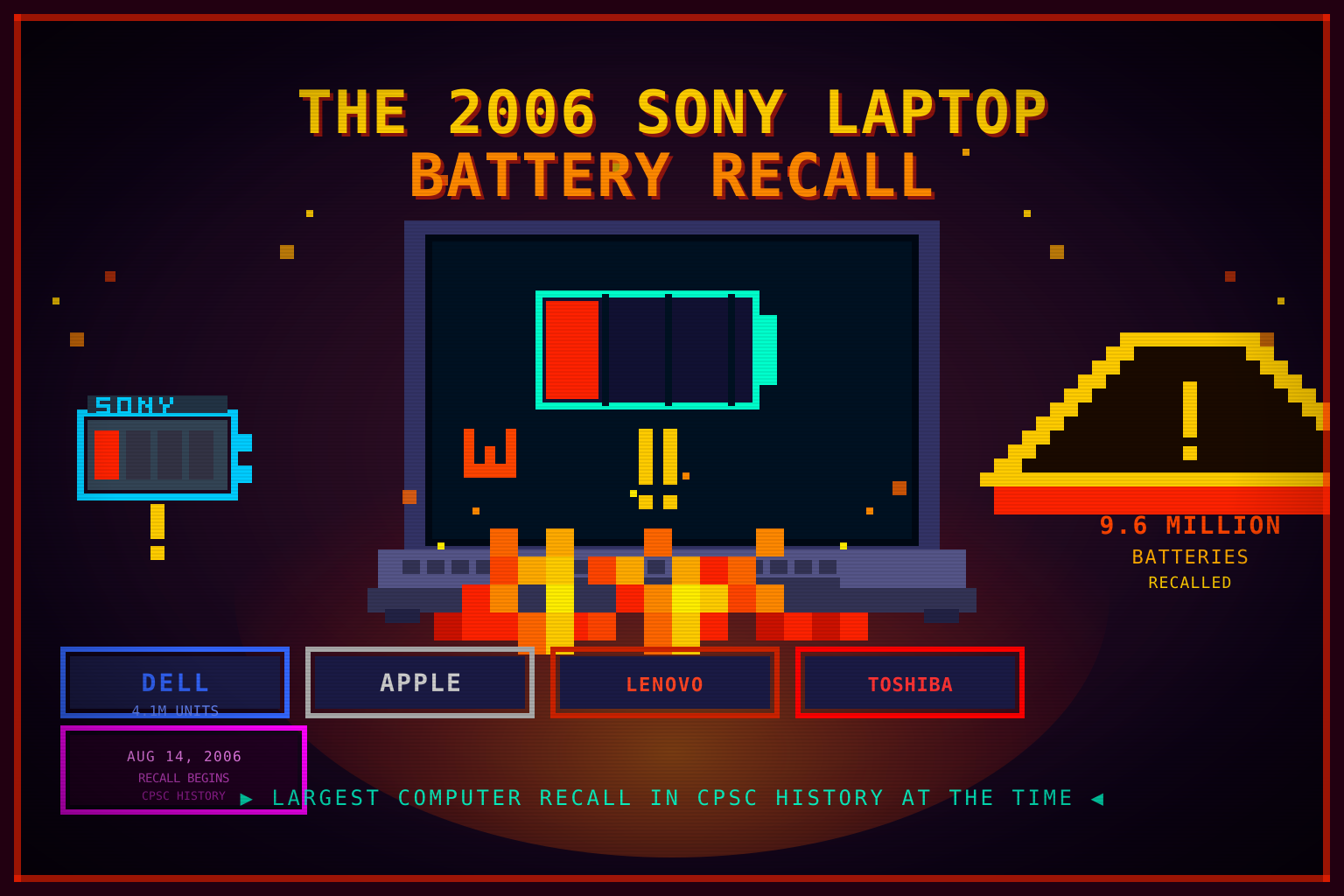
In the second half of 2006, a defect in lithium-ion battery cells manufactured by Sony Energy Devices Corporation forced nearly every major notebook-computer maker to recall Sony-supplied battery packs after reports of laptops overheating and, in a small number of cases, catching fire. The cascade began on August 14, 2006, when Dell announced the recall of about 4.1 million batteries—described by the U.S. Consumer Product Safety Commission (CPSC) as the largest computer-related recall in its history to that point. Within weeks Apple, Lenovo/IBM, Toshiba, Fujitsu and others followed, and Sony launched a voluntary global replacement program. By late October 2006 the total had reached roughly 9.6 million batteries worldwide, making it one of the largest consumer-electronics recalls ever undertaken.
The episode exposed the safety limits of the high-density lithium-ion cells that had become standard in portable electronics, drew regulatory attention on multiple continents, and imposed a charge of hundreds of millions of dollars on Sony during a year in which the company was already stretched by the costly launch of the PlayStation 3.
Background
By the mid-2000s, lithium-ion batteries had become the dominant power source for laptops, prized for their high energy density and light weight. That same density, however, left little tolerance for manufacturing imperfections: a short circuit inside a densely packed cell can trigger thermal runaway, in which the battery rapidly overheats and can ignite. Through 2006 a series of widely circulated news reports and photographs showed notebook computers emitting smoke or bursting into flames, including a Dell laptop that caught fire at a conference in Japan and another incident in Illinois, focusing public and regulatory attention on cell safety.
The recall cascade
The defect was traced to Sony-made cells produced over roughly a two-year span, and because Sony was a leading supplier of laptop cells, the recalls spread across the industry.
| Date (2006) | Manufacturer | Batteries recalled |
|---|---|---|
| August 14 | Dell | ~4.1 million (sold with laptops shipped April 2004 – July 2006) |
| August 24 | Apple | ~1.8 million (iBook and PowerBook G4 models) |
| September 28–29 | IBM/Lenovo | ~526,000 (ThinkPad models) |
| September (mid–late) | Toshiba, Fujitsu | additional units, prompting Sony’s global program |
| Late September – October | Sony (global replacement program) | ~3.5 million further units beyond those already recalled |
Dell’s recall covered lithium-ion packs sold with, or supplied as service replacements for, models across its Latitude, Inspiron, Precision and XPS lines. Apple’s recall, announced on August 24, 2006, covered batteries in certain iBook G4 and PowerBook G4 notebooks. IBM and Lenovo followed with a recall of ThinkPad batteries in late September.
Cause
Sony attributed the fault to a manufacturing defect: microscopic metallic particles introduced during cell production could, in rare cases, pierce the internal separator between the electrodes and create a short circuit. Under certain conditions—particularly repeated charge cycles or physical stress—such a short could cause a cell to overheat, posing a risk of smoke or fire. The company emphasized that the affected proportion of cells was very small relative to the total produced, but the potential severity of a battery fire made a broad precautionary recall necessary.
Sony’s global replacement program
After the initial manufacturer-led recalls, Sony announced a voluntary global battery replacement program in late September 2006 to cover affected packs not already addressed by Dell, Apple and Lenovo—an additional pool estimated at about 3.5 million units. Sony pledged to replace the batteries free of charge. Company executives issued a public apology, and Sony worked with the CPSC and regulators in Japan, Europe and elsewhere to coordinate the program.
Financial and industry impact
Sony stated that the battery recalls would add roughly $429 million (about ¥50 billion) to its costs in the July–September 2006 quarter. The charge landed during a difficult stretch for the company, which was simultaneously absorbing the heavy launch costs of the PlayStation 3 and competing in the high-definition disc format war. For Dell, the recall was estimated to cost on the order of $300 million; the company reported that tens of thousands of customers requested replacement batteries within the first day.
Beyond the direct costs, the episode reverberated across the electronics industry. It prompted the CPSC and international regulators to scrutinize lithium-ion cell manufacturing more closely, encouraged manufacturers to diversify their cell suppliers, and accelerated attention to battery-management safeguards—temperature and voltage monitoring, improved separators, and more conservative charging—that would shape later generations of portable-device batteries.
Significance
The 2006 Sony battery recall was, at the time, the largest recall in the history of consumer electronics, and it became a reference case for the safety challenges of mass-produced lithium-ion power cells. It demonstrated how a single supplier’s defect could propagate across an entire industry that shared common components, and it foreshadowed later high-profile lithium-ion safety episodes in laptops, hoverboards, and smartphones. The event reinforced the principle that the same energy density that made lithium-ion batteries indispensable to portable computing also demanded rigorous manufacturing tolerances and robust safety engineering.
Sources
- Consumer Product Safety Commission / InformationWeek: “Dell Recalls More Than 4 Million Laptop Batteries”
- CBC News: “Dell announces recall of 4.1 million laptop batteries”
- CBC News: “Sony says battery recall now at 9.6 million”
- NBC News: “Sony battery recall to hit 9.6 million”
- CBS News: “Sony Sorry For Laptop Battery Recall”
- Al Jazeera: “Toshiba recalling Sony laptop batteries”
Related
- Blu-ray vs. HD-DVD Format War — Sony’s other high-stakes hardware battle of 2006
- PlayStation 3 and Nintendo Wii launches — the PlayStation 3 launch that strained Sony the same year
- MySpace’s 2006 Peak — the broader 2006 technology landscape